
Administrative Law of Malaysia and Singapore by Professor MP Jain
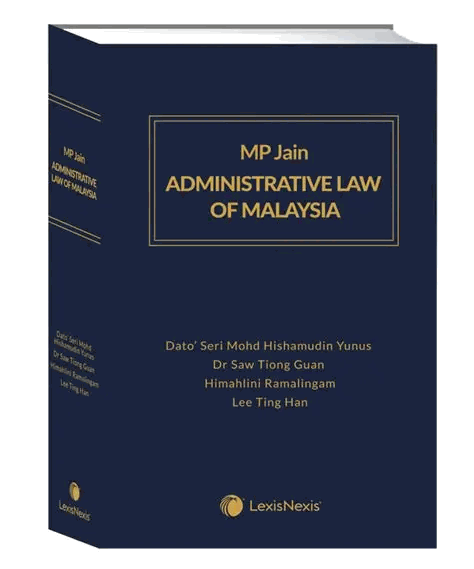


Description
Administrative Law
of Malaysia and Singapore
Professor MP Jain, LLM (Del),JSD (Yale) Professor of Public Law, University of Malaya (former Professor of Law, University of Delhi)
Administrative Law of Malaysia and Singapore: An Extensive Critical Review
Review author: marceljude.ai
I read the book in full. All page references below are to the page numbers appearing in the book itself,
The work consists of 22 chapters extending from printed page 1 to printed page 861. Its governing method is doctrinal, comparative and institutional. It explains the law of Malaysia and Singapore while repeatedly testing local doctrine against developments in Britain, India, the United States, Australia, New Zealand and other common-law jurisdictions. The author expressly approaches administrative law as a body of principles promoting lawful, fair, transparent and accountable administration.
General appraisal before the chapter-by-chapter review
The book’s central proposition is that administrative law is neither an enemy of effective government nor merely a collection of judicial remedies. It is the legal discipline through which public power is authorised, structured, controlled and corrected. Administrative authorities require substantial powers to govern a modern society, but those powers must be reconciled with individual liberty, procedural fairness and the rule of law.
The book is organised around a remarkably coherent progression:
Chapters I–IV establish the constitutional and jurisprudential foundations of administrative law.
Chapters V–VII examine subsidiary legislation and the controls imposed upon it.
Chapters VIII–XII address administrative adjudication and natural justice.
Chapters XIII–XVI analyse administrative and discretionary powers, including sub-delegation.
Chapters XVII–XVIII consider governmental liability and access to information.
Chapters XIX–XX provide an encyclopaedic treatment of judicial review and remedies.
Chapters XXI–XXII examine the Ombudsman and public undertakings, including privatisation.
The result is not simply a textbook of rules. It is a sustained account of the constitutional problem at the heart of modern government: how to confer enough power on the administration to govern effectively without allowing that power to become arbitrary, opaque or legally unaccountable.
List of contents with the book’s printed page numbers
Preliminary material
Foreword — p. v
Preface — p. vii
Table of cases — p. xvii
Table of statutes — p. lxiii
Chapter I — Need for Administrative Law and the reasons for its growth — pp. 1–9
Chapter II — Nature and scope of Administrative Law — pp. 10–17
Chapter III — Rule of law — pp. 18–28
Rule of law — p. 18
Growth of Administrative Law — p. 22
Chapter IV — Separation of powers — pp. 29–40
Separation of powers — p. 29
Droit administratif — p. 37
Chapter V — Subsidiary legislation — pp. 41–84
Factors leading to the growth of delegated legislation — p. 41
Need for safeguards — p. 44
Restraints on delegation of legislative power — p. 46
Britain — p. 46
United States — p. 46
India — p. 50
Malaysia — p. 55
Definition of subsidiary legislation — p. 60
Forms of delegation of legislative power — p. 64
Delegating formulae — p. 64
Statutory bodies — p. 67
Designated officials — p. 68
Bringing the Act into force — p. 68
Retrospective operation — p. 69
Taxation — p. 69
Punishments — p. 70
Exemption — p. 71
Modification of statutes — p. 73
Removal of difficulties — p. 75
Skeleton legislation — p. 78
Some miscellaneous norms — p. 80
Administrative quasi-legislation — p. 81
The printed contents repeats “Factors leading to the growth of delegated legislation” at p. 64. The chapter itself makes clear that the p. 64 section is concerned with the forms of delegation of legislative power.
Chapter VI — Controls over subsidiary legislation (1) — pp. 85–125
Judicial control — p. 85
Substantive ultra vires — p. 89
Procedural ultra vires — p. 117
Nature of the judicial function — p. 119
Statutory exclusion of judicial review — p. 121
Chapter VII — Controls over subsidiary legislation (2) — pp. 126–165
Legislative control — p. 126
Laying procedure — p. 126
Parliamentary Scrutiny Committee — p. 141
Other controls — p. 148
Publication — p. 148
Consultation of interests — p. 158
Chapter VIII — Administrative adjudication — pp. 166–225
Introduction — p. 166
Tribunals — p. 168
Adjudicatory bodies in Singapore — p. 173
Adjudication within the administration in Singapore — p. 188
Adjudicatory bodies in Malaysia — p. 194
Adjudication within the administration in Malaysia — p. 208
Inquiries — p. 217
The Franks Committee — p. 220
Chapter IX — Natural justice: when can it be claimed? — pp. 226–287
Natural justice — p. 226
Britain — p. 230
United States — p. 246
India — p. 248
Malaysia and Singapore — p. 255
Exclusion of natural justice — p. 275
Chapter X — Principles of natural justice — pp. 288–357
Audi alteram partem — p. 289
Notice — p. 291
Disclosure of materials to the party — p. 298
Hearing — p. 311
Receiving evidence produced by the individual — p. 322
Reasoned decisions — p. 330
Right to counsel — p. 337
One who decides must hear — p. 343
Institutional decisions — p. 353
Waiver — p. 356
Chapter XI — Rule against bias — pp. 358–386
Pecuniary bias — p. 358
Personal bias — p. 359
Policy bias — p. 370
Exclusion of bias — p. 377
Waiver — p. 378
Proposed reforms in the system of administrative adjudication — p. 380
Chapter XII — Failure of natural justice — pp. 387–401
Introduction — p. 387
Position in Britain — p. 389
Position in India — p. 394
Position in Malaysia and Singapore — p. 395
Curing breach of natural justice — p. 397
Chapter XIII — Administrative powers — pp. 402–411
Nature of administrative powers — p. 402
Statutory powers — p. 404
Non-statutory powers — p. 409
Chapter XIV — Discretionary powers (1) — pp. 412–500
Nature of discretionary powers — p. 412
Conferment of excessive discretion — p. 417
Judicial control over exercise of discretionary powers — p. 422
Reasoned decision — p. 424
Courts do not probe into the merits of the exercise of discretion — p. 428
Unfettered discretion not permissible — p. 431
Doctrine of ultra vires — p. 434
Extended ultra vires — p. 445
Abuse of discretion — p. 448
Mala fides — p. 448
Irrelevant considerations and omission of relevant considerations — p. 455
Mixed considerations — p. 465
Improper purpose — p. 466
Vague purpose — p. 474
Unreasonableness — p. 475
Unfairness — p. 481
Proportionality — p. 482
Colourable exercise of power — p. 486
Misdirection of fact and law — p. 487
Non-exercise of discretion — p. 489
Authority not applying its mind — p. 489
Acting under dictation — p. 492
Acting mechanically — p. 495
Fettering discretion — p. 495
Administrative discrimination — p. 499
Chapter XV — Discretionary powers (2) — pp. 501–538
Administrative delay — p. 501
Yang di-Pertuan Agong — p. 508
Non-statutory powers — p. 510
Unreviewable discretions — p. 512
Estoppel against the government and legitimate expectation — p. 522
Chapter XVI — Sub-delegation of powers — pp. 539–566
What is sub-delegation? — p. 539
Delegatus non potest delegare — p. 542
Sub-delegation of ministerial functions — p. 546
Sub-delegation versus assistance — p. 547
Express or implied authority to delegate power — p. 548
Relation between delegator and delegatee — p. 550
Government business — p. 551
Singapore — p. 555
Malaysia — p. 558
Authentication of orders — p. 564
Sub-delegated legislation — p. 565
Chapter XVII — Government liability — pp. 567–594
Contractual liability — p. 567
Tortious liability — p. 570
Misfeasance in public office — p. 580
Governmental liability for injuries to military personnel — p. 582
Public Authorities Protection Act 1948 — p. 583
Damages against municipal bodies — p. 587
Liability of statutory bodies — p. 587
Protection for public servants — p. 589
Statutory exemptions — p. 591
Chapter XVIII — Right to information — pp. 595–623
Open government — p. 595
Public interest immunity — p. 596
Official secrecy — p. 611
Access to information — p. 619
Chapter XIX — Judicial control of administrative action (1) — pp. 624–724
Judicial review — p. 624
Habeas corpus — p. 631
Nature of habeas corpus — p. 631
Position in Malaysia and Singapore — p. 632
Mandamus — p. 652
Alternative remedy, laches and grounds for refusal — p. 655
Standing — p. 656
Section 44, Specific Relief Act — p. 657
Certiorari and prohibition — p. 665
Nature of certiorari — p. 667
Leave of the court — p. 669
Alternative remedy — p. 672
Issued to whom? — p. 677
Election tribunal — p. 683
Standing — p. 685
Waiver — p. 688
Limitation — p. 689
Void order — p. 695
Grounds for certiorari and prohibition — p. 696
Quo warranto — p. 720
Moulding of relief — p. 721
Chapter XX — Judicial control of administrative action (2) — pp. 725–810
Declaration — p. 725
Examples of grants and refusals — p. 728
Declaration in service matters — p. 730
Premature matters — p. 732
Frivolous or hypothetical matters — p. 734
Limitation — p. 735
Joinder of parties — p. 736
Alternative remedy — p. 737
Matters outside court jurisdiction — p. 743
Declaration versus certiorari — p. 744
Procedure — p. 748
Interim declaration — p. 749
Locus standi — p. 749
Injunctions — p. 766
Temporary injunctions — p. 767
Interlocutory injunctions — p. 767
Perpetual injunctions — p. 770
Injunctions that cannot be granted — p. 770
Relator action — p. 777
Statutory provisions excluding judicial review — p. 782
Effect of privative clauses in Malaysia before 1980 — p. 785
Position after 1980 — p. 791
Statutory provisions for judicial control — p. 803
Equitable relief — p. 808
Chapter XXI — Ombudsman — pp. 811–826
Need for Ombudsman — p. 811
Ombudsman in New Zealand — p. 815
Ombudsman in Britain — p. 818
Australian Ombudsman — p. 822
Malaysia — p. 824
Singapore — p. 826
Chapter XXII — Public undertakings — pp. 827–861
Reasons for the growth of public undertakings — p. 827
Public enterprises in Malaysia — p. 827
Public enterprises in Singapore — p. 830
Classification of public undertakings — p. 831
Organisation of public enterprises — p. 833
Selected public undertakings — p. 837
Control over public enterprises — p. 844
Audit — p. 844
Parliamentary control — p. 845
Ministerial control — p. 845
Ministry of public enterprises — p. 847
Judicial control — p. 847
Legal characteristics of a corporation — p. 850
Privatisation — p. 853
Courts’ supervision over the privatised sector — p. 858
The sequence and printed subsection pagination are confirmed across the book’s contents.
Review of the preliminary material Foreword — p. v
The Foreword presents the book as an authoritative work that has influenced judicial reasoning, not merely academic teaching. That is important because administrative law develops largely through case-by-case judicial articulation. A work cited by superior courts participates indirectly in the development of doctrine: it identifies principles, rationalises dispersed decisions and supplies the vocabulary through which later controversies are analysed.
From a professor’s perspective, the Foreword correctly signals that this is a treatise, not a simplified student outline. It expects the reader to engage simultaneously with constitutional structure, statutory interpretation, procedural justice, institutional design and remedies.
Preface — pp. vii onward
The Preface performs an intellectual function beyond ordinary introductory remarks. It announces four features of the author’s method:
exposition of legal doctrine; analysis of the reasons supporting the doctrine; comparison with other common-law systems; criticism where Malaysian or Singaporean doctrine appears insufficiently protective of fairness or accountability.
The Preface also identifies judicial creativity as the principal engine of administrative law. Courts do not merely apply pre-existing rules; through disputes between individuals and public authorities, they formulate standards of lawful power, fair procedure, relevance, reasonableness and effective remedies.
This conception governs the entire book. Administrative law becomes a body of principles of good administration, not merely a technical jurisdiction concerned with writs and jurisdictional error.
Tables of cases and statutes — pp. xvii and lxiii
The extensive tables reveal the book’s working method. Arguments are built by moving among:
constitutional provisions;
enabling statutes;
subsidiary legislation;
domestic judicial decisions;
comparative Commonwealth and American authorities;
institutional reports and reform proposals.
This abundance is a major scholarly strength, although it contributes to the book’s density.
Chapter-by-chapter review
Chapter I — Need for Administrative Law and the reasons for its growth
Printed pages 1–9
This opening chapter explains why administrative law became indispensable. Although it has no formal internal headings, its argument develops in five identifiable stages.
1. The administrative age and emergency power — pp. 1–2
The chapter begins from the proposition that modern government has experienced an immense expansion of administrative apparatus, functions and powers. Emergency conditions, internal security, defence and public order contribute to that expansion because governments acquire powers to act quickly and preventively, sometimes against liberty without ordinary trial procedures.
The legal significance is immediate: whenever administration receives broader discretionary powers, the need for legal standards and remedies becomes more pressing. The author refuses to treat emergency power as existing outside administrative law. It is precisely where the consequences are most severe that legality and supervision matter most.
2. From laissez-faire to the welfare state — pp. 2–4
The book traces the decline of laissez-faire and the rise of collectivism and the welfare state. Under the older model, government largely protected property, enforced contracts, maintained order and defended the territory. That model proved incapable of addressing structural inequality, dangerous working conditions, poverty, monopolistic power and unequal bargaining strength.
The welfare state therefore assumes positive responsibilities. It does not merely restrain wrongdoing; it supplies services, regulates markets, redistributes resources and plans social and economic development.
The author adopts Friedmann’s classification of the modern state as:
protector
provider;
regulator;
entrepreneur;
umpire.
This classification is pedagogically useful because it explains why administrative law extends across such different fields. Licensing, social benefits, public corporations, disciplinary systems and market regulation are not isolated phenomena. They are manifestations of the state’s enlarged social role.
3. Predominance of the executive and administrative process — pp. 4–6
The modern legislature cannot itself supply every technical detail necessary to administer complex statutes. Nor can ordinary courts decide every regulatory or welfare dispute with sufficient speed and expertise. The executive therefore acquires:
rule-making power through subsidiary legislation;
adjudicatory power through tribunals and officials;
investigative and inspection powers;
licensing and registration powers;
powers of search, seizure and preventive action;
broad discretionary authority.
The chapter’s great strength is that it explains administrative power functionally. Delegated legislation is not presented as a constitutional accident. Tribunals are not merely inferior courts. Discretion is not merely a defect in statutory drafting. Each is a response to the scale, technicality and changing character of modern governance.
4. Administrative law as the control of power — pp. 6–8
The chapter then turns from necessity to danger. Administrative power can serve public welfare, but it can also injure liberty, property, livelihood and legitimate expectations. The more frequently individuals encounter public authorities, the greater the number of opportunities for arbitrary, corrupt, careless or procedurally unfair decisions.
Administrative law must therefore:
keep the administration within lawful authority;
ensure that powers are used for authorised purposes;
prevent arbitrary and irrelevant decision-making;
provide procedural safeguards;
establish effective remedies;
balance public welfare against private rights.
The author’s position is especially valuable: administrative law is a friend of good administration. It does not prohibit effective government. It separates lawful, reasoned and fair administration from misuse of authority.
5. Parliamentary government and the accountability deficit — pp. 8–9
The closing pages question whether legislative responsibility alone can adequately control administration. In a parliamentary system, the executive usually commands the legislative majority. The legislature may therefore be unable or unwilling to supervise particular administrative decisions closely. Its workload also makes detailed oversight impractical.
This generates the central question of the book: how can executive power be subjected to legal standards of fair procedure and just decision-making?
Professor’s assessment
This is an excellent foundational chapter. It connects political economy, constitutional structure and legal doctrine without reducing administrative law to a list of remedies.
Its principal strength is the insight that the growth of administrative law is the legal consequence of the growth of administration itself. Its limitation is that the historical movement from laissez-faire to welfare administration is presented somewhat linearly. Regulatory power also emerges from security, colonial administration, economic management and institutional self-preservation, matters that could have received greater separate treatment.
Nevertheless, as an opening statement of purpose, the chapter is compelling.
Chapter II — Nature and scope of Administrative Law Printed pages 10–17
This chapter asks what administrative law actually includes. Its importance lies in refusing a narrow definition that equates the subject only with judicial review.
1. The American approach — pp. 10–11
The chapter begins with Davis’s account of administrative law as the law governing administrative agencies, their powers, procedures and judicial review. This approach emphasises rule-making and adjudication.
The author finds it incomplete for jurisdictions in which many important powers are classified simply as administrative or discretionary. Public corporations, ministerial decisions and non-adjudicatory regulatory activity may fall outside an agency-centred formulation even though they affect private rights profoundly.
2. Dicey’s formulation — pp. 11–12
Dicey concentrated on the legal position and liabilities of public officials and on remedies in ordinary courts. The author criticises this as too narrow because it neglects:
the organisation of administrative authorities; administrative procedures; parliamentary supervision; tribunals; public corporations; non-judicial mechanisms of redress.
Dicey’s definition reflects his broader constitutional preoccupation with the rule of law and ordinary courts rather than the full operation of modern administration.
3. Jennings, Wade and the modern British approach — pp. 12–13
Jennings defines administrative law through the organisation, powers and duties of administrative authorities. Wade and Phillips similarly emphasise the composition, powers, rights, duties and liabilities of governmental organs engaged in administration.
These formulations are broader but still risk underplaying procedure. For the author, procedure is not secondary. It is one of the main means by which abuse of power is prevented before it occurs.
4. Administrative procedure and substantive law — pp. 12–14
The chapter insists on the centrality of administrative procedure. Fair notice, hearing, disclosure, consultation and reasons can improve the quality of decisions and reduce dependence on after-the-fact litigation.
The author nevertheless recognises that substantive statutory provisions cannot be ignored. Whether a power has been abused, used for an improper purpose or exercised on irrelevant considerations can be determined only by examining the statute creating it.
5. Jain’s four-part formulation — pp. 14–16
The book supplies its own comprehensive account. Administrative law concerns:
the structure, powers and functions of administrative organs; the limits upon those powers; the methods and procedures used in exercising them; the controls and remedies available when their exercise infringes rights or interests.
This is one of the most valuable conceptual passages in the book. It connects institutional structure, substantive legality, procedural fairness and remedial justice.
The fourth element is particularly important. A right against the state has little practical value unless a person can invoke an effective means of redress.
6. Administrative law and constitutional law — pp. 16–17
The chapter concludes that constitutional and administrative law overlap but are not identical. Constitutional law is primarily concerned with the principal organs of state, their constitutional powers and relationships. Administrative law focuses on the operation of public power in relation to individuals and groups.
Administrative law is therefore constitutional law in action: it examines what happens when legally conferred power reaches a particular person, licence, property, employment relationship, tax assessment or regulatory dispute.
Professor’s assessment
This chapter gives the reader an unusually strong map of the field. The four-part formulation is broad enough to include institutions and remedies without becoming so broad that it absorbs the whole of public administration.
Its unresolved difficulty is the public-private boundary. Government companies, professional bodies, exchanges and privatised utilities may exercise public power while possessing private legal form. The book later confronts this problem effectively, especially in Chapters XIX and XXII, but the definition offered here could have anticipated it more explicitly.
Chapter III — Rule of law Printed pages 18–28 Rule of law — pp. 18–21
The chapter begins with Dicey’s three familiar concerns: supremacy of regular law, rejection of arbitrary governmental power and equality before ordinary courts.
The author accepts the enduring value of legality but rejects Dicey’s institutional absolutism. Dicey was mistaken to suppose that England lacked administrative law, that officials possessed no broad discretion, or that ordinary courts were the only legitimate institutions capable of controlling government.
The book reconstructs the rule of law for the administrative state around four propositions:
administration has no authority outside law; discretion is permissible, but arbitrariness is not; administrative law promotes rather than contradicts the rule of law; tribunals are compatible with the rule of law if their decisions remain subject to appropriate legal supervision.
This is a sophisticated move. It shifts the rule of law from a rigid nineteenth-century institutional model to a substantive framework for evaluating governmental authority.
The proper question is not whether an official has discretion. The question is whether that discretion is legally bounded, procedurally fair, rationally exercised and reviewable for abuse.
Growth of Administrative Law — pp. 22–28
The second part explains how Dicey’s influence delayed recognition of administrative law in Britain. The field was initially regarded as foreign or continental. Its eventual development came through two principal channels.
Judicial creativity — pp. 22–23
Courts gradually expanded fairness, natural justice and judicial review. The chapter identifies Ridge v Baldwin as a turning point in the revitalisation of procedural protection.
Judicial creativity is portrayed as necessary because enabling statutes rarely state every legal constraint. Courts derive implied limits from statutory purpose, constitutional values and the requirement of fairness.
Legislative and institutional reform — pp. 23–25
The book reviews the Committee on Ministers’ Powers, the Crown Proceedings legislation, the Franks Committee, the Council on Tribunals and the Ombudsman.
These developments demonstrate that courts alone cannot provide a complete system of administrative accountability. Legislative design and independent supervisory institutions are also necessary.
Comparative reforms — pp. 25–28
Australia, New Zealand and Canada are examined as jurisdictions that undertook more systematic reforms. The discussion includes administrative appeals, specialised judicial procedures, review councils, Ombudsmen, codification of grounds of review and access to official information.
Professor’s assessment
This chapter’s achievement is to rescue the rule of law from Dicey without discarding it. The rule of law becomes a standard by which discretion, tribunals and remedies can be assessed.
The institutional history is illuminating, though somewhat progressive in tone: development is sometimes depicted as a steady movement from judicial passivity to enlightened control. Administrative-law development is rarely so linear. Courts may expand one ground of review while narrowing standing or remedies elsewhere.
Even so, the chapter provides the jurisprudential foundation for everything that follows.
Chapter IV — Separation of powers Printed pages 29–40 Separation of powers — pp. 29–36
The chapter analyses the particular influence of separation of powers on American administrative law.
1. Classical theory — pp. 29–31
Legislative, executive and judicial powers are separated to prevent concentration of authority and protect liberty. The American constitutional structure reflects this model more strongly than parliamentary systems do.
2. The administrative-state challenge — pp. 31–32
Modern agencies often combine:
rule-making; investigation; enforcement; prosecution; adjudication.
A strict application of separation would make such institutions impossible. The growth of regulatory commissions therefore required doctrinal adjustment.
The author correctly observes that the real danger lies less in the mere combination of functions than in unchecked power. Safeguards may include internal separation, procedural fairness, reasons, appeal and judicial review.
3. Delegation and non-delegation — pp. 31–33
The chapter links separation of powers to the American doctrine that Congress must supply policy or standards when delegating legislative power. The doctrine preserves a distinction between primary legislative choice and administrative implementation.
In practice, however, courts have tolerated broad standards. The book therefore exposes the gap between formal doctrine and administrative necessity.
4. Procedural reform — pp. 33–35
The Administrative Procedure Act is treated as an effort to reconcile administrative flexibility with fairness. The discussion also includes freedom-of-information legislation, open-meeting requirements and the Administrative Conference.
These institutions demonstrate that separation of powers can be implemented through procedure and oversight rather than absolute institutional division.
5. Continuing judicial use of separation — pp. 35–36
Cases such as Chadha and Bowsher show that separation remains capable of invalidating arrangements in which one branch intrudes excessively upon another.
Droit administratif — pp. 37–40
The second portion turns to France.
Conseil d’Ιtat and administrative justice — pp. 37–38
Rather than subjecting administration to ordinary civil courts, France developed specialist administrative courts. The Conseil d’Ιtat combines expertise with a central supervisory role and promotes coherence across administrative law.
Tribunal des conflits — p. 38
Jurisdictional conflict between ordinary and administrative courts is resolved through a specialised institution, protecting the division between the systems.
Control of legality and governmental liability — pp. 38–39
French administrative law enables annulment of unlawful administrative action and compensation for harm. The author stresses that specialist institutions may protect individuals more effectively than ordinary courts.
Influence on common-law doctrine — pp. 39–40
The chapter notes the increasing attraction of functional review, legitimate expectation and proportionality. It challenges the assumption that ordinary courts possess a monopoly on rule-of-law protection.
Professor’s assessment
This is a highly effective comparative chapter. It demonstrates that constitutional values can be institutionalised differently. Ordinary courts, specialist administrative courts and internal agency structures are means, not ends.
The account of France is necessarily compressed and risks presenting droit administratif as more unified than it is. Still, its inclusion performs an essential critical function: it prevents the reader from mistaking common-law arrangements for universal constitutional necessities.
Chapter V — Subsidiary legislation Printed pages 41–84
This chapter is one of the book’s most substantial achievements. It explains why delegated law-making is necessary, why it is dangerous and how different constitutional systems attempt to restrain it.
Factors leading to growth — pp. 41–43
Delegated legislation grows because legislatures face:
insufficient time; technical complexity; need for detailed implementation; need for flexibility; changing conditions; experimentation; emergencies.
The legislature determines broad policy, while administrative authorities supply operational detail. The author does not romanticise legislative capacity: modern statutes could not function if Parliament itself had to enact every technical rule.
Need for safeguards — pp. 44–45
The same features that make delegation useful make it constitutionally dangerous. Subsidiary legislation is often drafted without the publicity, debate and political visibility attending primary legislation.
Excessive delegation may permit the executive to determine policy rather than merely implement it. The author therefore distinguishes:
control at the point where power is delegated; and control when the delegated power is exercised.
This two-stage model is analytically important. Narrow statutory authority makes later review more effective; a blank statutory cheque makes ultra vires review difficult.
Restraints on delegation of legislative power — pp. 46–59 Britain — p. 46
Parliamentary sovereignty means that Parliament may confer very broad law-making authority. Courts cannot invalidate the enabling Act merely because delegation is excessive.
The restraint is principally political and parliamentary rather than constitutional.
United States — pp. 46–49
The non-delegation doctrine requires Congress to state policy or standards. The author discusses the tension between constitutional theory and administrative necessity through cases such as Panama Refining and Yakus.
The doctrine survives rhetorically, but broad formulations are usually accepted. Its practical influence lies partly in encouraging Congress to articulate purposes and factors.
India — pp. 50–54
The Indian doctrine distinguishes essential legislative functions from permissible delegation. The legislature must determine policy, while details may be assigned to the executive.
The discussion includes:
excessive delegation; taxation; modification powers; removal-of-difficulty provisions; expansion or contraction of statutory coverage.
Procedural safeguards may sometimes compensate for broadly expressed authority.
Malaysia — pp. 55–59
The Malaysian discussion is particularly important because it confronts broad legislative power, emergency legislation and constitutional review.
The author examines whether doctrines resembling excessive delegation can constrain Parliament. Courts are shown to be generally deferential, especially where emergency authority is concerned, but the administration remains bound by the legal scope of the enabling law.
Definition of subsidiary legislation — pp. 60–63
Two features are essential:
the instrument must be made under legally conferred authority; it must possess legislative effect.
The difficulty lies in distinguishing legislative instruments from administrative directions. Generality is relevant but not conclusive. Some instruments of general application remain non-statutory; some decisions directed at limited classes may have legislative character.
Forms of delegation — pp. 64–80 Delegating formulae — pp. 64–67
Enabling provisions use phrases such as necessary, expedient or prescribed. Their breadth determines the scope of the delegate’s authority.
The author shows that statutory language is never neutral. A clause authorising rules “for carrying out the purposes of the Act” differs from one authorising anything the executive considers desirable.
Statutory bodies — pp. 67–68
Rule-making power may be granted to corporations, boards and regulatory authorities rather than ministers. Their specialist expertise can justify delegation, but their democratic remoteness heightens the need for supervision.
Designated officials — p. 68
Specific officers may receive power to make rules, orders or directions. The legal question becomes whether the named officer must act personally and whether sub-delegation is permitted.
Bringing an Act into force — pp. 68–69
The executive may be authorised to determine commencement. Such provisions offer administrative flexibility but can allow the executive to delay the operation of legislative policy.
Retrospective operation — p. 69
Retrospective rule-making requires clear authority. The presumption against retrospectivity protects settled rights and legal certainty.
Taxation — pp. 69–70
The power to impose taxes or financial burdens is ordinarily jealously guarded. Delegated authority must be clearly expressed, and limits become especially important because taxation affects property directly.
Punishments — pp. 70–71
Subsidiary legislation may create offences or prescribe penalties only within the authority granted by the enabling statute.
Exemption — pp. 71–73
Authorities may receive power to exempt persons, classes or transactions. Although useful for flexibility, exemption powers can produce discrimination and opaque favouritism unless guided by principle.
Modification of statutes — pp. 73–75
Henry VIII clauses permit subsidiary legislation to alter primary legislation. The author rightly treats them as constitutionally exceptional because they reverse the normal hierarchy between legislature and executive.
Removal of difficulties — pp. 75–78
Such clauses allow administrative adjustment when unforeseen obstacles arise. They must not become authority to rewrite statutory policy.
Skeleton legislation — pp. 78–80
Skeleton statutes announce little more than a framework and leave substantial policy to the executive. This is the point at which delegation approaches legislative abdication.
Miscellaneous norms — p. 80
The book discusses amendment, variation, revocation, continuation under replacement statutes and related interpretive rules.
Administrative quasi-legislation — pp. 81–84
This section is particularly prescient. Administrative bodies regularly issue:
directions; circulars; guidelines; practice notes; policy statements; codes; instructions.
These instruments may lack statutory force yet strongly influence officials and the public. Their uncertain status raises several problems:
Can they create binding obligations? Can an authority depart from them? May a person rely upon them? Do they unlawfully fetter statutory discretion? Can they generate legitimate expectations?
The author recognises that modern administration operates through both formal law and “soft law.”
Professor’s assessment
Chapter V is among the finest chapters in the book. It combines constitutional theory, statutory interpretation and practical administration.
Its central insight is that delegated legislation is both inevitable and constitutionally hazardous. The discussion of quasi-legislation gives the chapter continued conceptual importance because many significant administrative norms are issued outside conventional legislative form.
The principal difficulty is definitional. The boundary between a legislative instrument, an administrative direction and an internal policy remains unstable. The chapter identifies the instability honestly, though no single doctrinal test resolves it.
Chapter VI — Controls over subsidiary legislation (1) Printed pages 85–125
This chapter concerns judicial control.
Judicial control — pp. 85–88
The courts may examine:
the constitutionality of the enabling statute; the constitutionality of the subsidiary instrument; conformity with the parent legislation; compliance with prescribed procedure.
Judicial review is therefore founded upon hierarchy: the delegate cannot possess more power than the legislature conferred.
Substantive ultra vires — pp. 89–116
This is the chapter’s core.
Consistency with the enabling statute — pp. 89–101
A rule is invalid if it contradicts, enlarges or defeats the parent Act. General words in an enabling provision are interpreted in light of statutory purpose.
The delegate cannot use rule-making power to:
alter the scheme of the Act; create powers the Act withheld; evade statutory safeguards; change legislative policy. Nexus with statutory purpose — pp. 99–104
Subsidiary legislation must possess a rational and legal connection with the objectives of the enabling Act. Merely invoking a broad purpose does not justify measures unrelated to it.
Private rights, punishment and financial burdens — pp. 102–112
Clear authority is required where regulations:
interfere with vested rights; impose punishments; create financial levies; exclude court jurisdiction; authorise trial or enforcement procedures.
This reflects the principle of legality: serious interference with rights is not inferred casually from general wording.
Retrospective regulations — pp. 105–107
Retrospective effect must be expressly or necessarily authorised. Otherwise, the delegate would disturb legal certainty beyond the mandate of the legislature.
Exclusion of court jurisdiction — pp. 107–109
A delegate generally cannot use subsidiary legislation to remove or diminish jurisdiction conferred by primary law.
Unreasonableness and arbitrariness — pp. 112–116
The book applies the traditional doctrine that by-laws and regulations may be invalidated for manifest unreasonableness. The test is demanding because courts must not substitute their policy preferences for those of the rule-maker.
Bad faith may also invalidate delegated legislation, although proving institutional bad faith is difficult.
Procedural ultra vires — pp. 117–118
Where the enabling statute requires consultation, publication, prior notice or laying before the legislature, failure to comply may invalidate the instrument.
The result depends on whether the requirement is mandatory or directory. The author warns against allowing formal classification to defeat statutory safeguards.
Nature of the judicial function — pp. 119–120
Courts examine legality, not the wisdom of the regulation. A court does not ask whether it would have adopted the same rule. It asks whether the authorised body acted within the limits, purpose and procedure of the empowering statute.
Statutory exclusion of judicial review — pp. 121–125
The chapter considers provisions declaring subsidiary legislation conclusive, treating it “as if enacted,” requiring parliamentary approval or attempting to oust review.
The author argues that such clauses should not ordinarily immunise action outside delegated authority. Parliamentary laying or approval does not automatically convert an unlawful regulation into valid primary legislation.
Professor’s assessment
The chapter is doctrinally rigorous and highly useful for litigation. Its case-based treatment teaches the reader how to relate a particular regulation to:
the text of the enabling power; the object of the statute; implied restrictions; constitutional rights; mandatory procedure.
Its weakness is partly the weakness of ultra vires doctrine itself. Substantive ultra vires, unreasonableness, improper purpose and constitutional review sometimes overlap. The categories are not always as distinct as the chapter’s structure suggests.
Chapter VII — Controls over subsidiary legislation (2) Printed pages 126–165
This chapter shifts from courts to democratic and procedural control.
Legislative control — pp. 126–147 Laying procedure — pp. 126–140
The chapter explains several forms:
simple laying; negative resolution; draft subject to negative resolution; affirmative resolution; draft requiring affirmative approval.
The strength of control varies. Simple laying may merely provide information. Negative resolution requires legislators to identify and challenge an instrument within limited time. Affirmative procedures require explicit approval but consume legislative time.
The comparative discussion demonstrates that the existence of a laying clause is not enough. Effective supervision depends on:
sufficient time; accessible explanatory material; parliamentary willingness; specialised scrutiny; consequences for non-compliance. Parliamentary Scrutiny Committee — pp. 141–147
The author examines specialised committees in Britain, Australia and India. Such committees typically inquire whether an instrument:
exceeds delegated authority; imposes an unauthorised charge; operates retrospectively without authority; excludes judicial review improperly; contains unusual uses of power; requires clarification.
The chapter is critical of inadequate scrutiny structures. Broad delegation without a technically competent committee leaves the executive largely supervising itself.
Other controls — pp. 148–165 Publication — pp. 148–157
Publication is an elementary rule-of-law requirement. A person should not be subjected to a norm that was inaccessible or secret.
The discussion distinguishes:
making an instrument; publishing it; commencement; actual notice; constructive notice.
Publication in an official Gazette supplies formal accessibility, though formal publication does not always ensure practical awareness.
Consultation of interests — pp. 158–165
Consultation improves both legitimacy and technical quality. Affected groups can identify practical defects before a regulation takes effect.
The chapter compares:
notice-and-comment procedures; previous publication; statutory consultation; representation of interests on boards; planning procedures; informal departmental consultation.
Consultation is not treated as surrendering public policy to regulated interests. The final decision remains with the authority. Its value is that decisions are better informed and less secretive.
Professor’s assessment
Chapter VII is an essential complement to Chapter VI. Courts can invalidate unlawful rules, but they are not well suited to assessing every technical instrument. Publication, consultation and parliamentary scrutiny prevent defects before litigation becomes necessary.
The chapter’s most important contribution is its insistence that accountability must be institutional and participatory, not only judicial. A system that relies solely on affected individuals bringing expensive court proceedings will inevitably leave much unlawful or poorly designed rule-making unchallenged.
Chapter VIII — Administrative adjudication Printed pages 166–225
This chapter surveys the transfer of dispute-resolution functions from ordinary courts to tribunals, boards, ministers and officials.
Introduction — pp. 166–167
Administrative adjudication grows because modern socio-economic legislation produces specialised disputes requiring:
expertise; speed; lower cost; procedural informality; flexibility; familiarity with regulatory policy.
Courts lose their former monopoly over binding decisions.
Tribunals — pp. 168–172
Tribunals occupy an intermediate position. They resemble courts because they determine disputes and issue binding decisions, but they often possess specialised membership, flexible procedure and administrative connections.
Their advantages include expertise and accessibility. Their dangers include:
departmental dependence; policy bias; inconsistent procedure; weak appeal rights; appointment by interested ministers; privative clauses.
The author correctly identifies independence as the defining institutional issue.
Adjudicatory bodies in Singapore — pp. 173–187 Income Tax Board of Review — pp. 173–174
The Board reviews assessments and supplies specialist tax adjudication. The chapter examines its composition, powers and relationship with court appeals.
Valuation Review Board — pp. 174–179
This body determines property valuation disputes. The discussion illustrates the interaction of expertise, evidentiary flexibility and finality.
Estate-duty adjudication — p. 179
Tax assessment controversies are assigned to specialised mechanisms rather than ordinary first-instance litigation.
Appeals Board for land acquisition — pp. 179–182
The Board reviews compensation questions arising from compulsory acquisition. Its significance lies in providing an adjudicatory body where public acquisition directly affects property.
Professional disciplinary bodies — pp. 182–184
Architectural, medical, legal and other professional bodies regulate entry and discipline. Because they may exclude a person from a livelihood, fair procedure is essential.
Rent and tenancy bodies — pp. 184–185
Rent conciliation and tenant-compensation mechanisms illustrate specialised adjudication in regulated private relationships.
Industrial Arbitration Court — pp. 187–188
Industrial adjudication combines law, economic policy and workplace relations. It is a prime example of why ordinary civil procedure may be unsuitable for every dispute.
Adjudication within Singapore’s administration — pp. 188–193
The chapter covers:
workmen’s compensation; trade-mark administration; registration of societies; trade-union registration; licensing; ministerial powers and appeals.
Here the adjudicator may remain within the administrative hierarchy rather than in an independent tribunal. That arrangement raises stronger concerns about impartiality and institutional independence.
Adjudicatory bodies in Malaysia — pp. 194–207 Special Commissioners of Income Tax — pp. 194–199
The Commissioners decide tax disputes through a specialised statutory framework. The chapter reviews their procedure, evidentiary powers and appeals.
Social Security Appellate Board — pp. 199–200
The Board provides specialised review of social-security determinations.
Public Service Tribunal — pp. 200–202
The treatment examines public-service disputes and the institutional relationship between discipline, executive management and adjudication.
Industrial Court — pp. 202–204
The Industrial Court receives substantial attention because of its role in dismissal and trade-dispute cases. Questions of jurisdiction, reasons, evidence and judicial review recur throughout later chapters.
Planning appeals and rent tribunals — pp. 204–205
These bodies illustrate how land use and housing regulation generate specialised dispute mechanisms.
Professional disciplinary bodies — pp. 205–208
The chapter examines the Bar Council and other professional bodies exercising disciplinary power.
Adjudication within Malaysia’s administration — pp. 208–216
The topics include:
land-acquisition awards; public-service disciplinary boards; registration of trade marks; societies and trade unions; licensing; adjudicatory functions of ministers.
The author is particularly critical where ministerial decisions are treated as appeals without the procedural characteristics of genuine appellate adjudication.
Inquiries — pp. 217–219
Inquiries investigate facts, report and recommend rather than necessarily determining rights. Nevertheless, their reports can seriously damage reputation or trigger later action. Fairness may therefore apply even though the inquiry is not a court.
Franks Committee — pp. 220–225
The Franks Committee’s standards of openness, fairness and impartiality supply the chapter’s reforming framework. The Council on Tribunals is discussed as a continuing supervisory institution concerned with appointments, procedure, reasons, legal representation and complaints.
Professor’s assessment
This chapter is institutionally invaluable. It shows that “administrative adjudication” is not one uniform system but a collection of bodies differing in composition, independence, procedure and review.
Its descriptive breadth is both strength and weakness. The institutional surveys are essential, but the volume of detail can obscure the central normative conclusion: adjudication should be separated from departmental policy and administration wherever practicable, and minimum procedural standards should apply across bodies.
Chapter IX — Natural justice: when can it be claimed? Printed pages 226–287
This chapter asks the threshold question: when must administrative power be exercised through a fair procedure?
Natural justice — pp. 226–229
Natural justice is presented as a procedural safeguard against improper exercise of public power. Its basic premise is that a person whose rights or important interests may be adversely affected should ordinarily have an opportunity to respond.
The author explains the procedural logic: compelling a decision-maker to act fairly increases the likelihood of an accurate and lawful decision.
Britain — pp. 230–245
The discussion traces the movement from a narrow distinction between judicial and administrative functions toward a broader duty to act fairly.
Older quasi-judicial classification — pp. 230–234
Earlier cases often required a “duty to act judicially” before natural justice applied. This encouraged artificial classification and allowed severe administrative decisions to escape procedural safeguards.
Revival through Ridge v Baldwin — pp. 234–240
The chapter treats Ridge as a major restoration of hearing rights. The focus shifts from labels to the nature and effect of the power.
Duty to act fairly — pp. 240–244
Fairness applies in licensing, public employment, immigration, prison administration, investigations and other settings. Its content varies with the context.
Legitimate expectation — pp. 244–246
A representation, established practice or procedural assurance may generate an expectation of consultation or hearing even where no conventional legal right exists.
United States — pp. 246–247
American due process protects liberty and property interests. The discussion addresses welfare benefits, school discipline and the balancing of:
the private interest affected; risk of erroneous decision; value of additional safeguards; administrative burden.
The American constitutional route differs from common-law natural justice but pursues similar procedural values.
India — pp. 248–254
Indian doctrine receives substantial attention.
Collapse of the administrative/quasi-judicial divide
Cases such as A.K. Kraipak establish that fairness may apply to administrative decisions where rights or civil consequences are involved.
Fair procedure and constitutional rights
The chapter examines passport decisions, public employment, licences, government takeovers and benefits. Post-decisional hearing may sometimes be accepted where urgent action makes advance hearing impracticable.
India’s jurisprudence is portrayed as an important source of expansive procedural principles.
Malaysia and Singapore — pp. 255–274
The chapter examines:
demolition orders; professional discipline; cancellation and alteration of licences; dismissal from public employment; industrial-relations decisions; land acquisition; work permits and immigration; university decisions; societies and membership; prison discipline.
The case law reveals progress but also inconsistency. Some courts continue to depend on formal classifications; others examine the practical effect of the decision.
The author is particularly critical where serious property or livelihood interests are affected without hearing.
Exclusion of natural justice — pp. 275–287
Natural justice may be restricted where:
legislation expressly excludes it; a detailed statutory procedure is intended to be exhaustive; urgent action is necessary; advance hearing is impracticable; national security genuinely requires confidentiality; the decision is legislative rather than individual; no prejudice could possibly have resulted.
The author cautions against broad use of the “no difference” argument. Denial of participation is itself an injury to procedural dignity and legitimacy. Courts should not casually assume that a hearing would have changed nothing.
Professor’s assessment
Chapter IX is one of the doctrinal pillars of the work. Its central achievement is to replace the question “Is this function quasi-judicial?” with the more principled question “Does fairness require an opportunity to be heard in this context?”
The chapter is strongest when exposing the dangers of:
formal classification; untested assertions of national security; routine reliance on urgency; judicial speculation that a hearing would have made no difference.
Its broader jurisprudential insight is that procedural fairness is not simply instrumental. It recognises the person affected as a participant rather than an object of administration.
Chapter X — Principles of natural justice Printed pages 288–357
The previous chapter explains when natural justice applies. Chapter X explains what it requires.
The author stresses that natural justice is procedural, not a licence for courts to decide the merits. Its content is variable and must be adapted to the nature of the power, the interest at stake and the practical setting.
Audi alteram partem — pp. 289–290
The right to be heard is not one isolated entitlement. It is a family of procedural rights extending from notice to disclosure, participation, evidence, representation and reasons.
Notice — pp. 291–297
Effective notice must ordinarily:
identify the proposed action; state the material allegations or grounds; be clear and specific; allow sufficient time to answer; disclose the potential consequence; comply with statutory form where required.
A merely formal notice that leaves a person unable to understand the case is not fair notice.
The chapter also considers when technical defects are immaterial because no prejudice occurred. The author favours substance but warns that “no prejudice” should not excuse a notice that concealed the real case.
Disclosure of materials — pp. 298–310
A party must know the substance of adverse material relied upon. The chapter considers:
investigative reports; complaint letters; witness statements; police evidence; medical opinions; advice supplied to a tribunal; confidential sources; material obtained after the hearing.
The right is not necessarily to every document. It is a right to enough information to answer the case effectively.
The discussion is especially strong on secret reports. A decision-maker cannot fairly invite a person to respond while withholding the decisive allegation.
Hearing — pp. 311–321
Fair hearing does not always require courtroom procedure. It may consist of:
written representations; interviews; exchange of correspondence; oral hearing; adjournment where preparation is necessary.
An oral hearing becomes more important where credibility is disputed, serious misconduct is alleged or cross-examination is needed.
The chapter rejects both extremes: natural justice is not a full civil trial, but administrative convenience does not justify a hollow opportunity to respond.
Receiving evidence produced by the individual — pp. 322–329
The authority must genuinely receive and consider relevant evidence. It cannot refuse material merely because it is inconvenient.
Administrative bodies are generally not bound by strict rules of evidence. They may consider hearsay or technical material, but their conclusions must have a rational evidentiary basis.
Cross-examination may be necessary where decisive facts depend on disputed testimony. Official or specialised knowledge can be used, but fairness may require disclosure so that it can be answered.
Reasoned decisions — pp. 330–336
The common law traditionally imposed no universal obligation to give reasons. The author builds a strong argument for reasons because they:
discipline the decision-maker; reveal whether relevant matters were considered; facilitate appeals and review; reduce suspicion; promote consistency; demonstrate respect for the affected person.
The chapter discusses statutory duties, tribunal practice, land acquisition, industrial disputes and public employment.
A particularly significant line of Malaysian reasoning connects reasons to constitutional fairness where fundamental liberty or livelihood is affected. Failure to give reasons may permit an inference that no legally adequate reason existed.
Right to counsel — pp. 337–342
There is no universal right to legal representation in every administrative proceeding. Relevant factors include:
seriousness of the consequence; complexity of law or fact; capacity of the person to present the case; whether the opposing side is legally represented; need for cross-examination; statutory language.
The chapter criticises inflexible statutory prohibitions and favours a contextual approach.
One who decides must hear — pp. 343–352
The principle ensures that the official making the decision has genuinely engaged with the evidence and submissions.
Modern administration often separates the hearing officer from the final decision-maker. Such arrangements may be lawful if:
the decision-maker receives an adequate report; the substance of the case is considered; disputed evidence is fairly transmitted; the decision is not a mechanical endorsement.
Where credibility is central, separation becomes more problematic.
Institutional decisions — pp. 353–355
Departments frequently act collectively. Advice may pass through several officials before a minister or board decides.
The chapter accepts institutional decision-making as administratively necessary but insists that the legally authorised person or body must make the decision, understand the relevant material and not merely lend a name to someone else’s conclusion.
Waiver — pp. 356–357
A person may waive procedural protection, but waiver must be:
informed; voluntary; unequivocal.
Silence does not necessarily constitute waiver where the person did not know of the defect or lacked a meaningful opportunity to object.
Professor’s assessment
This is probably the book’s finest practical chapter. Taken together, its subsections amount to a general code of fair administrative procedure.
Its principal strength is flexibility. Its principal risk is also flexibility: if every safeguard depends on context, decision-makers and courts may understate what fairness requires. The author responds to that risk by repeatedly favouring maximum practical protection consistent with the nature of the proceeding.
Chapter XI — Rule against bias Printed pages 358–386
Natural justice requires not only participation but impartiality.
Pecuniary bias — pp. 358–359
A direct financial interest traditionally results in strict disqualification. The purpose is not simply to prove actual corruption but to protect institutional integrity.
The rule is intentionally severe because the public cannot be expected to trust a decision in which the decision-maker may gain financially.
Personal bias — pp. 359–369
The chapter considers:
friendship or hostility; family or professional relationships; prior involvement; acting as accuser and judge; participation in an earlier stage; undisclosed communication; presence of an interested complainant during deliberation.
The applicable tests include real likelihood and reasonable suspicion of bias. The author’s emphasis is ultimately on public confidence: justice must be institutionally credible, not merely subjectively honest.
Actual bias is rarely provable. The law therefore focuses on appearance and probability.
Policy bias — pp. 370–376
Policy bias is more difficult. Ministers and regulatory bodies are appointed precisely because they possess policy responsibilities. Prior views cannot automatically disqualify them.
The legal distinction is between:
permissible predisposition arising from policy responsibility; and an impermissibly closed mind that makes the hearing meaningless.
The chapter also considers departmental adjudication, where the decision-maker belongs to the same institution that formulated or implemented the disputed policy.
This is one of the book’s most important structural discussions. A perfectly courteous hearing cannot cure an institution designed so that one party effectively judges its own conduct.
Exclusion of bias — pp. 377–378
Bias rules may be displaced by statutory necessity where no alternative decision-maker exists. The doctrine of necessity prevents governmental paralysis, but it should be confined narrowly.
Waiver — pp. 378–380
A party who knows of a possible bias and proceeds without timely objection may lose the right to complain. Waiver nevertheless requires sufficient knowledge of the relevant facts.
Proposed reforms — pp. 380–386
The chapter moves from doctrine to institutional reform. It proposes:
greater tribunal independence; fewer adjudicatory functions for ministers; minimum procedural standards; wider oral hearings where appropriate; legal representation; reasoned decisions; appellate structures; supervision comparable to a Council on Tribunals; adherence to openness, fairness and impartiality.
The author recognises that bias cannot be solved solely by asking individual officials to be fair. Institutional design matters.
Professor’s assessment
This chapter is excellent, especially on policy bias. It distinguishes personal partiality from structural predisposition and shows why administrative adjudication must sometimes be redesigned rather than judicially repaired.
A minor weakness is that the several formulations of apparent bias are not reduced to one definitive test. That reflects the case law rather than authorial confusion, but a concluding synthesis would have assisted students.
Chapter XII — Failure of natural justice Printed pages 387–401
This chapter asks what legal consequence follows from procedural unfairness.
Introduction — pp. 387–388
The traditional debate is whether a decision made in breach of natural justice is:
void from the beginning; or merely voidable until set aside.
The distinction affects standing, collateral challenge, limitation, subsequent acts and finality.
The author demonstrates that these labels are less absolute than they appear. Courts often tailor consequences to context.
Position in Britain — pp. 389–393
British authorities move from formal distinctions toward a more pragmatic conception of nullity. A serious breach may make a decision legally ineffective, but practical consequences often depend on whether and how it is challenged.
The chapter considers Ridge, Anisminic and related authorities, showing the convergence of natural justice and jurisdictional review.
Position in India — p. 394
Indian courts generally treat breach of natural justice as invalidating the decision, but they also consider prejudice, statutory context and available appeal.
Position in Malaysia and Singapore — pp. 395–396
The cases reveal inconsistent use of “void” and “voidable.” The author is sceptical of rigid labels and focuses on whether the affected person can obtain an effective remedy.
Curing breach — pp. 397–401
An appeal or later hearing may sometimes cure an earlier defect, but only where the later proceeding is genuinely adequate.
Relevant questions include:
Is the appellate body independent? Can it reconsider fact and law fully? Can it hear new evidence? Does it conduct a genuine rehearing? Has irreversible prejudice already occurred? Was the initial defect bias rather than mere omission?
A limited appeal cannot cure the denial of a full first-instance hearing. Structural bias is especially resistant to cure.
Professor’s assessment
This is a sophisticated chapter because it avoids metaphysical debate over nullity and directs attention to remedial consequences.
The better view emerging from the chapter is that breach of natural justice creates an illegality whose practical effect depends on statutory purpose, seriousness, prejudice and the remedy invoked. That is more realistic than treating “void” as a magic word.
Chapter XIII — Administrative powers Printed pages 402–411
This short chapter is a bridge between natural justice and discretionary control.
Nature of administrative powers — pp. 402–403
Administrative powers are diverse and difficult to classify. Legislative, adjudicatory and administrative functions overlap.
The classification matters because older doctrine attached different procedures and remedies to each category. The author warns that labels should not determine fairness mechanically.
Administrative decisions may often be reconsidered because the administration must adapt to changing circumstances. By contrast, an adjudicatory body ordinarily cannot reopen a final decision without legal authority.
Statutory powers — pp. 404–408
Examples include:
ministerial reference of industrial disputes; licensing; registration; land acquisition; search and seizure; inspection; company investigation; tax enforcement; inquiries; preventive detention.
The statutory source supplies the power’s limits and purpose. Whether hearing or reasons are required depends on text, context, consequences and general administrative-law principles.
Non-statutory powers — pp. 409–411
Government also acts through executive or prerogative authority. The absence of a specific statute does not mean absence of legal control.
Non-statutory powers may involve:
administration of government property; passports; contractual and managerial action; commissions or inquiries; executive organisation.
The key principle is that source should not determine immunity. Public power remains subject to legality.
Professor’s assessment
The chapter is concise but conceptually necessary. It dismantles the assumption that only statutory or “quasi-judicial” acts belong to administrative law.
Its taxonomy remains porous, but that is itself the lesson: legal control should follow the nature and effect of power rather than formal classification.
Chapter XIV — Discretionary powers (1) Printed pages 412–500
This is the doctrinal centre of the book.
Nature of discretionary powers — pp. 412–416
Discretion exists where an authority has a legally permitted range of choices. It is necessary because legislation cannot predict every factual situation.
Discretion is not absence of law. It is choice structured by:
statutory purpose; relevant considerations; equality; reasonableness; good faith; fair procedure. Conferment of excessive discretion — pp. 417–421
A law conferring uncontrolled power may offend constitutional equality where it supplies no principle for distinguishing between persons or procedures.
The author considers guidelines, appeal rights, statutory purposes and constitutional review. Article 8 assumes particular importance: arbitrary classification or unguided choice can become unconstitutional discrimination.
Judicial control over the exercise of discretion — pp. 422–447 Reasoned decisions — pp. 424–427
Reasons expose whether discretion has been exercised lawfully. Their absence may justify an adverse inference where the statutory purpose or constitutional interest required explanation.
Courts do not examine merits — pp. 428–430
Judicial review is not appeal. Courts do not substitute their preferred outcome merely because another conclusion was possible.
Yet the distinction between legality and merits is not absolute. Determining whether a consideration is relevant or a conclusion irrational inevitably requires some evaluation of the reasoning.
Unfettered discretion is impermissible — pp. 431–433
Even apparently absolute wording is interpreted within statutory purposes and constitutional limits. No public discretion is legally limitless.
Ultra vires — pp. 434–444
The authority must comply with:
express statutory restrictions; mandatory procedure; jurisdictional conditions; purposes of the Act.
Procedural and substantive ultra vires are applied to dismissals, detention, disciplinary decisions and regulatory powers.
Extended ultra vires — pp. 445–447
The doctrine expands beyond literal statutory boundaries to include improper purpose, irrelevant considerations, unreasonableness and related abuses.
Abuse of discretion — pp. 448–488 Mala fides — pp. 448–455
Bad faith includes dishonesty, personal hostility, ulterior motives and conscious misuse of power. It is difficult to prove because the relevant evidence often lies within the administration.
Courts may infer mala fides from surrounding circumstances, but allegations must be pleaded with specificity.
Irrelevant and omitted relevant considerations — pp. 455–465
A decision-maker must consider matters the statute makes relevant and disregard extraneous matters.
This ground requires careful statutory interpretation. Relevance comes from legislative purpose, not from what a court personally regards as important.
Mixed considerations — pp. 465–466
Where a decision rests on both proper and improper grounds, the court asks whether the unlawful consideration materially affected the result.
Improper purpose — pp. 466–474
A power must be used for the purpose for which it was granted. The chapter applies this principle to:
land acquisition; licensing; planning; industrial disputes; detention; documentary conditions.
A formally lawful act becomes invalid if undertaken to achieve an unauthorised objective.
Vague purpose — pp. 474–475
Indeterminate statutory purposes may encourage arbitrary administration. The author links precision to both legality and effective review.
Unreasonableness — pp. 475–481
The chapter examines Wednesbury unreasonableness and irrationality. A decision may be unlawful where it falls outside the range of conclusions reasonably open to the authority.
The author recognises both the usefulness and limits of the doctrine. If framed too narrowly, it tolerates serious injustice; if framed too broadly, it converts review into appeal.
Unfairness — pp. 481–482
Substantive unfairness may sometimes indicate abuse, especially where the authority departs from representations or treats comparable persons inconsistently.
Proportionality — pp. 482–486
Proportionality asks whether the measure maintains a proper relationship to its objective. It may involve:
suitability; necessity; balance between public purpose and private harm.
The chapter treats proportionality as an emerging ground rather than fully replacing unreasonableness.
Colourable exercise of power — pp. 486–487
An authority may present an action as serving one lawful objective while actually pursuing another. Courts examine substance rather than formal description.
Misdirection of fact and law — pp. 487–489
Discretion is unlawfully exercised where the authority misunderstands the governing law or acts on a legally decisive factual error.
Non-exercise of discretion — pp. 489–500 Failure to apply the mind — pp. 489–492
The authorised official must consider the individual case. Rubber-stamping or failure to examine relevant material is unlawful.
Acting under dictation — pp. 492–495
A decision-maker may consult others but cannot surrender statutory responsibility to an unauthorised person or body.
Acting mechanically — p. 495
Automatic decisions made without attention to individual circumstances amount to non-exercise of discretion.
Fettering discretion — pp. 495–499
Policies are permissible and often necessary for consistency. The authority must nevertheless remain willing to consider exceptions.
The legal distinction is between:
a policy guiding discretion; and a rigid rule replacing discretion. Administrative discrimination — pp. 499–500
Comparable cases should not be treated differently without rational justification. Equality therefore regulates both legislative classification and administrative implementation.
Professor’s assessment
Chapter XIV is the strongest doctrinal chapter in the book. It transforms “discretion” from a vague notion of freedom into a structured set of legal duties.
Its case-rich analysis shows that abuse of discretion is not one ground but a network of overlapping principles. That overlap is also the chapter’s weakness. Improper purpose, irrelevance, bad faith, unreasonableness and colourable exercise often describe the same defect from different angles.
The chapter would have benefited from a final synthesis grouping the grounds around three ideas:
authority; rationality; fairness.
Nevertheless, it remains an exceptionally useful account of judicial control.
Chapter XV — Discretionary powers (2) Printed pages 501–538 Administrative delay — pp. 501–507
Delay can be unlawful where:
a statute requires prompt action; the delay frustrates statutory purpose; property remains indefinitely burdened; a detention review is not completed in time; tax or licensing decisions are left unresolved; delay indicates non-application of mind.
The discussion of land acquisition and preventive detention is especially important because delay can itself produce serious deprivation.
The chapter treats time as an element of legality. A power conferred for timely exercise may be abused by inaction just as surely as by an unlawful positive decision.
Yang di-Pertuan Agong — pp. 508–509
The author explains that statutory powers formally vested in the Yang di-Pertuan Agong are not necessarily immune from review. Constitutional monarchy ordinarily requires action on advice except in identified constitutional circumstances.
Courts may therefore review the legal validity of the action without treating the monarch personally as an ordinary litigant.
Non-statutory powers — pp. 510–511
Prerogative or executive source does not exclude review. The relevant question is whether the power affects legal rights, interests or legitimate expectations and whether judicially manageable standards exist.
This functional approach anticipates the later treatment of non-statutory public bodies.
Unreviewable discretions — pp. 512–521
The chapter examines fields traditionally described as non-justiciable:
prerogative of mercy; prosecution and discontinuance; decisions of the Attorney-General; offices held at pleasure; transfers of officials; preventive detention.
The author is sceptical of absolute immunity. Even where courts will not examine the merits, they may review:
legal authority; proper purpose; relevant considerations; bad faith; mandatory procedure.
The preventive-detention discussion illustrates the danger of allowing subjective satisfaction to displace objective legality.
Estoppel against government and legitimate expectation — pp. 522–538 Promissory estoppel
Government representations may sometimes be enforced where a person relied upon them to their detriment. Estoppel cannot ordinarily:
compel an unlawful act; override a statute; prevent lawful exercise of regulatory power; permanently disable a change of policy. Legitimate expectation
A public representation or consistent practice may create an expectation of:
consultation; hearing; continued benefit; application of a stated policy; rational explanation before departure.
The chapter distinguishes procedural expectation from substantive protection, though the two doctrines remain intertwined.
Comparative discussion covers tax concessions, official advice, policy changes and government agreements.
Professor’s assessment
This chapter extends accountability into areas once thought immune from law. Its treatment of delay is particularly valuable because administrative inaction is often as harmful as an express refusal.
The main analytical weakness is the close treatment of estoppel and legitimate expectation. Estoppel arises from reliance and equitable restraint; legitimate expectation is a public-law doctrine directed toward fairness and consistency. The book identifies differences but could separate their foundations more sharply.
Chapter XVI — Sub-delegation of powers Printed pages 539–566 What is sub-delegation? — pp. 539–542
Sub-delegation occurs when a person or body receiving statutory power transfers its exercise to another.
The concern is accountability. Each additional level separates the exercise of power from the institution chosen by the legislature.
Delegatus non potest delegare — pp. 542–550
The maxim that a delegate cannot further delegate is not absolute. Modern government requires ministers and senior officers to act through departments.
Sub-delegation of ministerial functions — pp. 546–547
The Carltona principle permits authorised departmental officials to act in a minister’s name where the statute entrusts ordinary governmental business to the minister.
The act remains legally the minister’s act, accompanied by ministerial responsibility.
Sub-delegation versus assistance — pp. 547–548
Seeking clerical, technical or advisory assistance is not necessarily delegation. The distinction depends on who makes the legally operative decision.
Express or implied authority — pp. 548–550
Authority to delegate may be expressly granted or implied from:
statutory structure; volume of work; nature of the function; administrative necessity; established governmental practice.
Personal judgment may be required where the statute indicates that a named official must decide personally.
Relation between delegator and delegatee — pp. 550–551
The chapter examines whether the delegator retains concurrent power, can issue directions or revoke the delegation, and who bears legal responsibility.
Government business — pp. 551–555
Modern departmental government would be impossible if ministers personally signed or considered every decision. The chapter explains the practical constitutional basis for official action within administrative hierarchy.
Singapore — pp. 555–558
The discussion considers constitutional and interpretive provisions governing:
presidential authority; ministerial powers; official exercise of functions; authentication. Malaysia — pp. 558–565
The Malaysian treatment examines the Delegation of Powers framework and constitutional arrangements concerning:
the Yang di-Pertuan Agong; ministers; deputy ministers; state authorities; designated officials. Authentication of orders — p. 564
Authentication proves that an act or order is officially attributable to government. It is distinct from the substantive question whether the authorised decision-maker actually exercised the power lawfully.
Sub-delegated legislation — pp. 565–566
Sub-delegated rule-making raises stronger concerns than ordinary delegation because law is being made at a further remove from the legislature.
Clear authority, publication and legislative supervision are therefore especially important.
Professor’s assessment
This is a technically excellent chapter. It reconciles the legal principle of designated authority with the operational reality of departmental government.
Its most valuable distinction is between genuine delegation and administrative assistance. The ultimate inquiry is not who typed or transmitted the decision, but who exercised the legally conferred judgment.
Chapter XVII — Government liability Printed pages 567–594
This chapter shifts from invalidating governmental action to compensating those harmed by it.
Contractual liability — pp. 567–570
The chapter considers:
authority to enter government contracts; required formalities; contracts made by public officers; liability of statutory bodies; challenges involving public funds.
Government cannot rely casually on its public character to avoid ordinary contractual obligations, though constitutional and statutory formalities may affect enforceability.
Tortious liability — pp. 570–580
The discussion covers:
vicarious liability; negligence; false imprisonment; wrongful arrest; negligent misstatement; breach of statutory duty; liability for security-force conduct; identification of the responsible officer; damages for unlawful administration.
The book shows how legislation replacing older Crown immunity opened government to civil liability, but numerous statutory qualifications remain.
Negligence
Public authorities may owe duties of care, but courts consider policy, statutory purpose, available resources and the distinction between operational negligence and broad policy choice.
False imprisonment and wrongful arrest
Unlawful detention or arrest may generate damages even where public officers purported to exercise statutory powers.
Misfeasance in public office — pp. 580–582
Misfeasance addresses deliberate or recklessly unlawful abuse by public officers. It is especially relevant where:
an official knows an act is unlawful; power is used to injure; bad faith causes foreseeable loss.
The tort gives private-law consequences to serious public-law wrongdoing.
Injuries to military personnel — pp. 582–583
The chapter examines statutory restrictions and special treatment of service-related injury claims.
Public Authorities Protection Act — pp. 583–587
The statute supplies procedural and limitation protections for public authorities. The chapter explores:
actions performed in execution of public duty; limitation; abuse outside statutory function; recovery of public money; malicious acts.
Protection does not necessarily extend to conduct wholly outside public authority or undertaken in bad faith.
Municipal bodies and statutory bodies — pp. 587–589
Local and statutory corporations may be liable as separate legal persons. Their enabling statutes, immunities and governmental relationship determine the scope of liability.
Protection for public servants — pp. 589–591
Officials may receive statutory protections when acting in good faith or in purported execution of duty. The challenge is to protect honest administration without immunising abuse.
Statutory exemptions — pp. 591–594
Special statutes may exclude or restrict liability in fields such as transport, postal services, security operations or public utilities.
Professor’s assessment
This chapter is important because judicial review alone does not repair every injury. Quashing a decision may come too late after lost liberty, livelihood or property.
The treatment is somewhat fragmented because liability is dispersed among contract, tort, constitutional principles and special statutes. A more explicit unifying theory of public-law compensation would strengthen it. Still, the chapter demonstrates that governmental accountability must include financial consequences, not merely declarations of illegality.
Chapter XVIII — Right to information Printed pages 595–623 Open government — p. 595
The chapter begins from the democratic proposition that secrecy weakens accountability. Access to information enables:
informed public participation; exposure of maladministration; fair litigation; scrutiny of reasons; responsible journalism; legislative oversight. Public interest immunity — pp. 596–610
Formerly described as Crown privilege, public interest immunity permits withholding material where disclosure would harm the public interest.
The chapter examines:
Cabinet and policy documents; commercial information; police complaints; prison records; inquiry documents; criminal proceedings; confidentiality undertakings.
The crucial development is that government should not be final judge of its own claim. Courts must balance:
harm from disclosure; and harm to justice from non-disclosure.
The comparative treatment of Britain, Australia, India, the United States and Malaysia illustrates different degrees of judicial willingness to inspect documents and test official assertions.
Official secrecy — pp. 611–619
Official-secrets legislation may criminalise unauthorised communication, receipt or possession of protected information.
The author identifies several dangers:
excessively broad categories; executive control over classification; weak public-interest defences; chilling of legitimate disclosure; conflict with freedom of expression; secrecy after information is already public.
A document should not become legally secret merely because an authority labels it so.
Access to information — pp. 619–623
The chapter reviews the philosophy and structure of freedom-of-information legislation elsewhere. Such laws reverse the traditional presumption:
secrecy becomes the exception; access becomes the general rule; exemptions are specified; refusal is reviewable. Professor’s assessment
This is a normatively powerful chapter. It treats information not as administrative generosity but as part of accountable government.
Its limitation is institutional: the comparative right-of-access discussion is stronger than the domestic mechanisms described. Even so, the chapter correctly shows that natural justice, judicial review and parliamentary accountability all become weaker where the administration controls the relevant facts.
Chapter XIX — Judicial control of administrative action (1) Printed pages 624–724
This is the first of two major chapters on remedies.
Judicial review — pp. 624–630
Judicial review is supervisory rather than appellate. Its concern is the legality of the decision-making process, including:
authority; jurisdiction; procedure; reasons; rationality; proper purpose; relevant considerations; natural justice.
The chapter discusses prerogative orders, applications for review and procedural reform designed to reduce technical traps.
Habeas corpus — pp. 631–652 Nature of habeas corpus — p. 631
Habeas corpus protects personal liberty by requiring lawful justification for detention. It is directed to the person or authority controlling the detainee.
Malaysia and Singapore — pp. 632–652
The discussion includes:
arrest procedure; failure to communicate grounds; access to counsel; banishment; extradition; immigration detention; juvenile detention; restricted residence; preventive detention.
Preventive-detention cases reveal the tension between subjective ministerial satisfaction and judicial protection of liberty.
The remedy is strongest where courts independently test legal conditions and weakest where they accept executive assertions or broad ouster clauses.
Mandamus — pp. 652–665
Mandamus compels performance of a public duty or lawful exercise of jurisdiction. It does not ordinarily dictate the substantive result where discretion remains.
It may require an authority to:
consider an application; hear a matter; exercise jurisdiction; decide according to law; abandon an unlawful refusal. Alternative remedy, laches and refusal — pp. 655–656
Mandamus is discretionary. Delay and availability of an adequate statutory remedy may justify refusal.
Standing — pp. 656–657
The applicant must possess sufficient legal interest in performance of the duty, although public duties may justify a broader approach.
Section 44, Specific Relief Act — pp. 657–665
The statutory remedy is analysed through its conditions, restrictions and application to ministers and public officers.
Certiorari and prohibition — pp. 665–720
Certiorari quashes an unlawful decision already made. Prohibition prevents a body from proceeding unlawfully.
Nature of certiorari — pp. 667–669
Certiorari is supervisory and does not function as a disguised appeal on fact.
Leave — pp. 669–672
Leave screens unarguable or abusive applications but should not become an excessive barrier to accountability.
Alternative remedy — pp. 672–677
Availability of appeal does not automatically exclude certiorari, especially where jurisdiction or natural justice is challenged.
Issued to whom? — pp. 677–683
The remedy may extend beyond conventional courts and tribunals to bodies exercising public functions.
The chapter discusses exchanges, professional regulators, ministers, sporting bodies and non-statutory panels. The critical question increasingly becomes whether the body exercises public power, not whether its legal form is governmental. The book critically compares decisions concerning the Kuala Lumpur Stock Exchange, the Commodity Exchange and Datafin.
Election tribunals — pp. 683–685
Special statutory finality does not necessarily exclude review for jurisdictional illegality.
Standing — pp. 685–688
The chapter traces movement from strict personal-right tests toward sufficient interest and public-interest standing.
Waiver — pp. 688–689
Knowing participation without objection may affect relief, but jurisdictional illegality is not always curable by consent.
Limitation — pp. 689–695
Promptness protects administrative certainty, though rigid limitation can deny justice before the illegality becomes apparent.
Void orders — p. 695
A void decision may be challenged directly or collaterally, but practical legal systems still require an authoritative ruling in many situations.
Grounds for certiorari and prohibition — pp. 696–720
The grounds include:
absence or excess of jurisdiction; failure to exercise jurisdiction; error of law; breach of natural justice; procedural defect; jurisdictional fact; legally unsupported findings; irrationality.
The chapter examines Anisminic and the erosion of the distinction between jurisdictional and non-jurisdictional error of law.
Quo warranto — pp. 720–721
Quo warranto challenges unlawful occupation of public office. It protects the legality of public institutions rather than merely private rights.
Moulding of relief — pp. 721–724
Courts may tailor orders to the circumstances, combining quashing, directions and other relief to avoid injustice or administrative chaos.
Professor’s assessment
Chapter XIX is encyclopaedic and practically indispensable. It gives remedies a constitutional function: they convert abstract limits into enforceable law.
Its weakness is the inherited complexity of writ terminology. A unified theory of judicial review based on public power, legality and effective relief would be easier to teach. The author nevertheless repeatedly pushes doctrine in that functional direction.
Chapter XX — Judicial control of administrative action (2) Printed pages 725–810 Declaration — pp. 725–766
A declaration states the legal position without necessarily commanding action. Its flexibility makes it an important public-law remedy.
Grants and refusals — pp. 728–730
The court considers utility, legal interest, ripeness and whether the declaration would resolve a real controversy.
Service matters — pp. 730–732
Declarations may determine employment status, validity of dismissal or entitlement to office, though statutory service schemes affect availability.
Premature matters — pp. 732–734
Courts avoid deciding issues before an administrative process has produced a final or sufficiently concrete dispute.
Frivolous or hypothetical matters — pp. 734–735
Advisory opinions are generally refused. The dispute must possess practical legal significance.
Limitation — pp. 735–736
Although declaratory relief may not always be governed by the same formal period as prerogative orders, delay can influence discretion and prejudice.
Joinder of parties — pp. 736–737
Persons whose rights may be affected should be before the court so the declaration resolves the controversy fairly.
Alternative remedy — pp. 737–743
The presence of a statutory appeal or other procedure may lead to refusal but does not automatically remove jurisdiction.
Matters outside court jurisdiction — pp. 743–744
A declaration cannot be used to evade constitutional or statutory limits on the court’s competence.
Declaration versus certiorari — pp. 744–748
Certiorari quashes; a declaration states invalidity. The author examines differences in procedure, standing, limitation and effect.
The broader lesson is that substance should prevail over technical choice of remedy.
Procedure — pp. 748–749
The chapter considers originating process, pleadings and summary dismissal.
Interim declaration — p. 749
Interim relief may preserve the position pending final determination, though courts exercise caution.
Locus standi — pp. 749–766
This is an extensive treatment of standing. The chapter examines:
personal rights; sufficient interest; public-interest litigation; taxpayer and ratepayer claims; collective interests; relator proceedings; Malaysian and Indian developments.
Standing is shown to be a constitutional issue. An unlawfully exercised public power may escape review if no one is permitted to challenge it.
Injunctions — pp. 766–776 Temporary and interlocutory injunctions — pp. 767–770
Interim injunctions preserve the subject matter where there is a serious question and damages would not be adequate. Courts balance convenience and public consequences.
Perpetual injunctions — p. 770
Final injunctions restrain continuing or threatened illegality.
Injunctions that cannot be granted — pp. 770–776
Statutory restrictions on injunctions against government and public officers receive extensive treatment. The Lim Kit Siang–UEM litigation illustrates the difficulty of obtaining effective interim relief where a private entity and government action are closely connected.
The author critically examines whether formal prohibitions should prevent courts from preserving meaningful judicial review.
Relator action — pp. 777–782
A relator action allows the Attorney-General to lend official standing to proceedings protecting public rights.
The procedure’s weakness is dependence on executive consent. If the Attorney-General declines, unlawful government action may become effectively unchallengeable.
Statutory exclusion of judicial review — pp. 782–802 General principles — pp. 782–785
Privative clauses seek to make administrative decisions final or prevent court challenge. Courts traditionally interpret them narrowly.
Position before 1980 — pp. 785–790
The chapter reviews earlier Malaysian doctrine concerning finality, jurisdictional error and declarations.
Position after 1980 — pp. 791–802
Industrial-relations cases and Anisminic-type reasoning receive particular attention. A clause may protect decisions made within jurisdiction but not an act outside the authority conferred.
The author resists the idea that Parliament can casually convert illegality into legality merely by using the word “final.”
Statutory provisions for judicial control — pp. 803–808
Some statutes expressly provide appeals or references to courts in tax, land, employment, stamp-duty and tribunal matters.
Such mechanisms may supplement judicial review but can also narrow issues, prescribe short deadlines or restrict standing.
Equitable relief — pp. 808–810
The chapter closes by showing how equitable principles may fill remedial gaps where ordinary statutory or prerogative remedies are inadequate.
Professor’s assessment
Chapter XX is one of the book’s most consequential chapters because it treats access to court and choice of remedy as part of substantive legality.
Its discussions of standing and privative clauses are especially strong. A right without standing or effective interim relief may be practically worthless.
The chapter’s density reflects the fragmented remedial system. Its deeper argument is that courts should mould relief around the unlawful exercise of public power rather than force litigants into technical procedural compartments.
Chapter XXI — Ombudsman Printed pages 811–826 Need for Ombudsman — pp. 811–815
The chapter begins by identifying defects in existing controls:
courts are formal, expensive and confined to legal error; legislatures lack time for individual grievances; internal departmental review lacks independence; ministerial responsibility is often ineffective in individual cases.
An Ombudsman is an external statutory watchdog. The institution is:
informal; inexpensive; investigatory; accessible; capable of addressing maladministration beyond strict illegality.
The Ombudsman’s value is both curative and preventive. Recommendations in individual cases can lead to broader procedural reform.
Although the Ombudsman ordinarily lacks power to quash decisions, recommendations carry authority through reporting, publicity and legislative support.
New Zealand — pp. 815–818
The New Zealand model permits investigation of:
action and inaction; illegality; unfairness; unreasonableness; oppression; improper discrimination; mistakes of fact or law; inadequate reasons; defective administrative practices.
Direct complaints and broad investigative authority make this a strong model. The Ombudsman can recommend corrective action and report non-compliance.
Britain — pp. 818–822
The Parliamentary Commissioner is institutionally independent but historically reached through a member of Parliament. The “MP filter” screens complaints but can restrict direct access.
The chapter examines jurisdiction, departmental coverage, maladministration and reporting arrangements.
Australia — pp. 822–824
The Australian model includes direct access and broad coverage. Additional functions may relate to police complaints and freedom of information.
Security of tenure and reporting powers protect independence.
Malaysia — pp. 824–826
Malaysia’s Public Complaints Bureau is examined as an alternative to a legislative Ombudsman.
The author identifies a structural weakness: a body located within the executive lacks the same independence and public credibility as an officer responsible to the legislature.
Singapore — p. 826
The Corrupt Practices Investigation Bureau performs an important anti-corruption function but is not a general Ombudsman capable of addressing the full range of maladministration.
Professor’s assessment
The chapter makes a persuasive case for a genuinely independent Ombudsman. Its strongest institutional criteria are:
appointment with broad legislative confidence; independence from departments investigated; direct and inexpensive access; broad jurisdiction over maladministration; access to records; power to report publicly; protection against removal.
The chapter correctly recognises that judicial review is essential but incomplete. Many administrative wrongs—delay, discourtesy, failure to reply, inconsistent treatment or careless record-keeping—may not be legally reviewable yet still require correction.
Chapter XXII — Public undertakings Printed pages 827–861
The final chapter examines governmental economic activity and the public-private boundary.
Reasons for growth — p. 827
Public undertakings grow because the state pursues:
economic development; infrastructure; essential services; national strategic interests; market regulation; redistribution; industrial promotion.
Government becomes entrepreneur as well as regulator.
Public enterprises in Malaysia — pp. 827–830
The chapter surveys development authorities, utilities, transport bodies, financial institutions and government companies.
The multiplicity of forms demonstrates that “public enterprise” is an economic and functional category rather than one legal form.
Public enterprises in Singapore — pp. 830–831
Singaporean public enterprises similarly combine statutory corporations, government-linked companies and specialised authorities.
Classification — pp. 831–833
The book classifies undertakings as:
commercial and industrial; promotional and developmental; financial; regulatory; service-providing.
Classification matters because the appropriate degree of ministerial, parliamentary and judicial control may differ.
Organisation — pp. 833–837
Possible forms include:
government departments; statutory corporations; government companies; autonomous bodies.
A departmental undertaking is closely controlled but may lack commercial flexibility. A statutory corporation has separate legal personality and defined public duties. A government company gains corporate flexibility but may escape traditional public-law controls if courts focus only on legal form.
Selected undertakings — pp. 837–844
The chapter examines bodies such as:
Federal Agricultural Marketing Authority; Highway Authority; Mass Rapid Transit Corporation; Petroleum Nasional; telecommunications and transport entities.
The examples illustrate differences in governance, finance, borrowing, regulation, ministerial direction and accountability.
Control over public enterprises — pp. 844–850 Audit — pp. 844–845
Audit addresses financial regularity, efficiency and lawful expenditure.
Parliamentary control — pp. 845–846
Parliament may examine accounts, reports and ministerial responsibility, but technical complexity and executive majorities limit detailed supervision.
Ministerial control — pp. 845–847
Ministerial directions connect enterprises to democratic policy but may undermine commercial autonomy or conceal responsibility.
Ministry of public enterprises — pp. 847–848
A coordinating ministry can improve oversight but may create another bureaucratic layer.
Judicial control — pp. 847–850
Courts enforce statutory limits, natural justice and corporate obligations. The key question is whether public-law standards apply to formally separate bodies.
Legal characteristics of a corporation — pp. 850–853
The chapter examines:
separate personality; ownership of property; contracts; torts; employee status; government instrumentality; statutory powers.
Corporate personality does not necessarily erase public character.
Privatisation — pp. 853–858
The discussion includes:
reasons for privatisation; efficiency claims; fiscal objectives; transfer methods; continuing regulation; arguments for and against; examples involving transport, utilities, postal services and communications.
Privatisation may alter legal form without eliminating monopoly power, essential-service obligations or public dependence.
Courts’ supervision over the privatised sector — pp. 858–861
This is the chapter’s most significant section. It asks whether judicial review should follow:
ownership; statutory source; governmental control; public function; monopoly power; impact on consumers.
The author favours a functional approach. A privatised utility exercising public power or supplying an essential service should not escape all public-law duties merely because it is incorporated as a company.
The discussion of discriminatory charges and consumer relationships anticipates a broader public-law principle: public accountability should follow the nature of power, not simply the legal costume worn by the institution.
Professor’s assessment
This is a fitting conclusion to the book. The first chapter explains the rise of the administrative state; the last explains how government may move functions into corporate and privatised forms.
The chapter is somewhat descriptive in its catalogue of enterprises, but its final conceptual contribution is substantial. The public-private boundary must not become a device for evading legality, fairness and review.
Review of the book as a whole 1. The book’s governing theory
The book advances a coherent theory of administrative law as the law of controlled public power.
Public authorities require power because modern government cannot function through legislation and ordinary courts alone. But power is legally legitimate only where it is:
derived from lawful authority; used for an authorised purpose; exercised by the proper decision-maker; based on relevant material; procedurally fair; rational and proportionate; open to an effective form of review or redress.
This theory allows the author to connect subjects that are too often taught separately. Subsidiary legislation, natural justice, discretion, government tort liability, access to information and the Ombudsman are all responses to the same constitutional problem.
2. Structural excellence
The sequence of chapters is exceptionally well designed.
The reader first learns why administrative law exists, then how administrative power is created, then how it is exercised, and finally how it is controlled and remedied.
Particularly strong pairings include:
Chapters V–VII: creation and control of subsidiary legislation; Chapters IX–XII: entitlement, content, bias and consequence in natural justice; Chapters XIV–XV: abuse, non-exercise and special forms of discretion; Chapters XIX–XX: the complete remedial system; Chapters XXI–XXII: non-judicial control and the shifting public-private boundary. 3. Comparative method
The comparative method is one of the book’s greatest strengths.
Britain supplies common-law foundations and institutional reports. India supplies expansive constitutional and natural-justice jurisprudence. The United States supplies due process, administrative procedure and information law. Australia and New Zealand supply systematic reform, administrative appeals and Ombudsman models. France supplies an alternative conception of administrative justice.
The comparisons are not decorative. They serve three functions:
They explain the origin of doctrines. They reveal that local arrangements are choices rather than necessities. They supply concrete models for reform. 4. Treatment of Malaysian and Singaporean law
The author does not merely append Malaysian and Singaporean cases to English doctrine. He uses domestic decisions to evaluate:
fairness in licensing and employment; public-service discipline; land acquisition; industrial adjudication; preventive detention; standing; privative clauses; public corporations; ministerial discretion.
The book is willing to criticise judicial decisions where formalism, deference or restrictive standing weakens accountability. That critical independence distinguishes a scholarly treatise from a digest.
5. Natural justice as the moral centre
Although the book covers the entire field, natural justice is its moral centre.
The hearing rule, disclosure, reasons, counsel and impartiality are not treated as courtroom technicalities. They express a conception of public authority in which persons affected by power are entitled to be informed, heard and treated as participants.
The progression from Chapters IX to XII is especially effective:
Chapter IX asks when fairness applies. Chapter X explains what fairness requires. Chapter XI addresses impartiality. Chapter XII determines the consequence of breach.
Together, these chapters form a near-complete law of administrative procedure.
6. Discretion as structured power
Chapters XIV and XV reject the false choice between unlimited discretion and mechanical rules.
Administration may need judgment and flexibility, but discretion is never equivalent to personal will. It remains constrained by purpose, relevance, reason, equality, fairness and good faith.
The book’s treatment of non-exercise is especially valuable. Administrative unlawfulness includes not only doing the wrong thing but also:
refusing to decide; applying a rigid policy; acting mechanically; accepting another person’s command; delaying until the statutory purpose is frustrated. 7. Remedies and access to justice
The remedial chapters demonstrate enormous doctrinal command. More importantly, they show that legality depends on access.
The author recognises that a theoretically unlawful decision may remain effective where:
standing is too narrow; limitation is too short; leave is denied; interim relief is unavailable; the wrong form of action is chosen; a privative clause is read too broadly; costs make litigation impracticable.
Thus remedies are not an appendix to administrative law. They are the means by which its principles become real.
8. Institutional accountability beyond courts
The chapters on tribunals, parliamentary scrutiny, consultation, information and the Ombudsman prevent the book from becoming court-centred.
Courts are indispensable, but they act after disputes arise and are constrained by procedure, standing and remedial doctrine. Good administration also requires:
publication; consultation; specialist tribunals; legislative committees; internal procedural standards; access to records; independent complaint investigation.
This is one of the book’s most mature insights.
Principal strengths Doctrinal breadth
Few subjects are omitted. The work moves from constitutional theory to detailed remedial procedure without losing its central theme.
Command of case law
The extensive use of decisions allows the reader to see how abstract principles operate in concrete disputes involving licences, employment, detention, taxation, land, professions and public utilities.
Integration of procedure and substance
Natural justice is linked to discretion, reasons to rationality, standing to legality, and information to accountability.
Comparative depth
The reader sees multiple institutional possibilities rather than one inherited model.
Critical independence
The author does not simply report doctrine. He evaluates whether it advances legality, fairness and effective redress.
Reform orientation
The book repeatedly proposes better structures:
scrutiny committees; consultation; independent tribunals; procedural codes; reasoned decisions; Ombudsman institutions; broader review of public and privatised bodies. Recognition of soft law and privatisation
The discussions of administrative quasi-legislation and privatised public power are conceptually forward-looking. They show that public power can migrate outside traditional statutory departments.
Principal limitations Density and scale
The book is demanding. Long sequences of cases, cross-references and statutory provisions sometimes overwhelm the main principle.
It is more effective as a treatise or advanced course text than as a first introduction.
Uneven synthesis
Some chapters end without a concise restatement of the governing principles. Readers must extract the rule from a large body of authority.
Overlapping grounds of review
Improper purpose, irrelevant considerations, mala fides, unreasonableness and unfairness are treated separately, although in practice they frequently overlap.
A more unified account of authority, rationality and fairness would make the law easier to understand.
Public-private boundary
The book insightfully addresses exchanges, professional bodies, government companies and privatised utilities. Nevertheless, the subject’s traditional classifications occasionally remain too dependent on statutory source or governmental form.
Its own later functional reasoning points toward a broader theory of public power.
Estoppel and legitimate expectation
The doctrines are closely related but conceptually distinct. Their treatment together sometimes blurs:
private-law reliance; procedural fairness; substantive consistency; lawful policy change. Proportionality
Proportionality receives recognition but less sustained development than Wednesbury unreasonableness. Its relationship with constitutional rights, necessity and balancing could have been elaborated further.
Limited empirical examination
The book is doctrinal and institutional. It says less about how agencies actually behave, how often remedies succeed, how cost affects litigants, or how regulated communities experience administrative procedure.
That is not a defect in legal scholarship as such, but empirical material would enrich some reform proposals.
Pedagogical value
For students, the book teaches several indispensable habits of public-law analysis.
When confronting an administrative decision, a reader learns to ask:
What is the legal source of the power? Who is authorised to exercise it? Has the power been delegated or sub-delegated lawfully? What statutory purpose governs it? Which considerations are mandatory, permissible or irrelevant? Is a hearing required? What notice and disclosure were provided? Was the decision-maker impartial? Were reasons required or supplied? Is the decision irrational, disproportionate or discriminatory? Which body is amenable to review? Does the claimant have standing? What remedy is procedurally and substantively appropriate? Does an alternative remedy or privative clause affect review? Can damages, an Ombudsman complaint or another non-judicial process offer redress?
That method is more valuable than memorising isolated case holdings.
Final assessment
Administrative Law of Malaysia and Singapore is a major work of public-law scholarship. Its defining achievement is to present administrative law as an integrated system rather than a loose collection of writs, tribunal procedures and judicial-review grounds.
Its deepest message can be expressed simply:
Public power is necessary, but necessity does not make power unlimited.
The administration must possess the capacity to govern, regulate, investigate, adjudicate and provide services. Yet every enlargement of administrative capacity creates a corresponding need for legal authority, procedural fairness, reasoned decision-making, institutional independence and effective redress.
As a professor’s evaluation:
As a doctrinal treatise: authoritative and exceptionally comprehensive. As a comparative study: sophisticated and consistently useful. As a work on Malaysian and Singaporean public law: foundational. As an introductory student text: intellectually rewarding but demanding. As an argument for accountable government: forceful and enduring.
The book’s greatest virtue is not the number of authorities it collects. It is the constitutional vision that organises them: administrative law should make public administration lawful without making government unworkable, and effective without making it arbitrary.
— marceljude.ai
- MALAYSIA'S 1ST AI LAWYER - CLICK HERE
- ISMAIL – INTEGRATED SINGAPORE/MALAYSIA AI & LAW (Library)
- OPENING OF SINGAPORE MALAYSIA AI CENTRE AND LAW LIBRARY
- LIFT - LAW INSTRUMENTS FORMS & TEMPLATES
- LAWS OF MALAYSIA FOR SINGAPOREAN DUMMIES
- HANNAH YEOH'S ARTIFICIAL INTELLIGENCE LAW ENCYCLOPEDIA
- LEAD CR - Law Ecosystem Archive Databases on CD-ROM
- BREAKING NEWS FROM MJN
- CLICK HERE CO. PROFILE
- EXCITING NEW SERIES - THE ADVENTURES OF BOBBY TAN -ADVOCATE & SOLICITOR IN THE HIGH COURT OF NORTH BORNEO by marceljude.ai
- MEDICO LEGAL - BY PRISKILA AKWILA & GLORIOUS PETAL SDN BHD - powered by marceljude.ai
- MISCELLANOUS
- ANNOTATED STATUTES OF SABAH - A NEW SERIES
- e-library - marceljude.ai
- DRAFT - DOCUMENT RESEARCH & AUTOMATED FILING TECHNOLOGY
- CLARA – Case Law Analysis & Retrieval AI
- FOR RESEARCH REQUEST CLICK HERE
- CLICK HERE TO ASK ANYTHING
- RAMBO'S LAW - THE LAW OF THE LAW JUNGLE - EXCITING NEW SERIES - CASE ANALYSIS BY JOHN RAMBO @ +60138646786
- PRISKILA AKWILA ADVOCATES - High Court of Sabah & Sarawak @ Kota Kinabalu
- COLA - COMMONWEALTH ONLINE LAWCASES AI -marceljude.ai
- THE LAW LIBRARY THAT COMES TO YOU ANYWHERE AND ANYTIME
- marceljude.ai training academy
