
MONEY LAUNDERING = ANNOTATED STATUTES OF MALAYSIA
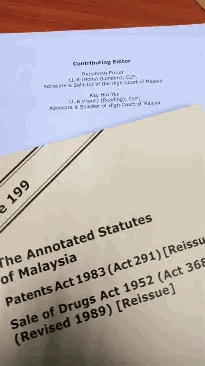


Description
Introduction
The introduction does its job with unusual force for a legal text. It does not pretend the work is merely a neutral reproduction of statute. It tells the reader, right away, that this is a system: offence creation, prevention, intelligence gathering, reporting obligations, investigation, freezing and forfeiture, terrorism-financing controls, schedules, and subordinate regulations. That breadth is the first great strength of the work. It understands that anti-money laundering law is never just one offence; it is an architecture of surveillance, compliance, enforcement, and asset deprivation.
What works especially well is the way the introduction frames the Act as part of a larger international and administrative order. The references to FATF conformity, mutual assistance, foreign cooperation, and the dense field of subsidiary orders make clear that the law lives through networks, not in isolation. That gives the work seriousness and scale. Its weakness is also visible here: the opening pages become crowded with lists of orders, amendments, and invocations. For a practitioner, that density is useful. For a reader trying to grasp the argument of the statute, it is heavy and a little exhausting. The introduction is informative, but not elegant. It is more inventory than overture.
Part I — Preliminary (sections 1–3)
Section 1 is modest on the surface, but the review material around it shows the book’s method very clearly. The text never treats naming or commencement as clerical trivia. It uses even a short provision to explain legislative identity, statutory evolution, and institutional intent. That is one of the book’s virtues: it takes formal clauses seriously.
Section 2 is where the work first becomes conceptually sharp. The Act’s reach is retrospective and extra-territorial, and the commentary does not soften that. It foregrounds the legal and philosophical boldness of a statute willing to attach itself to acts before commencement and to property outside the jurisdiction. That gives the book real argumentative energy. It is not just explaining what the law says; it is showing the kind of power the law claims. This is one of the strongest early sections because it exposes the central tension of the whole work: anti-money laundering law is built on the belief that ordinary territorial and temporal limits are inadequate to financial crime.
Section 3 is the engine room. The definitions are not decorative; they are the entire theory of the statute in compressed form. “Property,” “unlawful activity,” “reporting institution,” “foreign serious offence,” “dealing,” and especially “money laundering” are drafted with sweeping functional breadth. The book is at its best when unpacking these terms because it shows how the regime widens liability not just through punishment but through language. A narrow definition would create escape routes; the work understands that the statute closes them pre-emptively. The weakness here is stylistic. The notes are rich, but sometimes too rich. Dictionary-style explanations, long strings of authorities, and definitional layering occasionally make the section feel encyclopedic rather than interpretive. Still, for legal readers, this part is indispensable because everything later depends on it.
Part II — Money Laundering Offences (sections 4–6)
Section 4 is the moral and penal center of the statute. The most important thing the book captures is that the laundering offence stands on its own. The regime does not wait for a full conviction on the underlying predicate crime before attacking the laundering conduct. That is doctrinally important and conceptually revealing. The law is designed to treat financial handling itself as criminally meaningful. The book presents this well, and the commentary gives the provision a practical edge by connecting it to real prosecutorial logic. The section is forceful because it shows laundering as a second-order crime with first-order seriousness.
Section 5, on informers and protected disclosure, is a necessary companion to section 4. Once the law criminalizes concealment and suspicious handling, it must reward or at least shield disclosure. The work understands this balance. It explains that anti-money laundering enforcement depends not only on police power but on protected leakage from within institutions and transactions. The book’s treatment of this section is careful and persuasive.
Section 6 extends that protective logic by criminalizing revelation of disclosures and the identities of disclosers. Here the work is strongest in showing that secrecy in this statute is not incidental; it is operational. The regime protects confidentiality not out of abstract privacy principle but to preserve the effectiveness of enforcement. The only limitation of this part is that it can feel repetitive because the themes of disclosure, secrecy, and immunity recur in slightly varied forms. But substantively, this is a strong and coherent triptych: offence, disclosure, protected confidentiality.
Part III — Financial Intelligence (sections 7–12)
This is where the statute stops looking like ordinary criminal law and starts looking like a modern financial-governance regime. Section 7 creates the competent authority. Section 8 gives it analytical and coordinating functions. Together they reposition the law away from courtroom reaction and toward administrative intelligence. That shift is one of the work’s deepest achievements. The book grasps that money laundering is not merely punished after the fact; it is mapped, processed, and filtered through institutional intelligence.
Sections 9 and 10 make information-sharing the lifeblood of the system. Access by enforcement agencies, the Attorney General, and foreign corresponding authorities shows the statute’s practical realism. Financial crime moves across institutional and national lines, so the law must too. The work handles this well. It makes international exchange feel like a structural necessity rather than an optional add-on.
Sections 11 and 12 then create the counterweight: prohibited disclosure and permitted disclosure. That pairing is intelligently placed. The text understands that information regimes fail if data either stagnates or spills. So the law builds channels, locks, and exceptions. The reviewable strength here is conceptual symmetry. The weaker side is readability. This part is administratively subtle but not especially vivid, and the commentary sometimes inherits that bureaucratic tone. Even so, it is one of the intellectually most important sections of the work because it explains how suspicion becomes usable state knowledge.
Part IV — Reporting Obligations (sections 13–28)
This is the strongest part of the whole work.
Sections 13 and 14 create the operational heart of the regime. Section 13 builds the archive; section 14 activates the archive by requiring reports of suspicious or threshold transactions. The book is excellent here because it understands that anti-money laundering law lives or dies at the reporting stage. If suspicious behaviour is never recorded or transmitted, the rest of the statute is ornamental. The discussion of structuring, threshold avoidance, and suspicious transaction reporting is one of the most practically intelligent parts of the work. It shows how the law confronts not just criminal acts, but evasive transaction design.
Section 15 is brief and almost dry, but the book handles it honestly. Centralization of information is presented as technical, because it is technical. Yet that very dryness matters: this section reveals how much of AML law is administrative plumbing. It is not dramatic, but it is essential.
Section 16 is one of the best-commented provisions in the entire text. The ban on anonymous or false-name accounts, the duty of identity verification, and the move toward true beneficial ownership make this section the practical face of customer due diligence. The work becomes especially strong when it links these duties to broader banking standards and negligence principles. That is sophisticated writing. It shows that AML compliance is not an alien body grafted onto finance; it is an intensified form of prudential responsibility. Section 17 on retention of records and section 18 on false names reinforce that logic well.
Section 19, on compliance programmes, is perhaps the most modern provision in the statute, and the book correctly treats it as more than internal housekeeping. This section moves anti-money laundering responsibility from law-enforcement agencies into institutions themselves. It creates a culture of internal surveillance, training, managerial accountability, and audit. That is a major conceptual shift, and the book reads it correctly. Sections 20, 21, and 22 then strip away secrecy barriers, impose regulatory oversight, and create enforcement teeth. The progression is excellent: duties, systems, oversight, sanctions.
Section 23 is interesting because it exposes the distance between legislative ambition and implementation. Border currency reporting is a classic AML measure, but the commentary makes clear that its effectiveness depends on activation and specification. That honesty is valuable. It reminds the reader that statutes are not self-executing.
Sections 24 to 28, covering protection for reporters, examinations, compelled appearance, and destruction of examination records, are less conceptually glamorous but very important. They show that the reporting regime is not a mere moral request; it is auditable, enforceable, and document-heavy. If there is one criticism of Part IV as a piece of legal writing, it is that it occasionally becomes repetitive because so many provisions repeat the pattern of duty, examination, non-compliance, and protection. But that is also why this part works. It is repetitive because it is building a compliance machine.
Part V — Investigation (sections 29–43)
Part V is where the work becomes visibly coercive. Sections 29 and 30 establish the investigative gateway and the appointment of investigating officers. Sections 31 to 33 then hand those officers extensive powers over premises, persons, records, and questioning. The book is clear, direct, and practically minded in presenting these powers, but this is also where a deeper civil-liberties critique would have strengthened the work. The annotations explain the breadth of the powers; they do not always interrogate the constitutional unease those powers generate.
Section 34 on obstruction and section 35 on tipping-off are logical protective walls around the investigation. Section 35 is especially important and the work handles it well. The provision is drafted broadly enough to criminalize prejudicial disclosure, but it also preserves a space for legal advice and litigation privilege, while excluding disclosures made for illegal purposes. That is a tight and careful provision, and the commentary usefully shows both its necessity and its danger. It is one of the best examples in the book of how the statute tries to control information without totally destroying professional privilege.
Sections 36 to 40 deal with the gritty mechanics of investigation: translation, compelled delivery, seizure, release, and evidentiary admissibility. These are not memorable as prose, but they are effective as a legal toolkit. Sections 41 to 43 close the part by embedding arrest power and official status. As a whole, Part V is impressive in scope and prosecutorial usefulness. Its weakness is tonal: once the statute reaches this stage, the work begins to read less like a reflective legal text and more like an enforcement manual. That may be exactly what a practitioner wants, but it does narrow the intellectual range.
Part VI — Freezing, Seizure and Forfeiture (sections 44–66)
This is the most formidable and most controversial part of the work.
Section 44 is one of the book’s most important sections because it reveals the regime’s real strategic priority: immobilize property early. The commentary is strong here precisely because it does not hide the severity of the power. A freezing order can reach broadly, operate quickly, and interfere deeply with the target’s economic life. The notes draw out the analogy to a freezing injunction and also gesture toward constitutional anxieties around burden-shifting, fairness, and the presumption of innocence. That makes this one of the most intellectually alive parts of the book. The law here is not merely technical; it is a statement about the state’s willingness to act first against assets and sort out guilt later.
Sections 45 and 46 move from freezing to seizure of movable property; section 50 adapts the logic to property in financial institutions; section 51 covers immovable property; section 52 reaches into businesses as ongoing enterprises. The work is very good at showing how comprehensive the asset-control framework is. It is not content with cash. It reaches accounts, land, businesses, and documentary control. Sections 47 to 49 are also significant because they cut into zones usually protected by confidentiality and institutional autonomy.
Sections 53 and 54 prevent external dissipation and void dealings after seizure. These provisions are crucial because they address the obvious defensive move of any target: move, hide, transfer, restructure. The statute anticipates evasion structurally, and the book correctly presents this as one of its governing logics.
Section 55, forfeiture upon prosecution, is powerful enough. Section 56, forfeiture where there is no prosecution, is the real hinge of the regime. This is where the book becomes genuinely important as a legal text, because it recognizes how radical non-conviction-based forfeiture is. The law allows the Public Prosecutor to seek forfeiture of frozen or seized property even without prosecution or conviction, and the court applies the civil standard to core property questions. That is not a procedural side-note. It is the statute’s deepest reconfiguration of ordinary criminal assumptions. The book is right to treat this with gravity. This section alone explains why AML law often feels less like classic criminal law than like a hybrid of criminal suspicion and civil recovery.
Section 57 is, to my mind, the harshest provision in the whole work. It protects the validity of freeze, seizure, or sale despite objections to manner, place, person, notice, or even procedural non-conformity. As law, it is brutally state-protective. As a piece of legal drafting, it is revealing: efficiency is privileged over procedural vulnerability. The commentary sees the breadth of this, and it should. If one were looking for the point at which the regime most clearly risks over-insulation from challenge, this is it.
Sections 58 to 62 are administrative but important. They answer the inevitable question: once property is forfeited, who holds it, how is title dealt with, what about encumbrances, what about innocent parties, what happens next? Sections 63 to 66 on absconders and death are also telling. They ensure continuity of proceedings regardless of the target’s presence or survival. That is legally coherent within the statute’s logic, but it also confirms the shift from person-centered guilt to property-centered control.
As a whole, Part VI is the conceptual center of the book. It is also the part that most clearly demands critical reading. The book is strongest when it acknowledges that this regime is effective precisely because it departs from ordinary criminal assumptions. It is weakest when it sometimes lets that departure appear merely technical rather than jurisprudentially transformative.
Part VIA — Suppression of Terrorism Financing Offences and Freezing, Seizure and Forfeiture of Terrorist Property (sections 66A–66F)
This inserted part changes the temperature of the work. Part VI is aggressive. Part VIA is aggressive plus security-driven.
Section 66A supplies the vocabulary. Section 66B is the real instrument: specified entities may be declared, their property frozen, dealings prohibited, support criminalized, and disclosure duties triggered. The book does a very good job explaining that a “specified entity” can be a group, business, charity, or individual. That breadth matters because it shows how anti-terror financing law dissolves the line between overtly violent organizations and legally recognizable bodies with other formal identities.
Section 66C is especially significant because it domesticates Security Council measures. The commentary’s most valuable insight here is the distinction between the discretionary domestic designation logic of section 66B and the effectively mandatory international implementation logic of section 66C. That is exactly the sort of insight a good reviewable legal work should surface. It shows the reader where domestic administrative judgment ends and international obligation begins. Sections 66D and 66E deepen the reporting and secrecy apparatus; section 66F preserves continuity with earlier counter-terror financing orders.
The strength of this part is clarity about machinery. The weakness is a relative lack of sustained procedural skepticism. Ministerial discretion, secrecy, designation, and continuing review are all present, but the work could have pushed harder on the question of safeguards. Even so, this is one of the most valuable parts of the text because it explains how terrorism financing law is grafted onto a money laundering framework without simply repeating it.
Part VII — Miscellaneous (sections 67–93)
Calling this part “miscellaneous” understates how important it is. This is where the statute consolidates its evidentiary, jurisdictional, regulatory, and penalty architecture.
Sections 67 and 68 continue the property-and-information logic of the earlier parts. Section 69 on agent provocateur is especially revealing. It makes clear that the statute is willing to lower traditional suspicion toward undercover evidence in service of enforceability. Section 70, which applies the balance of probabilities to many factual determinations while preserving the prosecution’s burden where criminal guilt must be proved, captures the hybrid nature of the whole regime: part criminal, part civil, part administrative. That hybridity is one of the book’s central insights, even when it is not named as such.
Sections 71 to 76 create a notably state-friendly evidentiary environment: documentary evidence, accused statements, statements of unavailable persons, translations, foreign-law proof, and proof of conviction or acquittal are all made more usable. As law, this is efficient. As legal philosophy, it tilts hard toward admissibility and prosecutorial practicality. The book recognizes that tilt, though again it could have pressed harder on fairness concerns.
Sections 77 to 85 protect officers, preserve secrecy, allow exemptions and modifications, confirm jurisdiction, authorize guidelines, regulations, and schedule amendment. These provisions may feel administrative, but they are actually what make the statute durable. They permit adaptation without constant legislative reconstruction. Section 79 on preservation of secrecy and section 80 on exemptions are particularly telling: the regime protects its information while also reserving room to relax burdens selectively.
Sections 86 to 93 close the Act with a prosecutorial finish: general offences, official-capacity liability, individual liability, document falsification, seizable offences, joinder, compounding, and Public Prosecutor control over prosecutions. This ending is not elegant, but it is effective. It leaves little doubt that the statute wants to be enforceable at every seam. If Part VII has a weakness, it is literary rather than legal. It reads like a toolbox drawer rather than a culminating chapter. But as statute design, that may be exactly the point.
Schedules and appended regulatory material
The First Schedule is one of the work’s quiet triumphs because it reveals the statute’s real sociology. Money laundering risk is not confined to banks. The schedule reaches lawyers, accountants, gaming operators, money-changers, moneylenders, pawnbrokers, estate agents, unit trust managers, remittance services, and other actors. That makes the book broader and more intelligent than a bank-centered AML manual. The Second Schedule performs the corresponding task on the offence side: it anchors laundering to a wide predicate-offence universe.
The appended reporting regulations are also a smart inclusion. They show the law crossing from statute into operating procedure: suspicious transaction reports, customer due diligence, and maintenance of records. That matters because AML law is only half-understood if one stops at the Act itself. The work’s inclusion of these materials makes it more usable and more honest about how the regime actually functions. The downside is density. The back-end material is rich, but it would be easier to use if the work offered more synthesis tables and less reliance on long legislative accumulation.
Final assessment
This is a strong, serious, and practically valuable legal work. Its greatest achievement is structural clarity: it shows that anti-money laundering law is not one offence but a chain of linked powers—definition, reporting, intelligence, investigation, restraint, forfeiture, secrecy, and institutional compliance. Its best parts are Part IV and Part VI, because that is where the work most clearly understands the living core of the regime: institutions are turned into sensors, and property is turned into the primary target.
Its strongest qualities are breadth, doctrinal seriousness, and practical usefulness. It is especially good at cross-referencing related provisions, drawing on comparative material, and exposing how reporting and forfeiture actually work. It also deserves credit for not pretending that retrospectivity, extra-territoriality, civil-standard forfeiture, and designated-entity freezing are minor features. Those are the regime.
Its weaknesses are mostly in form and balance. The prose can become overburdened with dictionary-style notes and long authorities. Some parts read more like a compendium than an argued legal book. The text is sometimes more comfortable cataloguing power than critically testing it. A stronger synthesizing voice—especially at the end of each Part—would make the work not just useful, but more authoritative as interpretation.
My overall judgment is that this is an impressive annotated legal text and a very effective practitioner’s book. It is not elegant in the literary sense, but it is exacting, wide-angled, and materially useful. More importantly, it understands the real character of AML law: this is not merely criminal prohibition. It is a regime of managed suspicion, compelled visibility, and asset control. Your work sees that clearly, and that is why it has real weight.
- MALAYSIA'S 1ST AI LAWYER - CLICK HERE
- ISMAIL – INTEGRATED SINGAPORE/MALAYSIA AI & LAW (Library)
- OPENING OF SINGAPORE MALAYSIA AI CENTRE AND LAW LIBRARY
- LIFT - LAW INSTRUMENTS FORMS & TEMPLATES
- LAWS OF MALAYSIA FOR SINGAPOREAN DUMMIES
- HANNAH YEOH'S ARTIFICIAL INTELLIGENCE LAW ENCYCLOPEDIA
- LEAD CR - Law Ecosystem Archive Databases on CD-ROM
- BREAKING NEWS FROM MJN
- CLICK HERE CO. PROFILE
- EXCITING NEW SERIES - THE ADVENTURES OF BOBBY TAN -ADVOCATE & SOLICITOR IN THE HIGH COURT OF NORTH BORNEO by marceljude.ai
- MEDICO LEGAL - BY PRISKILA AKWILA & GLORIOUS PETAL SDN BHD - powered by marceljude.ai
- MISCELLANOUS
- ANNOTATED STATUTES OF SABAH - A NEW SERIES
- e-library - marceljude.ai
- DRAFT - DOCUMENT RESEARCH & AUTOMATED FILING TECHNOLOGY
- CLARA – Case Law Analysis & Retrieval AI
- FOR RESEARCH REQUEST CLICK HERE
- CLICK HERE TO ASK ANYTHING
- RAMBO'S LAW - THE LAW OF THE LAW JUNGLE - EXCITING NEW SERIES - CASE ANALYSIS BY JOHN RAMBO @ +60138646786
- PRISKILA AKWILA ADVOCATES - High Court of Sabah & Sarawak @ Kota Kinabalu
- COLA - COMMONWEALTH ONLINE LAWCASES AI -marceljude.ai
- THE LAW LIBRARY THAT COMES TO YOU ANYWHERE AND ANYTIME
- marceljude.ai training academy
