
CLUBS - HALSBURY'S LAWS OF ENGLAND
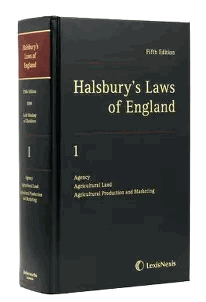


Description
Halsbury’s Laws of England: Clubs
Review by marceljude.ai
Overall review
This is not a conventional narrative book. It is a tightly organized legal digest on the law of clubs, and its real achievement is structural. It moves in a deliberate order: first, what a club is and how it is governed internally; second, how it stands in relation to outsiders; third, how it ends. That architecture gives the work unusual clarity.
The book’s central insight is that “club” is not one legal thing. A members’ club, proprietary club, incorporated club, working men’s club, miners’ welfare institute, sports club, learned society, investment club, and mutual insurance club do not sit on the same legal footing. The whole text is built around that distinction, and that is why it works so well. It never lets the reader forget that classification drives liability, property, procedure, taxation, and dissolution.
As writing, it is dense, formal, and case-led. It is not designed for leisurely reading. It is designed for precision. That makes it demanding for a casual reader, but highly effective for a lawyer, student, club committee member, secretary, trustee, or proprietor. Its biggest strength is doctrinal discipline. Its biggest weakness is that it often gives the rule without pausing long enough to explain the wider policy or social context.
Chapter 1 — Constitution, Management and Property
This is the strongest chapter in the work because it lays down the legal grammar for everything that follows.
1) Nature of clubs and special legislation
The opening section is excellent. It defines the club as a private association formed for lawful non-trading purposes, while allowing incidental trading. It then draws an important line: courts do not normally manage club affairs as such, but they will intervene on questions of law, power, and property. That balance between private autonomy and legal supervision becomes the book’s recurring theme.
It also smartly shows that clubs are never isolated from public regulation. Once a club deals with alcohol, entertainment, gambling, firearms, copyright, or charitable recreation, wider statutory regimes apply. That is a strong opening because it stops the reader from imagining the club as a sealed private world.
2) Types of clubs
This is probably the book’s best section. The classification is not decorative; it is the engine of the whole text. The distinction between unincorporated members’ clubs, incorporated members’ clubs, proprietary clubs, working men’s clubs, miners’ welfare institutes, community amateur sports clubs, learned societies, investment clubs, and mutual insurance clubs explains why later rules differ so sharply.
The treatment of the unincorporated members’ club is especially strong. The book insists that such a club has no separate legal existence apart from its members, that its property is typically held for the members collectively, and that internal supply to members is not simply the same as ordinary commercial sale. That point quietly underpins much of the rest of the book.
The contrast with proprietary clubs is handled just as well. In a proprietary club, the assets belong to the proprietor and the members’ rights are contractual. That shift changes almost everything: control, remedies, licensing position, and property analysis. The section on sports clubs is also valuable because it shows how tax and public-regulatory consequences connect back to constitutional form.
3) Rules and byelaws
This section explains the constitution of a club with real clarity. The rules are shown not as mere etiquette but as the legal framework for admission, subscriptions, meetings, management, expulsion, guests, dissolution, and asset distribution. The key idea is that the rules are part of the contractual framework binding the members, and in proprietary clubs they also regulate the relationship with the proprietor.
The discussion of interpretation is one of the best parts of the chapter. The book makes clear that committees cannot make themselves the final judges of legality. Courts retain the power to interpret rules as a matter of law. At the same time, the text recognizes the informality of club life and accepts that reasonableness and common sense sometimes matter as much as literalism. That is a subtle and well-balanced analysis.
The treatment of rule changes is also impressive. It shows that amendment powers are real, but not arbitrary: process matters, notice matters, retrospectivity is suspect, and changes must remain compatible with the club’s basic objects. The brief material on registered working men’s clubs and byelaws reinforces the point that some club forms live under stricter procedural regimes than ordinary private clubs.
4) Membership
This is the emotional and constitutional center of the book. Admission, fees, subscriptions, member rights, resignation, expulsion, suspension, and dispute resolution all appear here, and together they show that membership is a structured legal status, not just a social privilege.
The admission material is practical and exact. The book explains nomination, seconding, ballot, categories of membership, and the contractual importance of payment. It also brings in anti-discrimination rules, which is one of the places where the text most clearly shows that private associational freedom is not absolute.
The expulsion section is among the finest in the book. It states the core rule with precision: there is no inherent power to expel. The power must come from the rules. Once it exists, it must be exercised strictly in accordance with those rules, in good faith, with fair notice, a fair hearing, and proper grounds. The book is very strong here because it captures the quasi-constitutional character of club discipline: a private body, but one constrained by fairness.
The remedies discussion is equally important. In members’ clubs, wrongful expulsion can support declarations and injunctions; in proprietary clubs, the remedy sounds more in contract and damages. Suspension is treated as a lesser but still penal form of exclusion, and the book is right to extend fairness principles there too.
5) Management, meetings and staff
This is a less dramatic section, but one of the most practically useful. It deals with committees, secretaries, stewards, treasurers, trustees, borrowing, notices, meetings, staff, and auditors. What it does especially well is expose the legal risk hidden inside informality. Clubs may operate socially, but the law asks formal questions: who had authority, who was properly notified, who can borrow, who can bind the club, who is personally exposed?
The committee discussion is sharp: committee power comes from rules, not vague habit. The treatment of trustees is also valuable, especially the point that trustees may hold property for the members but are not automatically entitled to a personal indemnity from individual members. That is a subtle warning with real practical force.
The borrowing section is one of the most useful in the whole work. The book shows that unincorporated clubs do not simply “have” a power to borrow because borrowing seems necessary. Authority must come from the rules or unanimous consent. The material on debentures is technical, but it is exactly the kind of technicality that decides real disputes.
6) Club property
This section asks the most revealing question in club law: who owns what? In non-proprietary clubs, property belongs collectively to members, typically through trustees. In proprietary clubs, it belongs to the proprietor. That contrast is simple, but it drives much of the later law.
The use-of-premises material is especially strong because it broadens the inquiry beyond ownership. The book pulls together safety, alienation of club property, planning, nuisance, entertainment, gambling, alcohol, smoking rules, and accessibility for disabled members and guests. This is one of the book’s strongest syntheses. It shows that club premises are not just private rooms; they are legally regulated spaces.
Chapter 2 — Clubs and Their Members in External Relations
This chapter is where the book’s structure becomes especially impressive. After the long examination of internal governance, it turns outward and asks how clubs face the rest of the legal world.
1) Position in contract as regards third persons
This is arguably the most practically important section in the book. It dismantles the common fiction that an unincorporated club can simply contract as “the club.” Because such a club is not a legal entity, the real questions are about agency: who contracted, with what authority, and on whose behalf?
The book is excellent on this. Trustees, committee members, secretaries, stewards, and other officials do not automatically have power to pledge the credit of members. Authority must be express, implied from the rules, ratified, or supported by holding out. That is hard doctrine, but the book explains it cleanly.
The discussion of officer and committee liability is just as strong. Those who contract in their own names, or beyond their authority, may be personally liable. This is the book at its most practically valuable because it shows exactly where informal club management turns into personal legal exposure.
2) Position in tort as regards third persons
This section is shorter, but effective. Proprietary and incorporated clubs are treated through ordinary principles of occupiers’ liability, vicarious liability, and nuisance. The book makes the core point clearly: clubs do not escape ordinary tort rules simply because they are clubs.
Compared with the contract section, this part is more compressed. It is sound, but a little skeletal. That is one of the few places where the book feels more like a doctrinal outline than a fully developed analysis.
3) Criminal liability
This section is stronger than many readers may expect. It rejects any idea that club life softens criminal responsibility. Members may commit theft of club property. Members and officers can commit offences involving alcohol, minors, gambling, false statements, smoking restrictions, and other regulated conduct. The book also pays close attention to attribution: not just what offence exists, but who is legally responsible.
That focus on attribution is one of the best features of the chapter. In club law, responsibility is often blurred by committees, officers, and collective action. The book does a good job of cutting through that blur.
4) Civil proceedings
This is a concise but extremely useful litigation map. The book makes the procedural position plain: an unincorporated members’ club generally cannot sue or be sued in the club name; representative proceedings may be required; proprietary clubs proceed through the proprietor; incorporated clubs through the corporate entity; special statutory club forms may have their own routes.
It is not a flashy section, but it is one of the most useful. Procedure is often where club disputes become confused, and this chapter clears that up quickly.
5) Taxation and rating
This is one of the quiet strengths of the whole work. The book reminds the reader that club law is not only about governance and discipline; it is also about money. The treatment of mutuality is especially good. Members’ clubs are not ordinarily taxed on truly mutual dealings with members, but transactions involving non-members can break that logic. Proprietary clubs are treated as trading enterprises. Investment clubs depend on structure. VAT may apply to subscriptions and club trading. Rating relief may assist some non-profit or sports uses.
This section is compact, but economically realistic. It shows that club form has fiscal consequences, not just constitutional ones.
Chapter 3 — Dissolution of Clubs
This final chapter is a strong ending because it forces all the earlier distinctions to produce real consequences.
1) Unincorporated members’ clubs and unregistered working men’s clubs
This section is very good. It shows both judicial restraint and practical flexibility. Courts will not usually interfere if the rules provide a workable dissolution mechanism, but they can intervene where continuation is impossible or impracticable. The book is also clear on the usual destination of surplus assets: after liabilities are discharged, the residue is generally shared among current members, subject to the rules.
That point matters because it confirms the book’s deeper thesis that a non-proprietary club is a mutual association whose assets are collectively held until dissolution makes individual shares visible.
2) Proprietary clubs
The treatment is brief but exact. In a proprietary club, closure follows the proprietor’s position, and the members’ claims are contractual rather than ownership-based. The book’s consistency is one of its strengths: once property lies with the proprietor, dissolution looks different.
3) Incorporated clubs
This subsection is short because it can afford to be. Once a club is incorporated, dissolution follows the law of the relevant corporate form. The brevity works. The text knows when club-specific analysis ends and general corporate law takes over.
4) Registered working men’s clubs
This section keeps faith with the book’s classification method. Registered working men’s clubs have specific statutory routes for dissolution, and the book properly treats them as legally distinct rather than folding them back into ordinary members’ clubs.
5) Investment clubs
The discussion is brief, but coherent. Because the book has already suggested that investment clubs resemble partnerships more than true clubs, it is logically consistent to say their rules should provide expressly for winding up.
6) Learned societies and similar institutions
This is one of the most interesting parts of the dissolution chapter. On dissolution, residual property does not simply go back to members; it must go to a kindred institution. That reveals a different legal logic from that of the ordinary mutual club. It is a strong example of the book’s refusal to over-generalize.
7) Where a club may have ceased to exist
This is a very effective closing section. If a club has truly ceased to exist and property remains, that property may pass as bona vacantia. But if the club is merely dormant and members remain, winding up can still be arranged. It is a fitting ending because it asks the most basic question of all: when is the association actually gone?
Final judgment
This is an excellent legal reference work. Its greatest strength is conceptual discipline. It never loses sight of the fact that club law is really the law of associations, property, agency, contract, regulation, procedure, and dissolution seen through one institutional form.
Its main weakness is stylistic rather than doctrinal. It is compressed, formal, and not especially generous to beginners. Some sections, especially tort and civil procedure, feel more skeletal than the richer internal-governance material. But even that reflects the book’s purpose: it is meant to be consulted, not admired for literary flourish.
My overall verdict is this: as a general-interest read, it is demanding; as a legal handbook on clubs, it is first-rate. Its best material is the classification of clubs, the membership and expulsion analysis, the contract section on external relations, and the final dissolution chapter. Together, they show a text with a very clear governing idea: clubs may look socially informal, but in law they are highly structured institutions.
- MALAYSIA'S 1ST AI LAWYER - CLICK HERE
- ISMAIL – INTEGRATED SINGAPORE/MALAYSIA AI & LAW (Library)
- OPENING OF SINGAPORE MALAYSIA AI CENTRE AND LAW LIBRARY
- LIFT - LAW INSTRUMENTS FORMS & TEMPLATES
- LAWS OF MALAYSIA FOR SINGAPOREAN DUMMIES
- HANNAH YEOH'S ARTIFICIAL INTELLIGENCE LAW ENCYCLOPEDIA
- LEAD CR - Law Ecosystem Archive Databases on CD-ROM
- BREAKING NEWS FROM MJN
- CLICK HERE CO. PROFILE
- EXCITING NEW SERIES - THE ADVENTURES OF BOBBY TAN -ADVOCATE & SOLICITOR IN THE HIGH COURT OF NORTH BORNEO by marceljude.ai
- MEDICO LEGAL - BY PRISKILA AKWILA & GLORIOUS PETAL SDN BHD - powered by marceljude.ai
- MISCELLANOUS
- ANNOTATED STATUTES OF SABAH - A NEW SERIES
- e-library - marceljude.ai
- DRAFT - DOCUMENT RESEARCH & AUTOMATED FILING TECHNOLOGY
- CLARA – Case Law Analysis & Retrieval AI
- FOR RESEARCH REQUEST CLICK HERE
- CLICK HERE TO ASK ANYTHING
- RAMBO'S LAW - THE LAW OF THE LAW JUNGLE - EXCITING NEW SERIES - CASE ANALYSIS BY JOHN RAMBO @ +60138646786
- PRISKILA AKWILA ADVOCATES - High Court of Sabah & Sarawak @ Kota Kinabalu
- COLA - COMMONWEALTH ONLINE LAWCASES AI -marceljude.ai
- THE LAW LIBRARY THAT COMES TO YOU ANYWHERE AND ANYTIME
- marceljude.ai training academy
