
Confidential Information Law in Malaysia Cases and Commentaries by Dr Juriah Abdul - marceljude.ai
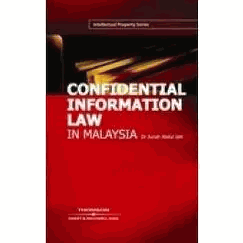


Description
Book Review of Confidential Information Law in Malaysia: Cases and Commentaries by Dr Juriah Abdul
Review by MarcelJude.ai
I read the book closely. It is a doctrinal, case-centred legal commentary on Malaysian confidential information law, using English, Australian, Singaporean, and Malaysian authorities to explain how courts define, protect, limit, and remedy breaches of confidence. The book’s central thesis is that confidential information law is not merely an intellectual property offshoot; it is an equitable and practical legal tool for protecting trade secrets, personal secrets, artistic and literary confidence, governmental secrecy, employment-related information, and privacy-linked interests. The author notes that Malaysian writing on this field has been limited, even though the area is important for commerce, information technology, and public administration.
List of Contents
Dedication — page vii
Preface — page ix
Acknowledgment — page xi
Table of Cases — page xvii
Table of Statutes — page xxi
Chapter One: Confidential Information — page 1
1.0 Introduction — page 1
1.1 Meaning of confidential information — page 1
1.2 Commentaries — page 13
Summary — page 14
Chapter Two: Classification of Confidential Information — page 17
2.0 Introduction — page 17
2.1 Trade secrets — page 17
2.2 Personal confidence — page 27
2.3 Artistic and literary confidence — page 38
2.4 Governmental secrets — page 41
2.5 Commentaries — page 44
Summary — page 44
Chapter Three: The Scope of Protection — page 45
3.0 Introduction — page 45
3.1 Defining the scope — page 45
3.2 Information already in public domain — page 48
3.3 Immoral information — page 50
3.4 Iniquity — page 56
3.5 Ideas for commercial purposes — page 58
3.6 Information obtained from reverse engineering process — page 60
3.7 Commentaries — page 61
Summary — page 63
Chapter Four: Basis of Action for Confidential Information — page 65
4.0 Introduction — page 65
4.1 Common law right of property in information — page 65
4.2 Equity — page 67
4.3 Contract — page 72
4.4 Commentaries — page 75
Summary — page 77
Chapter Five: Components for Breach of Confidential Information — page 79
5.0 Introduction — page 79
5.1 Components of breach — page 79
5.2 The information must be of confidential nature — page 83
5.3 Obligation of confidence — page 84
5.4 Detriment — page 88
5.5 Civil liability in disclosing information — page 89
5.6 Commentaries — page 94
Summary — page 97
Chapter Six: Employer and Employee Relationship — page 99
6.0 Introduction — page 99
6.1 Duty of fidelity and good faith — page 99
6.2 Breach of fiduciary duty — page 112
6.3 Commentaries — page 122
Summary — page 126
Chapter Seven: Misappropriation of Confidential Information — page 127
7.0 Introduction — page 127
7.1 Confidential information surreptitiously stolen — page 127
7.2 Confidential information improperly taken through telephone tapping — page 130
7.3 Confidential information taken without authority to disclose iniquity for public interest — page 142
7.4 Commentaries — page 158
Summary — page 159
Chapter Eight: Liability of Third Person — page 161
8.0 Introduction — page 161
8.1 Liability of a third person entrusted with possession of confidential information — page 161
8.2 The liability of third party who innocently receives confidential information — page 163 8.3 Commentaries — page 166
Summary — page 167
Chapter Nine: Defence — page 169
9.0 Introduction — page 169
9.1 Public interest — page 169
9.2 Public interest defence in Malaysia — page 197
9.3 Restraint of trade — page 203
9.4 Restraint of trade in Malaysia — page 205
9.5 Commentaries — page 206
Summary — page 208
Chapter Ten: Remedies — page 209
10.0 Introduction — page 209
10.1 Injunction — page 209
10.2 Damages — page 253
10.3 Anton Piller order — page 258
10.4 Delivery up — page 265
10.5 Account of profit — page 270
10.6 Commentaries — page 286
Summary — page 288
Chapter Eleven: Privacy and Confidential Information — page 289
11.0 Introduction — page 289
11.1 Wedding photographs taken without authorisation — page 289
11.2 Sexual activity — page 307
11.3 Patient privacy and confidentiality — page 326
11.4 Commentaries — page 339
Summary — page 341
Chapter Twelve: Administrative Secret — page 343
12.0 Introduction — page 343
12.1 Cabinet documents and proceedings — page 343
12.2 Publication of illegal activities of security service — page 354
12.3 Government information concerning relations with other countries — page 369
12.4 Position in Malaysia — page 380
12.5 Commentaries — page 407
Subject Index — page 409
Overall Review of the Book
As a law professor, I would describe this book as a functional and litigation-oriented doctrinal guide. Its greatest strength is that it does not treat confidential information as an abstract concept. Instead, it studies the subject through disputes: employees leaving with customer lists, companies misusing technical information, journalists publishing private material, governments seeking to restrain publication, and courts balancing secrecy against public interest.
The book is especially valuable because it places Malaysian law inside a wider common-law framework. Malaysian authorities such as Electro Cad Australia Pty Ltd v Mejati RCS Sdn Bhd, Schmidt Scientific Sdn Bhd v Ong Han Suan, Yeohata Industries Sdn Bhd v Coil Master Sdn Bhd, Stamford College Group Sdn Bhd v Raja Abdullah Raja Othman, and Public Prosecutor v Lim Kit Siang are read alongside English, Australian, and Singaporean cases. That comparative method is useful because confidential information law in Malaysia is heavily influenced by equitable common-law principles.
The book’s intellectual centre is the equitable maxim that a person who receives information in confidence must not take unfair advantage of it. From that idea, the author builds the entire legal architecture: definition, classification, scope, cause of action, breach, employment duties, misappropriation, third-party liability, defences, remedies, privacy, and administrative secrecy.
The book is at its strongest in Chapters One, Five, Six, Nine, Ten, Eleven, and Twelve. These chapters explain the operational doctrine: what must be proved, who can sue, what remedies are available, and how courts balance confidentiality against public interest. Its weaker point is that it sometimes relies heavily on long case extracts and less on theoretical synthesis. Still, for legal practice and legal education, that approach has a benefit: students and practitioners can see how courts reason in real factual situations.
Chapter One Review: Confidential Information
Pages 1–15
Chapter One introduces the legal meaning of confidential information. The chapter explains that confidential information can be tangible or intangible. Tangible examples include customer lists, medical information, undisclosed financial reports, formulae, and sales information. Intangible examples include ideas, television programme concepts, plots, marital information, and national security information. The chapter’s key point is that information becomes legally significant when it is secret, valuable, and received in circumstances importing an obligation of confidence.
1.0 Introduction — page 1
The opening section frames information as a modern legal commodity. This is important because confidential information law is not only about privacy or secrecy in a moral sense; it is also about economic power. The author’s discussion anticipates modern problems in technology, data, software, trade secrets, commercial negotiations, and intellectual property.
As a law professor, I would emphasise that this introductory section performs a foundational task: it explains why confidential information deserves legal protection even when it does not fit neatly into copyright, patent, or trademark law. A customer database, an unpatented formula, a pricing structure, or an idea disclosed in negotiations may fall outside classic intellectual property categories but still deserve protection through equity.
1.1 Meaning of confidential information — page 1
This subsection centres on Electro Cad Australia Pty Ltd v Mejati RCS Sdn Bhd. The case involved anti-theft car device technology and information disclosed during negotiations. The Malaysian court treated the technical and commercial information as trade secrets and held that information imparted during negotiations may be protected if the circumstances impose confidentiality. The chapter identifies several factors relevant to confidentiality, including how widely known the information is, how it is guarded, its value to the owner and competitors, the money or effort spent developing it, and the ease or difficulty of independent acquisition.
The chapter also introduces the three classic elements of breach of confidence: the information must be confidential in nature; it must be communicated in circumstances importing an obligation of confidence; and there must be unauthorised use. This is the doctrinal backbone of the entire book.
1.2 Commentaries — page 13
The commentary section stresses that there is no closed category of confidential information. Trade secrets, personal secrets, artistic and literary secrets, and governmental secrets may all be protected. The chapter also highlights the importance of obligation: secrecy alone is not enough. The claimant must show that the recipient was bound, expressly or impliedly, to keep the information confidential.
Chapter One Evaluation
Chapter One is successful because it gives the reader the governing test immediately. Its most important contribution is its use of Electro Cad as a Malaysian anchor. The chapter shows that Malaysian courts are willing to protect technical ideas, commercial strategies, and information disclosed in negotiations. It also introduces the “springboard” idea: a person who receives confidential information cannot use it as a shortcut to gain an unfair commercial advantage.
Chapter Two Review: Classification of Confidential Information
Pages 17–44
Chapter Two classifies confidential information into four major categories: trade secrets, personal confidence, artistic and literary confidence, and governmental secrets. The chapter states that trade secret law is the most developed branch of confidential information law.
2.0 Introduction — page 17
The introduction explains that breach of confidence litigation has arisen across many factual settings. This matters because confidential information is not a single type of property. It may arise in business, marriage, art, government, journalism, employment, medicine, or technology.
2.1 Trade secrets — page 17
This is the most commercially significant part of the chapter. Trade secrets include formulae, methods, techniques, customer lists, names and addresses, business plans, sales data, pricing information, marketing methods, and technical know-how. The author divides trade secrets into technical secrets and business secrets.
2.1.1 Technical secrets — page 18
Technical secrets include recipes, formulae, methods of production, technical specifications, and specialised industrial processes. The chapter discusses cases such as Newbery v James, where secrecy was lost because the formula had already appeared in an expired patent specification. This is doctrinally important: once information enters the public domain, secrecy evaporates.
The author also considers cases where information disclosed in research or product development can be protected. The focus is not merely on the physical product but on the knowledge, testing, method, or process behind it.
2.1.2 Business secrets — page 20
Business secrets include customer information, order books, pricing structures, delivery routes, market information, and business strategies. The discussion of cases such as Robb v Green and Faccenda Chicken v Fowler shows the tension between protecting employers and allowing employees to use their general skill and experience.
The chapter is careful to distinguish protectable secrets from ordinary workplace learning. A former employee may not steal or deliberately memorise confidential customer lists, but the law does not prevent an employee from using general knowledge, skill, and experience honestly acquired.
2.1.3 Recent development of trade secrets — page 26
This subsection is forward-looking. It discusses biotechnology, DNA-related information, computer software, decompilation, encryption, and source code. The book recognises that trade secret law may protect information that patent law does not protect, especially where novelty or patentability is uncertain.
As a law professor, I see this subsection as one of the book’s most prescient parts. It anticipates data-driven disputes and software confidentiality problems that have only become more important.
2.2 Personal confidence — page 27
This subsection examines private relationships, marriage, sexuality, celebrity publicity, private collections, diaries, and photographs. Cases such as Argyll v Argyll, Prince Albert v Strange, Douglas v Hello, Naomi Campbell v Mirror Group Newspaper, and Theakston v MGN are used to show the overlap between confidence and privacy.
The chapter’s key point is that, before privacy became more directly recognised in English law through human-rights reasoning, breach of confidence often served as a substitute for privacy protection.
2.3 Artistic and literary confidence — page 38
This subsection shows that confidence may protect creative ideas before copyright protection is available or before a work is published. Examples include unpublished plots, television concepts, architectural drawings, and artistic material. The legal issue is whether the idea is sufficiently developed and communicated in circumstances of confidence.
2.4 Governmental secrets — page 41
This subsection introduces administrative and public secrets. Government information may be protected, but not automatically. Courts must consider public interest, national security, public domain status, and the age of the information. This subsection prepares the reader for the deeper treatment in Chapter Twelve.
2.5 Commentaries — page 44
The commentary confirms that trade secrets are the most developed category and that privacy remains a difficult and evolving area. It also notes that the government may use breach of confidence as a civil route alongside statutory secrecy offences.
Chapter Two Evaluation
Chapter Two is an excellent classification chapter. It helps students see that confidential information law is not limited to commerce. Its main achievement is showing the breadth of the doctrine while preserving analytical distinctions between trade secrets, personal confidence, artistic confidence, and government secrets.
Chapter Three Review: The Scope of Protection
Pages 45–63
Chapter Three asks a crucial question: what information is protected, and what information is outside the law of confidence? The chapter explains that information must have confidential character, must not be public property or public knowledge, and must not merely be trivial. It also discusses public domain information, immoral information, iniquity, ideas, and reverse engineering.
3.0 Introduction — page 45
The chapter begins by stressing that a claimant must prove the subject matter falls within the law’s protection. Not all information is legally protectable. If information is already widely known, trivial, grossly immoral, or tied to wrongdoing that public interest requires to be exposed, protection may fail.
3.1 Defining the scope — page 45
The central case is Saltman Engineering Co Ltd v Campbell Engineering Co Ltd. The case shows that drawings, plans, and technical material may be confidential even if their components are publicly available, provided the claimant’s skill, labour, and mental effort produced something valuable.
This subsection is doctrinally important because it prevents defendants from saying: “Every part was public, so the whole is public.” The law can protect the confidential combination, arrangement, or application of publicly available material.
3.2 Information already in public domain — page 48
This subsection explains that once information enters the public domain, it generally loses confidentiality. The Spycatcher litigation is central here. The book explains that courts will not protect information that has become generally accessible. But this is a matter of degree: limited disclosure may not destroy confidentiality, while widespread disclosure usually will.
3.3 Immoral information — page 50
The book considers whether immoral or sexual information may be protected. The treatment is nuanced. Information about private sexual conduct may be confidential, but grossly immoral or scandalous material may fall outside protection depending on the circumstances and public policy.
3.4 Iniquity — page 56
This subsection introduces the principle that there is no confidence in wrongdoing. If confidential information reveals fraud, serious misconduct, danger to the public, or other iniquity, disclosure may be justified. The book treats iniquity both as a limit on protection and as a public-interest defence.
3.5 Ideas for commercial purposes — page 58
The chapter explains that ideas may be protected if they are sufficiently developed and communicated in confidence. A vague idea is not enough. A developed concept for a commercial project, television programme, business model, or artistic work may be protectable if the circumstances show confidentiality.
3.6 Information obtained from reverse engineering process — page 60
This subsection discusses the limits of protection in technology. Reverse engineering may defeat a confidence claim where the information is accessible through lawful purchase and analysis of a product. The chapter warns that encryption alone does not automatically make information confidential; there must also be confidentiality and obligation.
3.7 Commentaries — page 61
The commentary stresses precision. A claimant must identify the confidential information specifically. Courts cannot protect vague claims to secrecy. The chapter also notes that information may exist orally, in documents, in drawings, or in combinations of ideas.
Chapter Three Evaluation
Chapter Three is one of the book’s strongest analytic chapters. It moves the reader from classification to limitation. The law of confidence is powerful, but the chapter makes clear that it is not limitless. Public domain, public interest, reverse engineering, insufficient development of ideas, and lack of specificity all operate as safeguards against overprotection.
Chapter Four Review: Basis of Action for Confidential Information
Pages 65–77
Chapter Four examines the legal foundation of the action. The author identifies three possible bases: common law property reasoning, equity, and contract. In employment cases, breach of fidelity and good faith may also be central.
4.0 Introduction — page 65
The introduction explains that confidential information law historically developed uncertainly. Courts used property language, contract language, equitable language, and sometimes tort-like reasoning. This is an important jurisprudential issue: is confidential information property, a contractual obligation, an equitable conscience-based duty, or a tort?
4.1 Common law right of property in information — page 65
The subsection discusses Prince Albert v Strange, where private etchings were protected from unauthorised publication. The chapter shows how property language was historically used to protect unpublished works and private information. However, the author is careful to note that confidential information is not always “property” in the ordinary sense.
4.2 Equity — page 67
This is the conceptual heart of the chapter. Equity imposes duties based on conscience, fairness, and good faith. A person who receives information in confidence cannot use it unfairly against the person who disclosed it. The discussion of Seager v Copydex, Franklin v Giddins, and Fraser v Evans demonstrates that confidential obligations may arise even without a contract.
4.3 Contract — page 72
This subsection explains how contract operates in confidentiality law, especially in employment and business negotiations. Confidentiality clauses, fidelity clauses, non-disclosure agreements, and employment contracts can create express obligations. The author also explains that implied obligations may arise from the nature of the relationship.
4.4 Commentaries — page 75
The commentary recognises that equity became the strongest foundation for confidence actions. The summary states that confidential information claims may be based on contract or equity; in employment cases, both may apply.
Chapter Four Evaluation
Chapter Four is jurisprudentially important. It helps readers understand why breach of confidence is flexible. If protection depended only on contract, strangers or third parties might escape liability. If it depended only on property, intangible information might be hard to protect. Equity supplies the needed flexibility by focusing on conscience and unfair advantage.
Chapter Five Review: Components for Breach of Confidential Information
Pages 79–97
Chapter Five explains the elements required to prove breach of confidence. It is built around Coco v AN Clark (Engineers) Ltd, the classic authority for the three-part test.
5.0 Introduction — page 79
The introduction states that breach of confidence may be based on equity, contract, or property reasoning. But regardless of theoretical foundation, the claimant must prove the core elements: confidential quality, obligation of confidence, and unauthorised use causing detriment.
5.1 Components of breach — page 79
The Coco test is explained in detail. The information must have the necessary quality of confidence; it must be communicated in circumstances importing an obligation of confidence; and it must be used without authorisation. The book also notes that information built from public materials may still be confidential if human skill and ingenuity produce a new confidential result.
5.2 The information must be of confidential nature — page 83
This subsection explains that secrecy is essential. Information in the public domain is not protected. The author links this requirement to trade secrets, personal secrets, artistic secrets, administrative secrets, and other forms of protected information.
5.3 Obligation of confidence — page 84
The obligation may be express or implied. The reasonable-person test is important: would a reasonable recipient understand that the information was given in confidence? This subsection also explains the springboard doctrine, under which a defendant may not use confidential information as a launching platform for unfair advantage.
5.4 Detriment — page 88
The chapter explains that detriment is often required, especially in commercial cases, but some cases suggest it is not always necessary for injunctive relief. This is a sophisticated point. In commercial matters, detriment may be financial loss, loss of competitive advantage, or reputational harm. In personal confidence, detriment may be humiliation, exposure, or loss of privacy.
5.5 Civil liability in disclosing information — page 89
This subsection discusses disclosure compelled by law. The book explains that a person required by legal process to disclose information may not be liable for breach of confidence. This is particularly important for witnesses, bankers, and officials subject to legal duties.
5.6 Commentaries — page 94
The commentary confirms that Malaysian courts have adopted the Coco framework. It also explains that courts consider the recipient’s position, the circumstances of disclosure, and whether an express agreement exists. The book recognises that detriment remains somewhat unsettled because courts do not always require it in the same way.
Chapter Five Evaluation
This is the book’s doctrinal engine. A law student could use Chapter Five as the basic checklist for answering an examination question or drafting a pleading. The strength of the chapter is its insistence that secrecy, obligation, and misuse must be separately analysed.
Chapter Six Review: Employer and Employee Relationship
Pages 99–126
Chapter Six examines one of the most common settings for breach of confidence: the employer-employee relationship. The chapter’s central idea is that an employee owes duties of fidelity, loyalty, good faith, and sometimes fiduciary duties to the employer.
6.0 Introduction — page 99
The introduction explains that employers need protection against ex-employees who misuse confidential information. The chapter recognises that this duty may be express or implied and may continue after employment ends.
6.1 Duty of fidelity and good faith — page 99
This subsection focuses on Schmidt Scientific Sdn Bhd v Ong Han Suan. The case involved former employees who allegedly used confidential customer, supplier, pricing, and product information to compete with their former employer. The book explains that employees must not misuse or disclose confidential information during employment and must not use confidential information after employment ends without consent.
The chapter carefully distinguishes trade secrets from general skill and knowledge. An employee may take personal skill and experience into future employment, but not confidential documents, customer lists, pricing data, or information deliberately copied or memorised to compete unfairly.
6.2 Breach of fiduciary duty — page 112
This subsection discusses fiduciary obligations, especially where senior employees, directors, or trusted employees divert business opportunities or disclose confidential material to a competing enterprise. The Certact case shows that courts may restrain former employees and companies that benefit from wrongful use of confidential business information.
6.3 Commentaries — page 122
The commentary confirms that duty of fidelity applies during employment and can continue after employment for trade secrets and confidential information. However, it does not prevent employees from using general knowledge, skill, and experience. The author also considers restraint of trade and warns that employers must not draft restrictions too broadly.
Chapter Six Evaluation
Chapter Six is highly practical. It would be useful for employment lawyers, commercial litigators, and companies drafting confidentiality clauses. The chapter’s best feature is its balance: employers deserve protection against unfair competition, but employees retain the right to earn a living using honest skill and experience.
Chapter Seven Review: Misappropriation of Confidential Information
Pages 127–159
Chapter Seven examines wrongful acquisition of confidential information, including theft, surreptitious copying, telephone tapping, and disclosure of information to expose wrongdoing.
7.0 Introduction — page 127
The introduction frames misappropriation as a practical risk. Confidential information may be stolen, copied, intercepted, or obtained without authority. The central question is whether such acquisition and use amount to breach of confidence.
7.1 Confidential information surreptitiously stolen — page 127
The leading example is Franklin v Giddins, involving stolen budwood used to produce valuable nectarines. The chapter treats the genetic and propagation information embodied in the plant material as a trade secret. The court’s reasoning is important: a thief who knowingly steals a trade secret for commercial competition acts unconscionably.
7.2 Confidential information improperly taken through telephone tapping — page 130
This subsection compares Malone v Commissioner of Police and Francome v Mirror Group Newspaper. The book distinguishes lawful or justified police tapping from private unlawful tapping. The key issue is whether private communications attract confidentiality and whether interception is justified by public interest or lawful authority.
7.3 Confidential information taken without authority to disclose iniquity for public interest — page 142
The central case is Lion Laboratories Ltd v Evans. The chapter explains that disclosure may be justified where confidential information reveals serious public danger, inaccuracy, or wrongdoing. The public may have a right to know if the information affects life, liberty, public safety, or legal justice.
7.4 Commentaries — page 158
The commentary summarises the rule: misappropriation generally amounts to breach of confidence unless justified by public interest, just cause, excuse, or disclosure of wrongdoing.
Chapter Seven Evaluation
Chapter Seven is valuable because it moves beyond voluntary communication. It shows that a duty of confidence may arise even where information was not “given” in confidence but was stolen, intercepted, or improperly acquired. This expands the doctrine from relationship-based confidence to conscience-based liability.
Chapter Eight Review: Liability of Third Person
Pages 161–167
Chapter Eight deals with third-party liability. This is a short but important chapter because confidential information often travels beyond the original wrongdoer.
8.0 Introduction — page 161
The introduction raises the question whether a third party who receives confidential information can be liable even if they were not part of the original confidential relationship.
8.1 Liability of a third person entrusted with possession of confidential information — page 161
This subsection explains that a person entrusted with confidential documents or information may be restrained from misusing or disclosing them. Equity may impose obligations where the third party knows or ought to know the material is confidential.
8.2 The liability of third party who innocently receives confidential information — page 163
The book explains that innocent receipt does not always protect a third party. Once the third party learns that the information was confidential or improperly obtained, continued use or disclosure may become unconscionable.
8.3 Commentaries — page 166
The commentary states that third parties may owe obligations of confidence, especially if information was improperly obtained. But a third party may defend the claim by showing that the information was not confidential information but know-how, skill, or experience.
Chapter Eight Evaluation
Chapter Eight is concise but doctrinally necessary. Without third-party liability, the law of confidence would be weak: a wrongdoer could simply pass secrets to another person or company. The chapter properly extends equitable conscience beyond the first recipient.
Chapter Nine Review: Defence
Pages 169–208
Chapter Nine examines defences to breach of confidence. Its two major themes are public interest and restraint of trade.
9.0 Introduction — page 169
The introduction explains that breach of confidence does not automatically lead to liability. Disclosure may be justified if the information concerns public interest, wrongdoing, danger, or if enforcement would improperly restrain a person’s trade or livelihood.
9.1 Public interest — page 169
This subsection is one of the book’s most important discussions. The public-interest defence is examined through cases such as Lion Laboratories, A v B Plc, and Venables. The book emphasises the distinction between what is interesting to the public and what is genuinely in the public interest. It also explains that disclosure may sometimes be better made to police or responsible authorities rather than the press.
The chapter also shows that public interest is not unlimited. In Venables, the court prioritised the claimants’ life and safety over media freedom, treating it as an exceptional case.
9.2 Public interest defence in Malaysia — page 197
The Malaysian discussion centres on Attorney General of Hong Kong v Zauyah Wan Chik. The chapter explains that disclosure compelled by law may be justified. If witnesses are legally required to give evidence, confidentiality may yield to legal process.
9.3 Restraint of trade — page 203
This subsection explains that defendants may resist confidentiality claims where enforcement would operate as an unreasonable restraint of trade. The book distinguishes legitimate protection of trade secrets from unlawful restriction of livelihood.
9.4 Restraint of trade in Malaysia — page 205
The chapter discusses Malaysian law through cases such as Stamford College Group Sdn Bhd v Raja Abdullah Raja Othman and Schmidt Scientific. Restrictions may be invalid if unreasonable or contrary to public policy, but courts may still restrain misuse of genuine confidential information.
9.5 Commentaries — page 206
The commentary identifies two central defences: public interest and restraint of trade. Public interest must be justified; restraint of trade must be unreasonable and contrary to public interest to succeed.
Chapter Nine Evaluation
Chapter Nine is excellent because it prevents the law of confidence from becoming authoritarian or anti-competitive. It recognises that secrecy must sometimes yield to truth, legality, safety, public debate, and livelihood.
Chapter Ten Review: Remedies
Pages 209–288
Chapter Ten is the remedies chapter. It explains injunctions, damages, Anton Piller orders, delivery up, and account of profits. The chapter states that injunction is the most common and useful remedy because once confidential information is published, secrecy may be lost forever.
10.0 Introduction — page 209
The introduction explains that breach of confidence is mainly remedied through equitable relief. This is logical because the primary goal is often prevention, not compensation.
10.1 Injunction — page 209
This is the longest and most important remedy section. Injunctions may restrain publication, prevent unlawful use, stop disclosure, preserve documents, or protect identities. The chapter discusses interlocutory injunctions, permanent injunctions, Mareva-type restraint, and injunctions against media publication.
The chapter’s treatment of Venables is especially significant. It explains how courts may grant broad injunctions where publication would create serious risks to life or safety. It also considers Malaysian injunction cases such as Yeohata, where the court restrained misuse of confidential technical and commercial information.
10.2 Damages — page 253
Damages compensate for loss after breach has occurred. In commercial cases, damages may cover lost profits, loss of business opportunity, or reduced market advantage. The limitation is that damages may be inadequate if secrecy itself has been destroyed.
10.3 Anton Piller order — page 258
An Anton Piller order allows preservation of evidence where there is a real risk that documents or materials may be destroyed or hidden. This remedy is powerful and intrusive, so courts require strict conditions. In confidential information cases, it may be crucial where defendants possess copied documents, source material, customer lists, or technical data.
10.4 Delivery up — page 265
Delivery up requires defendants to return confidential documents, copies, disks, materials, or items containing confidential information. This remedy prevents continuing misuse and helps restore control to the owner.
10.5 Account of profit — page 270
Account of profit prevents defendants, especially fiduciaries, from retaining gains made through breach. The author discusses the principle that the defendant must surrender profits caused by breach, subject to equitable allowances for skill, effort, capital, and expenses.
10.6 Commentaries — page 286
The commentary states that injunctions are immediate and effective, while other remedies address consequences after breach. It also notes that remedies vary depending on the kind of breach and the claimant’s objective.
Chapter Ten Evaluation
Chapter Ten is highly useful for litigation. It shows that confidential information law is remedy-driven. The chapter also demonstrates why equity dominates this area: monetary compensation often cannot repair the loss of secrecy.
Chapter Eleven Review: Privacy and Confidential Information
Pages 289–341
Chapter Eleven examines the relationship between privacy and breach of confidence. It is one of the most conceptually rich chapters because it shows how personal privacy claims were historically forced into the law of confidence.
11.0 Introduction — page 289
The introduction explains that personal information may be protected through confidence, but privacy is a distinct and evolving concept. The chapter focuses on photographs, sexual activity, and patient information.
11.1 Wedding photographs taken without authorisation — page 289
This subsection discusses Douglas v Hello. The legal question is whether unauthorised wedding photographs are protected as confidential information, privacy, commercial value, or all of these. The book explains that photographs communicate information: they show what the event and participants looked like.
The author’s discussion is valuable because it shows the blurred line between privacy and commercial exploitation. Celebrity wedding photographs may be personal, but they may also be valuable commercial assets.
11.2 Sexual activity — page 307
This subsection examines private sexual conduct and cases such as A v B, Theakston, and related privacy/confidence authorities. The book distinguishes private intimate relationships from circumstances where confidentiality is weaker, such as commercial or public settings. It also explains that photographs may be treated differently from written descriptions because images can be especially intrusive.
11.3 Patient privacy and confidentiality — page 326
This subsection discusses medical confidentiality, patient information, anonymisation, and disclosure of prescription data. It recognises that doctors, pharmacists, and health authorities owe duties of confidence, but anonymised information may raise difficult questions if patient identity is protected.
11.4 Commentaries — page 339
The commentary explains that English law struggled with privacy before human-rights reasoning. The author notes that breach of confidence was often used because a free-standing privacy action was uncertain. The chapter also discusses the effect of the Human Rights Act 1998 and the balancing of privacy against freedom of expression.
Chapter Eleven Evaluation
Chapter Eleven is one of the most engaging chapters. It shows the law in transition. The strongest insight is that privacy and confidence overlap but are not identical. Confidentiality depends heavily on obligation; privacy depends more on the nature of the information and the intrusion.
Chapter Twelve Review: Administrative Secret
Pages 343–407
Chapter Twelve examines governmental and administrative secrecy. It asks when the government may use breach of confidence to restrain publication of official information.
12.0 Introduction — page 343
The introduction explains that government may rely on breach of confidence to seek injunctions against publication of official information. But courts are cautious. Genuine national security information may be protected, while old, public, or insufficiently harmful material may not be.
12.1 Cabinet documents and proceedings — page 343
This subsection examines Cabinet secrecy through AG v Jonathan Cape. The core issue is whether Cabinet discussions remain confidential after time has passed. The chapter explains that courts may recognise Cabinet confidentiality, but confidentiality may lapse with time, especially where publication no longer harms public interest.
12.2 Publication of illegal activities of security service — page 354
This subsection discusses security-service secrecy and the Spycatcher litigation. It explains that members of security services may owe lifelong duties of confidence. However, once information is widely in the public domain, injunctions become harder to justify.
12.3 Government information concerning relations with other countries — page 369
This subsection discusses Commonwealth of Australia v John Fairfax & Sons. The author explains that governments must show real public-interest harm, such as harm to national security or foreign relations. Embarrassment alone is not enough.
12.4 Position in Malaysia — page 380
This subsection considers Malaysian law, including official secrets, parliamentary privilege, internal security, public officers’ duties, and governmental classification. The Malaysian position is treated as stricter than the English approach in some respects, especially where statutes classify official information.
12.5 Commentaries — page 407
The commentary synthesises the principles: governmental secrecy is protectable, but courts should distinguish true national-security interests from mere political embarrassment. The government must show that disclosure harms public interest, national security, or foreign relations.
Chapter Twelve Evaluation
Chapter Twelve is a strong closing chapter because it brings confidentiality into constitutional and public-law territory. It forces the reader to confront the tension between secrecy, democratic accountability, national security, and freedom of publication.
Whole-Book Critical Assessment Main Strengths
The book’s first strength is clarity of legal structure. It begins with definition, then classification, then scope, then cause of action, then breach, then special relationships, then misappropriation, third-party liability, defences, remedies, privacy, and administrative secrecy. That sequence is pedagogically sound.
Its second strength is Malaysian anchoring. Electro Cad, Schmidt Scientific, Yeohata, Stamford College, and Zauyah Wan Chik are used to show that Malaysian law is not merely theoretical. Malaysian courts have applied these principles in commercial, employment, and procedural contexts.
Its third strength is the comparative method. English, Australian, Singaporean, and Malaysian authorities are combined. This is appropriate because Malaysian confidential information law draws heavily from common-law and equitable principles.
Its fourth strength is the practical treatment of remedies. Chapter Ten shows that confidential information disputes are often won or lost at the interlocutory stage. Injunctions, delivery up, Anton Piller orders, and accounts of profit are not afterthoughts; they are central.
Main Weaknesses
The book’s main weakness is that its heavy case-extract method sometimes slows down doctrinal synthesis. A student may need to work through long judicial passages before reaching the author’s own analytical position.
A second weakness is that the privacy discussion reflects an unsettled state of law. That is not really the author’s fault; the doctrine itself was uncertain. But as a modern reader, one would want more development on data protection, digital surveillance, biometric data, cloud storage, artificial intelligence, and cyber-trade secrets.
A third limitation is that the book’s statutory analysis is narrower than its case analysis. Confidential information law is equitable at its core, but modern confidentiality increasingly intersects with data protection, cybersecurity, employment regulation, corporate governance, banking secrecy, official secrecy, and whistleblower protection.
Best Chapters
Chapter Five is the best doctrinal chapter because it explains the elements of breach. Chapter Six is the best practical employment chapter. Chapter Ten is the best litigation chapter. Chapter Eleven is the most conceptually modern because of privacy. Chapter Twelve is the most public-law oriented.
Overall Judgment
This is a strong legal commentary for students, lawyers, academics, and judges dealing with Malaysian confidential information law. It succeeds in showing that the law of confidence is flexible, equitable, and commercially important. Its central message is that secrecy alone is not enough: the law protects confidential information when secrecy, obligation, misuse, and equitable unfairness come together.
As a law professor, I would recommend the book as a doctrinal foundation for understanding breach of confidence in Malaysia. It is especially useful for topics involving trade secrets, employee duties, commercial negotiations, injunctions, public interest disclosure, privacy, and governmental secrecy.
Final rating: 8.5/10. The book is doctrinally strong, case-rich, and highly useful, though it would benefit from deeper modern treatment of digital confidentiality, data protection, and technology-driven secrecy disputes
 marceljude.ai @ +60128285778 |
- MALAYSIA'S 1ST AI LAWYER - CLICK HERE
- ISMAIL – INTEGRATED SINGAPORE/MALAYSIA AI & LAW (Library)
- OPENING OF SINGAPORE MALAYSIA AI CENTRE AND LAW LIBRARY
- LIFT - LAW INSTRUMENTS FORMS & TEMPLATES
- LAWS OF MALAYSIA FOR SINGAPOREAN DUMMIES
- HANNAH YEOH'S ARTIFICIAL INTELLIGENCE LAW ENCYCLOPEDIA
- LEAD CR - Law Ecosystem Archive Databases on CD-ROM
- BREAKING NEWS FROM MJN
- CLICK HERE CO. PROFILE
- EXCITING NEW SERIES - THE ADVENTURES OF BOBBY TAN -ADVOCATE & SOLICITOR IN THE HIGH COURT OF NORTH BORNEO by marceljude.ai
- MEDICO LEGAL - BY PRISKILA AKWILA & GLORIOUS PETAL SDN BHD - powered by marceljude.ai
- MISCELLANOUS
- ANNOTATED STATUTES OF SABAH - A NEW SERIES
- e-library - marceljude.ai
- DRAFT - DOCUMENT RESEARCH & AUTOMATED FILING TECHNOLOGY
- CLARA – Case Law Analysis & Retrieval AI
- FOR RESEARCH REQUEST CLICK HERE
- CLICK HERE TO ASK ANYTHING
- RAMBO'S LAW - THE LAW OF THE LAW JUNGLE - EXCITING NEW SERIES - CASE ANALYSIS BY JOHN RAMBO @ +60138646786
- PRISKILA AKWILA ADVOCATES - High Court of Sabah & Sarawak @ Kota Kinabalu
- COLA - COMMONWEALTH ONLINE LAWCASES AI -marceljude.ai
- THE LAW LIBRARY THAT COMES TO YOU ANYWHERE AND ANYTIME
- marceljude.ai training academy
