
COMMERCIAL LAW OF MALAYSIA BY BEATRIX VOHRAH WU MIN AUN - marceljude.ai 074
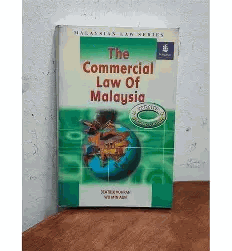


Description
Book Review of The Commercial Law of Malaysia
COMMERCIAL LAW OF MALAYSIA BY BEATRIX VOHRAH WU MIN AUN
Review author: marceljude.ai
List of Contents
Preface — p. vii Case list — p. ix Introduction — p. xxv
Part I: Law of Contract
Chapter 1: Law of Contract — p. 3 Chapter 2: Proposal and Acceptance — p. 8 Chapter 3: Consideration — p. 28 Chapter 4: Other Essentials of a Contract — p. 40 Chapter 5: Contents of a Contract — p. 63 Chapter 6: Consent of Parties — p. 87 Chapter 7: Unlawful and Void Contracts — p. 120 Chapter 8: Discharge of Contracts — p. 151
Part II: The Principal Types of Contract
Chapter 9: Sale of Goods — p. 187 Chapter 10: Hire-Purchase Agreements — p. 257 Chapter 11: Insurance — p. 288 Chapter 12: Negotiable Instruments — p. 316 Chapter 13: Cheques — p. 351
Part III: Law of Agency and Partnership
Chapter 14: Law of Agency — p. 379 Chapter 15: Law of Partnership — p. 419 Index — p. 445
Overall Review of the Book
The Commercial Law of Malaysia is a carefully structured doctrinal textbook that treats commercial law as a working body of rules rather than as an abstract academic subject. Its greatest strength is its insistence that Malaysian commercial law cannot be understood by reading statutes alone. The book repeatedly shows that commercial law in Malaysia operates through the interaction of legislation, local judicial decisions, English common law, Indian statutory influence, Commonwealth authority, and the practical needs of business transactions.
From a law professor’s perspective, the book is strongest where it explains how legal rules are actually used in disputes. It does not merely state that a contract requires proposal, acceptance, consideration, capacity, free consent, and legality. It demonstrates how those requirements are tested through Malaysian cases and through comparative authorities. That method is especially useful for students because commercial law is often misunderstood as a set of memorised rules. The book instead presents it as a system of legal reasoning.
The book’s organising idea is that commercial law is not a single isolated branch of law. It is a cluster of rules governing business activity: contract, sale of goods, hire-purchase, insurance, negotiable instruments, cheques, agency, and partnership. That makes the work practical. A commercial transaction rarely involves only one rule. A sale may involve contract formation, implied terms, delivery, risk, agency, payment by cheque, or financing through hire-purchase. The book’s structure reflects that reality.
Its limitation is also visible. The book deliberately omits some major business-law topics, especially company law and securities law. For a full modern commercial-law course, those omissions matter. However, as a foundation text on core transactional law, the book remains coherent because it focuses on doctrines that govern ordinary commercial exchange.
The text is especially valuable for explaining the Malaysian legal method. It shows how courts use English law where Malaysian legislation is silent, how Indian decisions may be persuasive because of shared statutory ancestry, and how local legislation prevails where it differs from English principles. This is one of the book’s deepest jurisprudential themes: Malaysian commercial law is neither purely English nor purely statutory. It is a mixed and evolving legal order.
Introduction Review — pp. xxv–xxxvii
The Introduction is not decorative; it is jurisprudentially important. It opens by asking what law is and immediately reminds the reader that law has different meanings depending on social position. Lawyers, citizens, politicians, police, philosophers, and business people experience law differently. This is a sophisticated opening because it prevents commercial law from being reduced to technical rules. The book wants the reader to understand that business law exists within a wider legal system and a wider society.
Classification of law — p. xxvii. The book distinguishes public law from private law. Public law governs the citizen’s relationship with the state; private law governs relationships between citizens. Commercial law is then situated within private law, especially contract, property, agency, partnership, insurance, sale of goods, and negotiable instruments. This classification is essential because most commercial disputes are private disputes, but they are still affected by public regulation.
Commercial law — p. xxviii. The Introduction explains that commercial law is not a separate, self-contained field. It is a convenient label for laws regulating traders, merchants, business persons, and commercial transactions. This is an important theoretical point. Commercial law is functional, not conceptual. It is defined by the activity it regulates: trade.
Sources of Malaysian law — p. xxviii. The discussion of sources is one of the strongest parts of the Introduction. It identifies constitutional law, federal and state legislation, subsidiary legislation, judicial decisions, English law, Islamic law, and native law as relevant legal sources. For students, this is vital because Malaysian commercial law cannot be analysed without knowing where legal authority comes from.
Federal Constitution — pp. xxviii–xxx. The book treats the Federal Constitution as the supreme law. This matters commercially because Parliament’s legislative power, state powers, and legal institutions all derive from constitutional structure. The Introduction also explains Malaysia’s federal system and the division of legislative powers, which is important when commercial transactions intersect with land, Islamic law, local government, or state regulation.
State constitutions, legislation, and subsidiary legislation — pp. xxx–xxxi. These sections show the reader that law is not only made by Parliament. State assemblies and delegated bodies also create legal obligations. This matters in commercial practice because regulations, by-laws, licensing rules, and delegated legislation often control whether a transaction is valid or lawful.
Common law and English law — pp. xxxi–xxxiii. This is doctrinally central. The book explains that common law refers to judge-made law and that English law entered Malaysia through colonial reception and statutory adoption. The important lesson is that English law may assist Malaysian courts only within limits. Local statutes and local conditions remain decisive.
Islamic law and native law — p. xxxiii. These sections remind the reader that Malaysian law is plural. Islamic law applies to Muslims in certain personal-law matters, while native law applies in Sabah and Sarawak. Although the book’s main concern is commercial law, this pluralism matters because legal capacity, family obligations, inheritance, and property relationships may influence commercial disputes.
Judicial precedent — pp. xxxiii–xxxiv. The explanation of precedent is excellent for beginning law students. It explains why courts cite prior cases and why the ratio decidendi of a superior court decision binds lower courts. Commercial law depends heavily on predictability, so precedent is not merely a technical legal doctrine; it is a commercial necessity.
Citation of cases and statutes — pp. xxxiv–xxxv. This section teaches legal literacy. Students are shown how to understand reported cases and statutory citations. As a teaching device, this helps bridge the gap between textbook reading and legal research.
Legal institutions — pp. xxxv–xxxvii. The Introduction ends by explaining Malaysia’s court structure and specialised tribunals. This is practically important because rights are meaningful only if there is an institution capable of enforcing them.
Chapter 1: Law of Contract — pp. 3–7
Subsections covered: Introduction — p. 3; Illustrations — p. 6; What is a Contract? — p. 6.
Chapter 1 performs the foundational work for the entire book. Its principal concern is the status of the Contracts Act and the relationship between statutory contract law and common law reasoning. The chapter explains that Malaysian contract law is statutory, but not hermetically sealed. The Contracts Act is central, yet courts may still refer to English law where the Act is silent and where reception principles allow it.
The discussion of whether the Contracts Act is a complete code is particularly important. A codifying statute would exclude outside principles except where expressly permitted. The book adopts the more nuanced view: the Act codifies many matters but does not exhaust all contract law. This is a crucial point for legal practice. A lawyer cannot simply read the Act and assume every issue is answered. Gaps remain, and those gaps may be filled by common law, equity, or persuasive Commonwealth reasoning.
The chapter also explains the persuasive value of Indian decisions. This is doctrinally significant because Malaysian contract legislation is historically close to Indian contract legislation. Indian cases are not automatically binding, but they carry interpretive weight where statutory language is similar. The book also notes that Privy Council decisions on equivalent provisions may carry stronger authority. This gives the student a map of comparative legal reasoning.
The section on illustrations explains that statutory illustrations are not empty ornaments. They assist interpretation even though they are not the operative text of the sections themselves. This is a valuable teaching point because students often ignore illustrations, even though they reveal legislative purpose.
The subsection “What is a Contract?” is concise but foundational. It identifies a contract as an agreement enforceable by law and then breaks down the essential elements: proposal and acceptance, consideration, intention to create legal relations, certainty, capacity, free consent, legality, and required formalities. As a law professor, I would describe this chapter as the book’s conceptual doorway. It does not yet solve difficult contractual problems, but it gives the reader the analytical checklist for every later chapter.
Chapter 2: Proposal and Acceptance — pp. 8–27
Subsections covered: Proposal — p. 8; Invitation to Treat — p. 9; To Whom a Proposal May Be Made — p. 12; Communication of Proposal — p. 13; Counter-Proposal and Acceptance — p. 14; Communication of Acceptance — p. 16; Positive Act of Acceptance — p. 18; Acceptance Through Post — pp. 19–21; Revocation of Proposal — p. 22; Revocation of Acceptance — p. 24; Proposal and Option — p. 25; Proposal-Acceptance Analysis — p. 26.
This chapter is one of the most important in the book because it explains how legal agreement is formed. Its strength lies in showing that contract formation is not simply about whether two parties “agreed” in a casual sense. The law asks whether there was a legally recognisable proposal and a legally effective acceptance.
The section on proposal explains the statutory vocabulary. Malaysian law uses “proposal,” while English law often uses “offer.” The chapter treats them as substantially similar, but it wisely keeps the statutory language in view. This is important because Malaysian law students must learn to move between local statutory terminology and common-law language.
The discussion of invitation to treat is commercially essential. Shops, advertisements, catalogues, auctions, and price lists do not always amount to offers. They may merely invite customers to make offers. This distinction protects business reality. If every advertised item were a binding offer, sellers could face liability for stock shortages or clerical errors. The chapter uses this doctrine to show how contract law accommodates ordinary commercial conduct.
The subsection on to whom a proposal may be made distinguishes offers made to a particular person from offers made to the world. This is important for reward cases and public advertisements. If an offer is made to a specific person, generally only that person may accept. If made generally, anyone who fulfils the terms may accept.
Communication of proposal is treated as a logical requirement of assent. A person cannot accept an offer of which he or she is unaware. This is doctrinally sound because acceptance is not merely conduct that happens to match the offer; it must be conduct referable to the offer.
The section on counter-proposal and acceptance explains the mirror-image principle. An acceptance must correspond to the proposal. A counter-offer rejects the original proposal unless the later exchange revives it. The chapter also draws the important distinction between a counter-offer and a request for information. That distinction is subtle but very important in commercial negotiations.
Communication of acceptance is discussed as the ordinary rule: acceptance must be communicated. The book then explains exceptions, especially where the proposer waives the need for notice or where performance itself constitutes acceptance. This is especially useful for unilateral contracts.
The section on positive act of acceptance rejects silence as acceptance. This is an important rule of fairness. A proposer cannot impose contractual liability by telling the other party that silence will count as agreement. Commercial law protects parties from being trapped by inaction.
The discussion of acceptance through post is especially valuable because postal acceptance is an exception to the general rule. The proposer may be bound once the acceptance is posted, even before actual receipt. The book explains this through statutory language and case law. It also notes the practical difficulties of the rule, especially its asymmetry between proposer and acceptor.
The sections on revocation of proposal and revocation of acceptance clarify timing. A proposal may generally be revoked before acceptance is complete against the proposer. Acceptance may also be revoked in certain circumstances before it is complete against the acceptor. These rules require close attention to when communication is legally complete.
The discussion of proposal and option is important because an option is not merely an offer held open as a matter of courtesy. It becomes legally binding when supported by consideration. This protects the offeree’s right to decide within the option period.
The final subsection, proposal-acceptance analysis, is intellectually mature. It acknowledges that the traditional offer-and-acceptance model does not always fit complex negotiations. This is a sophisticated closing because modern contracting often emerges from correspondence, conduct, draft documents, and ongoing performance rather than a neat offer followed by a neat acceptance.
Chapter 3: Consideration — pp. 28–39
Subsections covered: Definition — p. 28; Executory, Executed and Past Consideration — pp. 29–30; Exceptions to General Rule — p. 31; Adequacy of Consideration — p. 35; Consideration Need Not Move from Promisee — p. 36; Waiver of Performance — pp. 37–39.
Chapter 3 explains one of the most technical but central requirements of contract law: consideration. The chapter treats consideration as the legal price of a promise. It does not need to be economically adequate, but it must be legally sufficient unless the agreement falls within an exception.
The definition section uses the statutory concept of consideration and explains that it may consist of an act, abstinence, or promise. This is important because consideration is not limited to payment of money. Forbearance to sue, performance of services, delivery of goods, or refraining from action may all amount to consideration.
The discussion of executory, executed, and past consideration is clear. Executory consideration is promise for promise. Executed consideration is act for promise. Past consideration is more difficult. The book explains that Malaysian law differs from strict English common law by recognising certain past acts as valid consideration where statutory conditions are satisfied. This is one of the chapter’s most important comparative insights.
The section on exceptions to the general rule is useful because it shows that agreements without consideration are not always void. The book discusses natural love and affection, compensation for past voluntary acts, compensation for acts the promisor was legally compellable to do, and promises to pay statute-barred debts. These exceptions reveal the moral and social dimensions of contract law. The law is not purely bargain-based; it sometimes enforces promises because justice, relationship, or prior obligation supports enforcement.
The subsection on adequacy of consideration explains that courts do not normally police the fairness of the bargain by measuring economic equivalence. A promise may be supported by nominal consideration. But inadequacy may be evidence of a problem such as fraud, undue influence, or lack of free consent. This is a subtle but important distinction. Courts do not rewrite bad bargains merely because they are bad, but they may examine unfairness as evidence of vitiated consent.
The section consideration need not move from promisee is one of the clearest departures from English law. Under Malaysian statutory law, consideration may move from the promisee or another person. This affects privity-style reasoning and gives Malaysian law a distinctive statutory character.
The final section on waiver of performance is especially practical. It explains that Malaysian law does not strictly follow the old English rule that part-payment of a debt cannot discharge the whole without fresh consideration. The statutory approach allows remission or waiver by the promisee. This makes Malaysian law more flexible and commercially realistic.
Chapter 4: Other Essentials of a Contract — pp. 40–62
Subsections covered: Intention to Create Legal Relations — pp. 40–44; Business Agreements — p. 40; Social, Domestic and Family Agreements — p. 42; Uncertainty of Terms — p. 44; Formalities — p. 46; Capacity to Contract — pp. 47–62; Minors — p. 48; Necessaries — p. 50; Scholarships — p. 52; Other Binding Contracts — p. 54; Insurance — p. 54; Apprenticeship — p. 54; Guarantee and Indemnity — p. 55; Performance and Recovery of Benefit — p. 56; Ratification of Void Contract — p. 59; Capacity of Person of Sound Mind — p. 60; Corporations — pp. 61–62.
Chapter 4 moves beyond offer, acceptance, and consideration to examine the other conditions required for enforceability. It is doctrinally rich because it shows that contract law is not only about agreement; it is about legally serious agreement made by legally capable parties on sufficiently certain terms.
The section on intention to create legal relations explains why not every agreement is a contract. Business agreements are presumed to have legal effect, while social, domestic, and family arrangements are usually presumed not to. This distinction is essential because human life contains countless promises that the law should not enforce. The book’s treatment is balanced: presumptions can be rebutted where the facts show serious legal intention.
Under business agreements, the book examines clauses such as “subject to contract.” This is practically important because parties often negotiate commercially but intend not to be bound until formal documentation is executed. The book shows that courts examine the parties’ intention objectively.
Under social, domestic and family agreements, the book explains why family promises usually fall outside contract law. But it also recognises that some domestic arrangements may become legally binding, especially where parties are separated or dealing at arm’s length. This prevents the rule from becoming too crude.
The section on uncertainty of terms explains that courts cannot enforce an agreement whose meaning is too vague or incomplete. This is a rule of legal administrability. A court cannot enforce what it cannot identify. However, the book also recognises that courts may uphold agreements where meaning can be made certain.
Formalities are treated as exceptions to the general freedom of form. Most contracts need not be written, but statutes may require writing, signature, registration, witnessing, or other formal requirements. The chapter rightly shows that formalities are not mere technicalities; they may determine enforceability.
The section on capacity to contract is one of the chapter’s strongest parts. It explains capacity through minors, persons of unsound mind, and corporations. Capacity rules protect vulnerable parties and define the legal personality of artificial entities.
The treatment of minors is detailed. The general rule is that minors’ contracts are void, subject to exceptions. The section on necessaries explains that minors may be liable for goods or services suited to their condition in life, but liability is limited and protective. The subsection on scholarships explains statutory modification of the ordinary incapacity rule. The discussion of insurance and apprenticeship shows that policy sometimes supports enforceability where the transaction benefits the minor.
Guarantee and indemnity is a particularly important subsection because it distinguishes secondary liability from primary liability. A guarantee depends on the principal debtor’s liability; an indemnity is a direct promise to protect against loss. This distinction matters greatly where the principal contract is invalid because one party lacks capacity.
The discussion of performance and recovery of benefit addresses the difficult problem of restitution where a minor has received or conferred benefits. This is a legally sensitive area because protecting minors may sometimes create unfairness to adults who dealt with them.
The section on ratification of void contract explains that a minor cannot generally ratify a void contract simply by later reaching majority, although a fresh contract may sometimes arise with proper consideration.
The treatment of persons of sound mind explains that contractual capacity depends on the ability to understand the contract and form a rational judgment about its effect. This is not a moral judgment but a legal test of cognitive capacity at the time of contracting.
Finally, corporations are discussed as artificial legal persons whose capacity depends on incorporation and statutory rules. The chapter thereby links general contract law to company law without making company law the central subject.
Chapter 5: Contents of a Contract — pp. 63–86
Subsections covered: Express and Implied Terms — pp. 63–67; Terms Implied in Law — p. 64; Extrinsic Evidence — pp. 66–68; Collateral Contract — pp. 68–70; Terms and Representations — p. 70; Conditions and Warranties — p. 71; Incorporating Terms — p. 74; Exemption Clauses — pp. 75–81; Rules of Construction — p. 76; Fundamental Breach — p. 78; Ticket Cases — p. 78; Effect of Statute — p. 80; Conditional Contracts — pp. 81–86.
Chapter 5 is concerned with what the contract actually contains. This is a sophisticated chapter because the existence of a contract is only the first question. The next question is what promises, obligations, exclusions, and conditions form part of it.
The section on express and implied terms explains the distinction between terms directly agreed by the parties and terms read into the contract by law, custom, trade usage, or necessity. This is commercially important because written contracts rarely state every obligation. Implied terms give business efficacy to incomplete agreements.
Terms implied in law are especially important in standard contract categories such as sale of goods, hire-purchase, tenancy, and employment. The book shows that implication is not judicial invention at large. Courts imply terms cautiously, especially where necessary to make the contract workable.
The section on extrinsic evidence introduces the parol evidence principle. Where parties reduce their agreement to writing, oral evidence generally cannot be used to contradict or vary the written terms. The chapter’s discussion is useful because it also recognises exceptions. Commercial life is messy; not all promises are neatly captured in the final document.
Collateral contract is one of the most important subsections. It explains how an oral promise may exist alongside a written contract where that promise induced entry into the main contract. This doctrine prevents injustice where one party relies on a pre-contractual assurance not recorded in the final written document.
The distinction between terms and representations is essential. A term creates contractual liability if breached. A representation, if false, may create rights to rescind or other remedies depending on the nature of the misrepresentation. This distinction affects remedy, burden of proof, and litigation strategy.
The section on conditions and warranties explains hierarchy among contractual terms. Breach of a condition may justify termination; breach of a warranty usually gives only damages. The chapter also recognises the complexity of intermediate terms, where the seriousness of the consequences may determine the remedy.
Incorporating terms is practical and important. Terms may be incorporated by signature, notice, course of dealing, or reference. The chapter’s discussion of ticket cases shows how standard-form contracts operate in everyday life. A customer may be bound by terms printed or referenced on a ticket if reasonable notice was given before or at the time of contracting.
The treatment of exemption clauses is doctrinally strong. Such clauses attempt to limit or exclude liability. The chapter explains judicial hostility to unfair exclusions through strict construction and the contra proferentem principle. It also discusses fundamental breach and statutory limits. This is where contract law’s tension between freedom of contract and fairness becomes most visible.
The final section on conditional contracts examines contracts whose operation depends on a future event. This is especially important in land sales, finance clauses, approvals, and commercial transactions requiring third-party consent. The chapter explains that courts must distinguish between a condition precedent to formation and a condition governing performance.
Chapter 6: Consent of Parties — pp. 87–119
Subsections covered: Consent — p. 87; Void, Voidable and Illegal Contracts — pp. 88–89; Fraud — pp. 89–96; Proof — p. 92; Silence — p. 94; Fraud under the National Land Code — pp. 94–96; Misrepresentation under Section 18 — pp. 96–102; Duty of Disclosure — p. 98; Exception to Section 19 — p. 99; Remedies for Misrepresentation — pp. 100–102; Coercion — pp. 102–106; Economic Duress — pp. 104–106; Undue Influence — pp. 106–110; Effects of Undue Influence — p. 110; Mistake — pp. 110–119; Mistake as to Document — p. 114; Effects of Mistake — pp. 116–119; Rectification — p. 118.
Chapter 6 is one of the most substantial chapters in Part I because it addresses defective consent. The chapter’s governing idea is that contract law enforces voluntary agreement, not apparent agreement obtained through improper pressure, deception, mistake, or exploitation.
The opening section on consent explains that parties must agree to the same thing in the same sense. This is the foundation of consensus ad idem. Without real consent, the moral and legal basis for enforcing promises weakens.
The distinction between void, voidable and illegal contracts is vital. A void contract has no legal effect. A voidable contract is valid until the innocent party elects to avoid it. An illegal contract may carry more severe consequences. The chapter’s explanation prepares the reader for fraud, misrepresentation, coercion, undue influence, and mistake.
The discussion of fraud is detailed and important. Fraud involves intentional deception. The chapter treats fraudulent statements, active concealment, promises made without intention to perform, and other deceitful conduct. The legal importance of fraud lies in its effect on consent and remedy. The innocent party may avoid the contract and may seek further relief depending on the circumstances.
The subsection on proof rightly emphasises that fraud must be proved seriously. Courts do not lightly find fraud because it implies dishonesty. This is a good example of how procedural caution shapes substantive rights.
The section on silence is nuanced. Mere silence is usually not fraud, but silence may become fraudulent where there is a duty to speak. This is crucial in fiduciary relationships, insurance contracts, and situations where non-disclosure creates a misleading impression.
Fraud under the National Land Code expands the discussion beyond ordinary contract law. This is an excellent move because Malaysian commercial law often intersects with land transactions. Fraud in land law may affect indefeasibility of title, making the consequences especially serious.
The treatment of misrepresentation under Section 18 distinguishes misrepresentation from fraud. Misrepresentation may be innocent or negligent, but it still affects consent where one party is induced into the contract by an untrue statement. The chapter explains how misrepresentation operates within the statutory framework and how it differs from English categories.
The section on duty of disclosure is especially important in insurance and fiduciary relationships. Commercial law generally allows parties to pursue their own interests, but some relationships require fuller candour.
The Exception to Section 19 adds complexity by addressing situations where a party had means of discovering the truth. The chapter’s treatment shows that misrepresentation law is not simply pro-representee; it also expects diligence in certain cases.
The subsection on remedies for misrepresentation is useful because it connects doctrine with litigation outcomes. Remedies may include rescission, restoration of benefits, compensation, or affirmation of the contract depending on the legal basis and statutory provisions.
Coercion is treated through statutory language. It covers threats or acts forbidden by law and unlawful detention of property. The chapter usefully distinguishes coercion from broader common-law duress.
Economic duress is a modern and commercially important topic. It recognises that pressure need not be physical. Commercial pressure may become legally improper where it overwhelms genuine choice and involves illegitimate conduct.
The section on undue influence addresses abuse of dominance. It is particularly important in family, fiduciary, religious, medical, solicitor-client, and lender-borrower contexts. The chapter explains presumptions and burdens of proof, showing that equity intervenes where one party’s will is overborne.
Effects of undue influence are explained through voidability and possible terms imposed by the court. This reflects equity’s flexible remedial tradition.
The discussion of mistake is intellectually demanding. The chapter explains when mistake makes a contract void and when a party must simply bear the consequences of a bad assumption. The law does not rescue every mistaken party. Only fundamental and legally recognised mistakes affect validity.
The subsection on mistake as to document introduces non est factum, the plea that a signed document is not truly the signer’s act because of a fundamental mistake as to its nature. The chapter correctly treats this as exceptional.
The final discussion of effects of mistake and rectification shows how courts may restore parties, refuse enforcement, or correct written instruments where the written document fails to reflect the true agreement.
Chapter 7: Unlawful and Void Contracts — pp. 120–150
Subsections covered: Contracts Offending the Law — pp. 120–128; Wagering Contracts — p. 128; Contracts That Are Fraudulent under Section 24(c) — p. 129; Contracts Injurious to Person or Property under Section 24(d) — p. 129; Contracts That Are Immoral or Against Public Policy under Section 24(e) — pp. 130–136; Public Policy — pp. 130–136; Contracts in Restraint of Trade — pp. 137–140; Sale of Goodwill of a Business — p. 138; Restraints between Partners — p. 140; Contracts in Restraint of Legal Proceedings — pp. 140–144; Effects of Restraints — p. 144; Consequences of Illegality — pp. 144–150.
Chapter 7 examines the boundary between private agreement and public legality. Contract law respects party autonomy, but it will not enforce agreements that violate law, morality, public policy, or statutory prohibition.
The section on contracts offending the law is crucial. It explains that illegality may arise because a contract is forbidden by statute, defeats statutory policy, or is otherwise inconsistent with law. The chapter rightly shows that statutory illegality is not always straightforward. Courts must ask whether the statute intends to invalidate the contract or merely impose a penalty.
Wagering contracts are treated as void. This discussion is important historically and doctrinally because gambling agreements sit at the intersection of private bargain and public regulation.
The subsection on fraudulent contracts under Section 24(c) distinguishes contracts induced by fraud from contracts whose object or consideration is fraudulent. That distinction matters. A contract procured by fraud is voidable; a contract to carry out a fraud is unlawful.
Contracts injurious to person or property are treated as unlawful because law cannot enforce agreements to harm others. This is a straightforward but important moral limit on contract.
The discussion of immorality and public policy is one of the most jurisprudentially interesting parts of the chapter. Public policy is necessary but dangerous. Courts need it to refuse enforcement of harmful bargains, but overuse may create uncertainty. The book correctly notes the cautious judicial approach to expanding public-policy categories.
The treatment of contracts in restraint of trade is especially important in commercial practice. Malaysian law is stricter than English law in this area. Agreements restraining lawful profession, trade, or business are generally void unless they fall within recognised exceptions. This has major implications for employment covenants, sale of business, partnership restrictions, and non-compete clauses.
The subsection on sale of goodwill explains a key exception. Where a person sells the goodwill of a business, reasonable restraint may protect the buyer. Without such protection, the seller could destroy the value of what was sold by immediately competing for the same customers.
Restraints between partners are treated separately because partnership law often requires restrictions to protect the firm’s business and goodwill. The chapter recognises that such restraints may be valid where they fall within statutory exceptions.
The section on contracts in restraint of legal proceedings explains that parties cannot generally oust the jurisdiction of the courts. However, arbitration clauses and certain agreed dispute-resolution mechanisms may be valid. This section remains highly relevant because commercial contracts frequently contain arbitration clauses.
The final section on consequences of illegality is vital. Courts may refuse enforcement, refuse recovery, or leave parties where they stand. But there are exceptions, especially where the plaintiff can establish a claim without relying on the illegal transaction or where restitutionary principles apply. This chapter therefore teaches not only what illegality is, but how severely it operates.
Chapter 8: Discharge of Contracts — pp. 151–184
Subsections covered: Discharge by Performance — pp. 151–163; Time and Place for Performance — p. 151; Performance of Reciprocal Promises — p. 156; Contingent Contracts — p. 158; Tender of Performance — p. 160; Performance by Third Party — p. 160; Devolution of Joint Rights and Liabilities — p. 162; Discharge by Agreement — pp. 163–166; Rescission — p. 163; Novation — p. 164; Remission — p. 164; Discharge by Impossibility of Performance — pp. 166–171; Consequences of Frustration — p. 170; Discharge by Breach — pp. 171–174; Remedies for Breach — pp. 176–184; Quantum Meruit — p. 176; Damages — pp. 175, 177–179; Specific Performance — pp. 179–182; Injunction — pp. 182–184.
Chapter 8 completes the general contract-law part of the book by explaining how contractual obligations end. This is a necessary counterpart to formation. The law must know not only when a contract begins, but when it is discharged.
Discharge by performance is the normal route. The chapter explains that parties must perform according to their promises. It also explores strict performance, tender, time, place, and reciprocal obligations.
The section on time and place for performance is highly practical. Commercial parties often dispute whether late performance justifies termination. The book explains the role of “time of the essence” and the difference between delay that merely gives damages and delay that allows rescission.
Performance of reciprocal promises is important because many contracts involve exchange: payment for goods, delivery for price, work for remuneration. The chapter shows that one party’s duty may depend on the other’s readiness and willingness to perform.
Contingent contracts depend on uncertain future events. This section links back to conditional contracts in Chapter 5 but focuses on performance. Insurance and guarantee are natural examples.
Tender of performance explains that a party who properly offers performance may be discharged if the other party refuses. This protects a promisor from being held liable where the promisee blocks performance.
The discussion of performance by third party and devolution of joint rights and liabilities adds practical detail. Contractual obligations may involve successors, representatives, joint promisors, or third-party performance depending on the circumstances.
Discharge by agreement includes rescission, novation, remission, and alteration. This section is important because parties who create obligations may also release or replace them. Novation is particularly significant in commercial restructuring because it substitutes a new obligation or party.
Discharge by impossibility of performance addresses frustration. Where an unforeseen event makes performance impossible or radically different, the contract may be discharged. The book discusses consequences of frustration, including restitutionary issues.
Discharge by breach explains anticipatory breach, refusal to perform, and disabling oneself from performance. The innocent party may terminate where the breach is sufficiently serious.
The final part on remedies for breach is central to litigation. Damages are the ordinary remedy, designed to compensate rather than punish. The chapter also addresses liquidated damages, penalties, nominal damages, substantial damages, specific performance, injunctions, and quantum meruit. As a law professor, I would call this chapter one of the most examination-relevant because it links doctrine with remedy.
Chapter 9: Sale of Goods — pp. 187–256
Subsections covered: Scope of the Sale of Goods Act — p. 188; Interpretation — p. 188; Law of Contracts and the Act — p. 188; Contract of Sale — p. 191; Definition of Goods — p. 192; Formation and Formalities — p. 193; Capacity — p. 194; Terms of the Contract — p. 194; Implied Terms — p. 196; Title — p. 197; Description and Fitness for Purpose — p. 199; Merchantable Quality — p. 205; Sale by Sample — p. 207; Privity of Contract — p. 211; Transfer of Property in Goods — p. 217; Risk — p. 217; Perishing of Goods — p. 218; Transfer of Title — p. 220; Estoppel — p. 221; Mercantile Agent — p. 223; Performance of Contract — p. 228; Delivery of Goods — p. 228; Acceptance of Goods — p. 236; Remedies for Breach — p. 237; Unpaid Seller — p. 242; Lien — p. 243; Stoppage in Transit — p. 244; Remedies of Buyer — p. 248; International Sales — p. 253; F.O.B. Contracts — p. 253; C.I.F. Contracts — p. 254; Ex Ship and Ex Works Contracts — p. 256.
Chapter 9 is the bridge between general contract law and a specific commercial transaction: sale of goods. It is one of the most commercially important chapters in the book because sale is the archetypal business transaction.
The section on scope of the Sale of Goods Act clarifies when the statute applies. This is crucial because not every transaction involving goods is a sale. Hire, hire-purchase, barter, services, and land transactions may fall outside the Act or raise separate issues.
Interpretation and contract of sale establish the basic statutory framework: transfer of property in goods for a price. This definition distinguishes sale from other arrangements where possession transfers but ownership does not.
Definition of goods is important because the Act applies only to goods within the statutory meaning. The book explains how movable property is treated and how classification affects rights.
Formation and formalities show that ordinary contract principles apply to sale, subject to statutory modifications. Capacity is also relevant because parties must be legally competent.
The section on terms of the contract leads into implied terms. This is the heart of sale-of-goods law. Buyers often rely on statutory implied protections rather than express promises.
Implied terms cover title, description, fitness for purpose, merchantable quality, and sale by sample. These provisions protect buyers and support commercial confidence. The implied condition as to title is especially fundamental: a buyer expects ownership, not merely possession. Fitness for purpose protects a buyer who relies on the seller’s skill or judgment. Merchantable quality addresses basic commercial acceptability. Sale by sample ensures bulk goods correspond to the sample.
The section on privity of contract is important because sale disputes often involve manufacturers, distributors, retailers, and consumers. Traditional privity limits claims to contracting parties, although tort and statutory developments may soften that limit.
Transfer of property in goods and risk are doctrinally central. Ownership and risk do not always move at the same time, but commonly risk follows property unless agreed otherwise. The timing of transfer affects who bears loss if goods perish.
Transfer of title addresses the nemo dat principle: a seller cannot usually pass better title than he has. The chapter then examines exceptions, including estoppel and mercantile agents. These exceptions protect commercial circulation of goods and innocent purchasers.
The section on performance explains duties of delivery, acceptance, and payment. Delivery is not merely physical handover; it is legal performance according to contract terms.
Remedies for breach and rights of the unpaid seller are highly practical. The unpaid seller may have lien, stoppage in transit, resale rights, or action for price. The buyer may claim damages, reject goods, or seek specific remedies depending on the breach.
The final section on international sales introduces F.O.B., C.I.F., ex ship, and ex works contracts. This is valuable because international commerce depends heavily on standardised trade terms. The chapter’s treatment gives students a foundation for understanding allocation of risk, delivery obligations, insurance, freight, and documentary performance.
Chapter 10: Hire-Purchase Agreements — pp. 257–287
Subsections covered: Developments — p. 257; Common Law Form — p. 258; Scope of the Act — p. 258; Definition — p. 260; Goods Covered — p. 261; Formation of Agreement — p. 262; Written Agreement — p. 263; Signature of Parties — p. 263; Contents — p. 265; Service of Documents — p. 265; Deposit — p. 266; Conditions — pp. 267–273; Condition as to Title — p. 268; Warranties — pp. 268–269; Misrepresentation — p. 273; Statutory Rights of Hirer — pp. 274–281, 285; Assignment — p. 276; Termination — p. 278; Notice and Recovery of Possession — p. 279; Limitation on Term Charges — p. 280; Obligations of Hirer — p. 280; Insurance — p. 282; Guarantors — p. 282; Void Provisions — p. 285; Powers of the Court — p. 286.
Chapter 10 is a consumer-commercial chapter. Hire-purchase is not an ordinary sale because ownership does not pass immediately. The hirer obtains possession and pays by instalments, with ownership passing only if contractual conditions are fulfilled.
The section on developments explains why hire-purchase required special legal control. At common law, hire-purchase forms could favour owners heavily and expose consumers to harsh consequences. Legislative intervention protects hirers from unfair terms and repossession practices.
Common law form explains the structure of the transaction: hire with an option to purchase. This form historically allowed owners to avoid some rules applicable to sales. The book’s treatment is useful because it shows how legal form can be used commercially.
The scope of the Act and goods covered are essential. Not all hire-purchase transactions fall within the statutory protection. Classification determines whether statutory formalities and safeguards apply.
The sections on formation, written agreement, signature, contents, and service of documents show that hire-purchase law is formality-heavy. This is justified because the hirer is often in a weaker bargaining position. Written documents ensure transparency.
Deposit and term charges are financially important. The law regulates the economic burden imposed on the hirer, including charges beyond the cash price.
The discussion of conditions and warranties imports protective ideas similar to sale-of-goods law. Hirers need assurance of title, freedom from encumbrance, and suitability of goods.
Misrepresentation is commercially significant because hire-purchase often involves dealers, owners, and financiers. The hirer may rely on statements made by a dealer even though the legal owner is a finance company.
The section on statutory rights of the hirer is the chapter’s moral centre. These rights protect hirers in relation to assignment, termination, repossession, notices, and accounting. The book explains that hire-purchase legislation modifies freedom of contract to prevent unfair deprivation of goods and money.
Recovery of possession is especially important. Owners cannot always repossess freely; statutory procedures may apply. This protects hirers who have paid substantial sums.
Insurance and guarantors show that hire-purchase often creates a network of related obligations. Guarantors may be exposed to liability, and insurance may protect goods or parties.
The final sections on void provisions and powers of the court demonstrate the regulatory character of this area. Courts may intervene, and certain contractual terms are ineffective even if agreed. This chapter therefore illustrates the shift from classical contract freedom to protective commercial regulation.
Chapter 11: Insurance — pp. 288–315
Subsections covered: Classification of Insurance — p. 288; Contract of Insurance — p. 290; Indemnity — p. 290; Subrogation — p. 291; Insurable Interest — p. 292; The Risk — p. 294; Utmost Good Faith — p. 295; Material Facts — p. 298; Qualifications on Duty of Disclosure — p. 300; Statutory Exceptions — p. 300; Basis of Contract Clause — p. 302; Conditions and Warranties — pp. 304–305; Rules of Construction and Exemption Clauses — p. 306; Motor Insurance and Third Party Rights — p. 310; Authority of Agent to Grant Cover — p. 312; Proposal Form and Agent — p. 313.
Chapter 11 treats insurance as a specialised contract governed by distinctive principles. Insurance is not simply a promise to pay money on an event. It is a risk-transfer mechanism that depends on disclosure, classification of risk, and actuarial judgment.
The section on classification of insurance explains categories such as indemnity and non-indemnity insurance, and different functional classes. Classification matters because legal consequences differ across life, fire, marine, motor, and other forms.
Contract of insurance introduces the general concept: one party assumes risk in return for premium. But the book quickly shows that insurance law differs from ordinary contract law because the insurer often relies on information known mainly to the insured.
Indemnity is a central principle. In indemnity insurance, the insured should be restored to the position before the loss, not allowed to profit. This prevents insurance from becoming gambling.
Subrogation follows from indemnity. Once the insurer pays, it may step into the insured’s shoes to recover from responsible third parties. This prevents double recovery and allocates ultimate responsibility.
Insurable interest prevents wagering. A person must have a legally recognised interest in the subject matter or life insured. This requirement gives insurance its legitimate risk-protection function.
The section on risk explains that the insurer prices and accepts a defined risk. If the risk is misstated, concealed, or altered, the insurer’s obligation may be affected.
Utmost good faith is the chapter’s deepest doctrine. Insurance requires stronger disclosure than ordinary contracts because the insured often knows material facts that the insurer cannot discover easily. This doctrine explains why silence may matter more in insurance than in ordinary sale or service contracts.
Material facts are facts that would influence a prudent insurer in deciding whether to accept the risk or set the premium. The chapter’s discussion is valuable because materiality is often the key issue in insurance litigation.
The sections on qualifications and statutory exceptions prevent the doctrine from becoming oppressive. Not every omission should defeat the policy. The law must balance insurer protection with insured fairness.
Basis of contract clauses are treated critically because they can turn proposal-form answers into warranties, sometimes producing harsh results. This is an important consumer-protection concern.
The discussion of conditions and warranties explains the severity of insurance warranties and the need for careful construction. Insurance law has historically treated breach of warranty harshly, so judicial interpretation matters.
Rules of construction and exemption clauses again show the court’s role in controlling harsh contractual language.
The final sections on motor insurance, third-party rights, agent authority, and proposal forms make the chapter practical. Motor insurance affects not only insurer and insured but also accident victims. Agency issues matter because insurance is often sold through intermediaries.
Chapter 12: Negotiable Instruments — pp. 316–350
Subsections covered: Definition — p. 316; Characteristics — p. 316; Examples of Negotiable Instruments — p. 318; Functions of a Bill of Exchange — p. 318; Definition of a Bill of Exchange — p. 320; Consideration in a Bill of Exchange — p. 325; Capacity to Contract by Bill of Exchange — pp. 326–327; Negotiation of Bills — p. 326; Acceptance — p. 327; Types of Acceptance — p. 328; Indorsements — p. 330; Types of Indorsements — p. 330; Delivery — pp. 326, 332; Liability of Parties — p. 332; Fictitious and Non-Existing Payees — p. 336; Holder — p. 338; Holder in Due Course — p. 338; Holder for Value — p. 340; Forged Signatures — p. 342; Inchoate Bills — p. 344; Presentment for Payment — p. 346; Procedure on Dishonour — p. 348; Noting and Protest — p. 348.
Chapter 12 examines negotiable instruments, especially bills of exchange. This is a technically demanding chapter, but it is important because negotiable instruments historically allowed commercial credit to circulate like money.
The definition and characteristics sections explain negotiability: transferability, title through possession and indorsement, and the ability of a holder in due course to obtain better rights than prior parties in certain circumstances. This is a major exception to ordinary contract principles.
Examples of negotiable instruments situate bills, cheques, and promissory notes within the broader category. This helps students distinguish documents that merely evidence debt from instruments that circulate as payment.
The section on functions of a bill of exchange explains why bills matter commercially. They facilitate payment, credit, financing, and settlement across distance.
The definition of a bill of exchange is technical but essential. A bill involves an unconditional order in writing, addressed by one person to another, requiring payment of a sum certain to a specified person, bearer, or order.
Consideration in bills differs from ordinary contract analysis because negotiable instruments operate with presumptions. Consideration is presumed in favour of certain holders, supporting circulation and confidence.
Capacity explains who may incur liability on a bill. Ordinary capacity rules apply, but negotiable instruments add special formal consequences.
The sections on negotiation, acceptance, and indorsement form the transactional core. Negotiation transfers the instrument. Acceptance creates the drawee’s liability. Indorsement transfers rights and may create liability among parties.
Types of acceptance and types of indorsement are practical because variations affect liability and enforceability.
Delivery matters because an instrument is not fully operative merely because it is written. It must be delivered with intention to give effect.
The section on liability of parties explains the chain of responsibility among drawer, drawee, acceptor, indorser, and holder. This chain is what makes bills commercially reliable.
Fictitious and non-existing payees raise difficult fraud problems. The chapter’s treatment helps explain how loss is allocated where the named payee is not real or not intended to receive payment.
The discussion of holder, holder in due course, and holder for value is central. A holder in due course is protected because commercial negotiability depends on confidence that instruments can be taken free of some prior defects.
Forged signatures are treated carefully because forgery usually destroys authority and title. The chapter explains the severe effect of forgery while recognising statutory protections in some circumstances.
Inchoate bills address incomplete instruments delivered with authority to complete. This topic is practically important in financing and credit arrangements.
The final sections on presentment, dishonour, noting, and protest explain enforcement procedure. Negotiable instruments law is procedural as well as substantive. Rights may depend on proper presentment and notice.
Chapter 13: Cheques — pp. 351–376
Subsections covered: Cheques — p. 351; Undated Cheques — p. 352; Overdue or Stale Cheques — p. 352; Ante-Dated and Post-Dated Cheques — p. 352; Crossings of Cheques — p. 353; Types of Crossings — p. 354; General Crossing — p. 354; Special Crossing — p. 354; “Not Negotiable” Crossing — p. 356; “Account Payee Only” Crossing — p. 356; Alterations on a Cheque — p. 359; Apparent Alteration — p. 358; Non-Apparent Alteration — p. 359; Customer’s Duty of Care Against Fraudulent Alterations — p. 360; Protection of the Paying Banker — p. 362; Protection of the Collecting Banker — p. 366; Collecting Banker and Contributory Negligence — p. 372; Protection of Bank as Holder in Due Course — p. 372; Termination of Banker’s Authority to Pay — p. 372.
Chapter 13 narrows the broader topic of negotiable instruments to cheques. This is a practical banking-law chapter. Cheques are both payment instruments and sources of risk: forgery, alteration, stale presentation, crossing, wrongful payment, and collecting-bank liability.
The opening section on cheques explains their character as bills drawn on bankers and payable on demand. This connects the chapter to Chapter 12 while identifying the cheque as a specialised instrument.
Undated, stale, ante-dated, and post-dated cheques are practical categories. The date affects payment expectations, banker authority, and risk. A post-dated cheque should not be paid before its date; a stale cheque may raise suspicion or justify refusal.
Crossings of cheques are one of the chapter’s most important topics. Crossing is a safety mechanism directing how a cheque should be collected. The law uses crossing to reduce risk of misappropriation.
The section on types of crossings explains general and special crossings. General crossing requires collection through a bank. Special crossing directs payment through a named bank. These rules allocate duties to paying and collecting bankers.
The “not negotiable” crossing is especially important because it limits the ability of a transferee to obtain better title than the transferor. This protects true owners.
The “account payee only” crossing is a further protective instruction, though its precise legal effect depends on banking practice and interpretation.
The discussion of alterations distinguishes apparent from non-apparent alterations. Apparent alteration may put a banker on notice; non-apparent alteration raises harder issues of loss allocation.
Customer’s duty of care against fraudulent alterations is important because banking law does not place all risk on banks. Customers must exercise care in drawing cheques to avoid facilitating fraud.
The section on protection of the paying banker explains statutory shields where a bank pays in good faith and without negligence. This protection is necessary because banks process large volumes of cheques and cannot investigate every transaction as a court would.
Protection of the collecting banker is equally important. A collecting bank may receive payment for a customer who has no title. Statutory protection depends on good faith and absence of negligence.
The section on collecting banker and contributory negligence reflects modern loss-sharing concerns. Banking law often asks which party was better placed to prevent the loss.
The final section on termination of banker’s authority to pay explains events that end a bank’s authority, including countermand, death, insolvency, notice of defect, assignment, insufficient funds, and closure of account. This is a concise but valuable practical ending.
Chapter 14: Law of Agency — pp. 379–418
Subsections covered: Creation of Agency — p. 380; Express and Implied Appointment — p. 380; Ratification — p. 383; Agency by Necessity — p. 385; Estoppel or Holding Out — p. 388; Kinds of Agency — p. 390; Classification by Extent of Authority — p. 390; Classification by Function — p. 390; Del Credere Agent — p. 389; Duties of Agent to Principal — p. 390; Sub-Agents — p. 397; Substituted Agent — p. 398; Duties of Principal to Agent — p. 398; Authority of Agent — p. 401; Actual Authority — p. 400; Apparent or Ostensible Authority — p. 404; Breach of Warranty of Authority — p. 405; Effects of Contracts Made by Agents — p. 406; Named Principal — p. 406; Undisclosed Principal — p. 409; Third Party Rights — p. 410; Rights of Principal — p. 411; Termination of Agency — p. 413.
Chapter 14 is essential because agency is the legal mechanism through which much commercial activity occurs. Companies, partnerships, traders, landowners, insurers, banks, and merchants often act through agents. Without agency law, commercial scale would be impossible.
The opening discussion explains that agency is the relationship in which one person acts on behalf of another so as to affect the principal’s legal position. The chapter correctly distinguishes legal agency from loose commercial language. A “sole distributor” may not be an agent in the legal sense.
Creation of agency is treated broadly. Agency may arise by express appointment, implication, ratification, necessity, or estoppel. This reflects commercial reality. Parties do not always use formal agency documents.
Express appointment is straightforward: the principal authorises the agent. Implied appointment arises from conduct or circumstances. This is important where business practice indicates authority without express words.
Ratification allows a principal to adopt an unauthorised act after the fact. The chapter explains limits: the principal must have capacity, the agent must have acted as agent, and the act must be capable of ratification.
Agency by necessity is narrow but important. It may arise where an agent must act to preserve goods or interests in an emergency and cannot obtain instructions.
Estoppel or holding out protects third parties who reasonably believe authority exists because of the principal’s representation. This is central to commercial reliability.
The section on kinds of agency classifies agents by authority and function. This includes general agents, special agents, mercantile agents, brokers, factors, auctioneers, and del credere agents. These distinctions affect authority and liability.
The section on duties of agent to principal is fiduciary in character. Agents must obey instructions, act with care and skill, avoid conflicts, not make secret profits, account for money, and protect the principal’s interests. This is one of the chapter’s strongest parts because it shows that agency is not merely contractual; it is also fiduciary.
Sub-agents and substituted agents are carefully distinguished. A sub-agent is appointed by the agent and may create layered responsibility. A substituted agent may be selected for the principal, creating a direct relationship.
Duties of principal to agent include remuneration, indemnity, and reimbursement where appropriate. Agency law is reciprocal, not one-sided.
The section on authority of agent is the doctrinal heart of the chapter. Actual authority may be express or implied. Apparent authority arises from representation by the principal to the third party. This distinction is essential in litigation.
Breach of warranty of authority protects third parties where a person purports to act as agent without authority. The false agent may be personally liable.
Effects of contracts made by agents explains when the principal is bound, when the agent is liable, and how named, unnamed, and undisclosed principals are treated. The treatment of undisclosed principal is especially important because it allows a hidden principal to sue or be sued in some circumstances, subject to limits.
The final section on termination of agency covers revocation, renunciation, completion, expiry, death, insanity, insolvency, illegality, and frustration-like events. It also addresses the effect of termination on third parties. This chapter is doctrinally complete and commercially indispensable.
Chapter 15: Law of Partnership — pp. 419–444
Subsections covered: Meaning and Nature of Partnership — p. 420; Firm and Firm Name — p. 421; Business Registration — p. 422; Considerations Affecting Existence of Partnership — p. 424; Formation of Partnership — p. 426; Duration of Partnership — p. 426; Types of Partner — p. 427; Relations of Partners to Outsiders — p. 426; Power of Partners to Bind the Firm — p. 426; Implied Authority — p. 428; Liability of Partners — p. 429; Liability by Holding Out — p. 430; Incoming Partner — p. 431; Retiring Partners — p. 432; Partnership Property — p. 433; Relation of Partners to One Another — p. 435; Rights and Duties of Partners in the Absence of Agreement — p. 436; Assignment of Partner’s Share — p. 438; Dissolution of Partnership — p. 439; Notice of Dissolution — p. 440; Continuation of Authority of Partner — p. 442; Settlement of Accounts after Dissolution — p. 442; Goodwill — pp. 443–444.
Chapter 15 closes the book by examining partnership, one of the oldest and most practical forms of business association. The chapter is valuable because partnership law combines contract, agency, property, fiduciary duty, and business organisation.
The section on meaning and nature of partnership begins with the core idea: persons carrying on business in common with a view of profit. This definition is deceptively simple. The chapter shows that not every profit-sharing or joint activity creates a partnership.
Firm and firm name explain that a firm is not fully separate in the same way as an incorporated company. The firm name is a business label, but the partners remain central legal actors.
Business registration is practically important because registration affects public notice and legal compliance, though registration alone does not necessarily create the partnership relationship.
The section on considerations affecting existence of partnership is one of the chapter’s most important parts. Courts look at substance, not labels. Sharing profits, joint management, contribution of capital, mutual agency, and intention may all matter. The book warns against assuming that a written label is conclusive.
Formation of partnership explains that partnership may arise by agreement, express or implied. Formality is less important than the actual relationship.
Duration of partnership distinguishes fixed-term partnerships, partnerships for a particular venture, and partnerships at will. This matters for dissolution rights.
Types of partner explains active, dormant, nominal, salaried, incoming, and retiring partners. These categories affect authority, liability, and public representation.
The section on relations of partners to outsiders is central because every partner may act as agent of the firm for business purposes. This creates risk: one partner’s act may bind all partners.
Power of partners to bind the firm and implied authority are agency doctrines applied to partnership. The firm is bound where a partner acts within ordinary business authority, unless the third party knows of lack of authority.
Liability of partners is severe because partners may be personally liable for firm obligations. This distinguishes partnership from limited-liability corporate structures.
The section on holding out protects third parties who rely on a person’s representation as partner. A person may incur liability by allowing others to believe he is a partner.
Incoming and retiring partners raise transition issues. An incoming partner is not automatically liable for prior debts unless agreed. A retiring partner remains exposed unless proper notice and release occur.
Partnership property is important because assets may belong to the firm for partnership purposes even if legal title is held by partners. The classification affects dissolution and creditor claims.
The section on relations of partners to one another explains fiduciary obligations: good faith, disclosure, accounting, no secret profits, and loyalty to the firm. Partnership is built on mutual confidence.
Rights and duties in the absence of agreement provide default rules. Partners may vary them by agreement, but absent agreement, statutory rules govern profit sharing, management, indemnity, interest, and decision-making.
Assignment of partner’s share explains that a partner may assign economic interest but cannot force the assignee into partnership management without consent. Partnership is personal and relational.
The sections on dissolution, notice, continuation of authority, and settlement of accounts explain how the relationship ends and how assets and liabilities are wound up. The settlement rules are crucial because dissolution often creates disputes over capital, profits, losses, debts, and goodwill.
The final section on goodwill is an elegant ending. Goodwill is the value of reputation and customer connection. On dissolution, it may be one of the firm’s most valuable assets. The book explains how goodwill may be sold and how former partners may or may not compete after sale.
Final Evaluation as a Law Professor
This book succeeds because it teaches commercial law as a system of enforceable relationships. It begins with the legal system, moves into contract formation and validity, then applies those principles to sale, hire-purchase, insurance, negotiable instruments, cheques, agency, and partnership. The sequence is pedagogically sound: students first learn the grammar of obligation, then see that grammar applied in commercial settings.
Its doctrinal strength lies in three things. First, it repeatedly connects statutory provisions to cases. Second, it identifies where Malaysian law follows, modifies, or departs from English common law. Third, it treats commercial law as practical: the reader learns not only rules, but consequences.
The best chapters are Chapter 2 on proposal and acceptance, Chapter 5 on contractual terms, Chapter 6 on defective consent, Chapter 9 on sale of goods, and Chapter 14 on agency. These chapters combine statutory analysis, case discussion, and commercial practicality especially well.
The book’s main weakness is that some areas of modern commercial regulation are not fully developed, especially broader consumer protection, company law, securities law, and newer financial practices. Still, within its chosen scope, it is a serious and useful legal text.
My final judgment: The Commercial Law of Malaysia is a strong foundational textbook for students, practitioners needing doctrinal orientation, and anyone studying Malaysian business law. It is not merely a summary of rules. It is a map of how Malaysian commercial law reasons, borrows, adapts, and enforces obligations in business life.
 marceljude.ai @ +60128030778 |
- MALAYSIA'S 1ST AI LAWYER - CLICK HERE
- ISMAIL – INTEGRATED SINGAPORE/MALAYSIA AI & LAW (Library)
- OPENING OF SINGAPORE MALAYSIA AI CENTRE AND LAW LIBRARY
- LIFT - LAW INSTRUMENTS FORMS & TEMPLATES
- LAWS OF MALAYSIA FOR SINGAPOREAN DUMMIES
- HANNAH YEOH'S ARTIFICIAL INTELLIGENCE LAW ENCYCLOPEDIA
- LEAD CR - Law Ecosystem Archive Databases on CD-ROM
- BREAKING NEWS FROM MJN
- CLICK HERE CO. PROFILE
- EXCITING NEW SERIES - THE ADVENTURES OF BOBBY TAN -ADVOCATE & SOLICITOR IN THE HIGH COURT OF NORTH BORNEO by marceljude.ai
- MEDICO LEGAL - BY PRISKILA AKWILA & GLORIOUS PETAL SDN BHD - powered by marceljude.ai
- MISCELLANOUS
- ANNOTATED STATUTES OF SABAH - A NEW SERIES
- e-library - marceljude.ai
- DRAFT - DOCUMENT RESEARCH & AUTOMATED FILING TECHNOLOGY
- CLARA – Case Law Analysis & Retrieval AI
- FOR RESEARCH REQUEST CLICK HERE
- CLICK HERE TO ASK ANYTHING
- RAMBO'S LAW - THE LAW OF THE LAW JUNGLE - EXCITING NEW SERIES - CASE ANALYSIS BY JOHN RAMBO @ +60138646786
- PRISKILA AKWILA ADVOCATES - High Court of Sabah & Sarawak @ Kota Kinabalu
- COLA - COMMONWEALTH ONLINE LAWCASES AI -marceljude.ai
- THE LAW LIBRARY THAT COMES TO YOU ANYWHERE AND ANYTIME
- marceljude.ai training academy
