
Digital Copyright Law of Malaysia Sik Cheng Peng - marceljude.ai
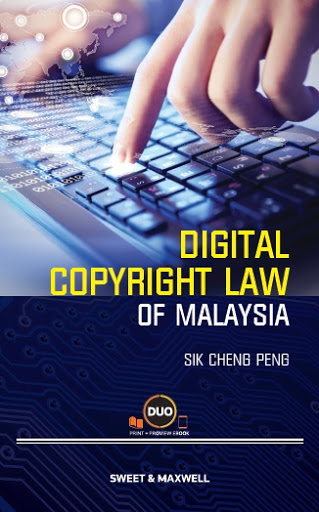


Description
Digital Copyright Law of Malaysia
Sik Cheng Peng
LLB, LLM, PhD (Malaya) Advocate & Solicitor, High Court of Malaya (Non-practising) Senior Lecturer, Faculty of Law, University of Malaya Deputy Director, University of Malaya Centre of Innovation and Commercialization (UMCIC), University of Malaya
Review Author: marceljude.ai
I have read the book for the purpose of this review. Digital Copyright Law of Malaysia is a focused, doctrinally careful, and comparative study of how Malaysian copyright law responds to digital technology, internet activity, artificial intelligence, online intermediaries, technological protection measures, and secondary liability. The book does not attempt to be a general textbook on all Malaysian copyright law. Its strength is narrower and more sophisticated: it studies the pressure points created when traditional copyright rules are applied to digital facts.
List of Contents
The book is organised around seven main chapters:
Chapter 1: Introduction
Chapter 2: The Exclusive Rights of Copyright Owners
Chapter 3: Authorship and Ownership of Copyright
Chapter 4: Exceptions to Copyright
Chapter 5: Limitation on Liabilities of Service Providers
Chapter 6: Technological Protection Measures and Rights Management Information
Chapter 7: Secondary Liability for Copyright Infringement
The preliminary materials include a preface, author information, table of cases, and table of statutes. The book ends with an index. The chapter structure itself shows the author’s method: begin with the legal framework, then move through rights, ownership, exceptions, intermediary liability, digital locks, rights information, and finally liability for those who facilitate infringement.
Overall Review of the Book
This is a strong specialist work. It is written for readers who already have some familiarity with copyright law, but it remains accessible because the author repeatedly explains why digital technology creates legal difficulty. The book’s central idea is that copyright law is not destroyed by digital technology, but it must be interpreted carefully, updated intelligently, and balanced fairly.
From a law professor’s standpoint, the book’s most valuable contribution is its Malaysian focus. Much writing on digital copyright relies heavily on United States, United Kingdom, European Union, or Australian law. This book uses those jurisdictions comparatively, but it does not let them swallow the Malaysian question. The author repeatedly returns to the Copyright Act 1987 and asks: what does this Malaysian provision actually mean, and how should it operate in online conditions?
The book’s second major strength is its attention to balance. It does not treat copyright owners as villains, nor does it treat internet users or technology companies as automatically innocent. The author recognises that copyright owners face real risks in a world of cheap, fast, high-quality digital copying. At the same time, the book is alert to overprotection: excessive control over reading, browsing, linking, research, interoperability, fair dealing, and technological innovation could damage the public interest.
Its third strength is doctrinal precision. The author takes statutory phrases seriously: “material form,” “communication to the public,” “the public,” “author,” “causes,” “circumvent,” “effective,” “knowledge,” “financial benefit,” and “right and ability to control.” This is exactly how a lawyer or judge must approach digital copyright disputes. The book is not merely describing technology; it is testing legal language under technological stress.
Its limitation is that the book is highly doctrinal. It is excellent for legal analysis, but less concerned with empirical policy, economics, user behaviour, platform governance, or broader digital culture. That is not a flaw in the book’s chosen mission, but it does mean the book is more useful for legal scholars, practitioners, policymakers, and advanced students than for casual readers.
Chapter 1 Review: Introduction
Chapter 1 sets the foundation by presenting copyright law as a legal field shaped by technology. The chapter begins with a historically important proposition: copyright has always developed in response to technological change. The printing press created the conditions for early copyright control; later technologies expanded copyright subject matter to films, broadcasts, sound recordings, computer programs, and databases. In the digital age, the same pattern continues, but at greater speed. The chapter then explains the international background. The author discusses the Berne Convention, TRIPS, the WIPO Copyright Treaty, and the WIPO Performances and Phonograms Treaty. These instruments matter because Malaysian copyright law does not exist in isolation. Digital copyright rules are partly shaped by international obligations, especially rules concerning computer programs, databases, communication to the public, technological protection measures, and rights management information. The discussion of the WIPO Internet Treaties is especially important. These treaties respond to online dissemination, digital storage, interactive access, and technological control. The author correctly identifies the right of communication to the public as a major digital-age right because online access often involves making works available to users at a time and place chosen by them. This is different from older broadcasting models.
The chapter then moves to the Malaysian Copyright Act 1987. The author traces major amendments, especially those addressing computer programs, databases, communication to the public, fair dealing, transient copies, technological protection measures, rights management information, anti-camcording provisions, and service-provider safe harbours. The chapter’s function is not merely historical; it shows that Malaysian copyright law has been repeatedly adjusted to meet digital conditions.
As a law professor, I would describe Chapter 1 as the book’s constitutional map. It tells the reader what kind of legal world the book occupies: one in which Malaysian copyright law is domestic, international, technological, and comparative all at once. The chapter succeeds because it avoids the mistake of treating digital copyright as a wholly new subject. Instead, it presents digital copyright as an extension and disruption of older copyright principles.
The chapter’s key insight is that copyright law remains flexible, but not automatically fair. Flexibility must be interpreted and structured. That theme carries through the whole book.
Chapter 2 Review: The Exclusive Rights of Copyright Owners
Chapter 2 is one of the most important chapters because it studies the rights that copyright owners actually control in the digital environment. The chapter focuses on three rights: reproduction, communication to the public, and distribution. These are the rights most strained by digital technology.
The discussion of reproduction begins with the idea that copying is fundamental to copyright. In the analogue world, reproduction usually meant making a visible or tangible copy. In the digital world, copying happens constantly: downloading, streaming, browsing, caching, buffering, loading into RAM, transferring files, and storing data. The author’s analysis of “material form” is therefore crucial. The question is whether temporary or technical copies count as reproductions.
The chapter’s treatment of temporary copies is especially strong. The author examines RAM copies, screen copies, cached copies, and copies generated during browsing or streaming. This is not merely technical trivia. If every temporary digital copy is treated as copyright infringement, ordinary internet use could become legally dangerous. If temporary copies are ignored entirely, copyright owners may lose meaningful control over digital exploitation. The chapter therefore captures the central tension of digital copyright: digital use often requires copying, but not all copying should be treated alike.
The author also asks who makes the copy. This is a sophisticated and necessary question. In automated systems, is the copy made by the user, the service provider, the software designer, the platform, or the machine? The chapter discusses this problem through comparative cases involving remote storage DVRs and automated recording systems. The distinction matters because exceptions may apply to users but not to commercial service providers.
The section on communication to the public is equally significant. The author explains that Malaysian law includes making works available so that members of the public may access them from a place and time individually chosen by them. This makes the right suitable for internet delivery, streaming, peer-to-peer sharing, and on-demand services. The author then examines the meaning of “the public,” including whether one-to-one transmissions can still amount to communication to the public when the overall service targets many users.
The hyperlinking discussion is one of the chapter’s most practically useful sections. The author distinguishes between merely pointing to lawful content already made available and actively facilitating access to infringing material. The chapter resists simplistic answers. A hyperlink is not always a copyright infringement, but linking conduct may become legally significant when it bypasses restrictions, organises infringing sources, or participates in a broader infringing scheme.
The chapter’s final major topic is the distribution right, especially digital resale. This section is conceptually rich. Physical copies can be resold because the copyright owner’s distribution right is exhausted after first sale. Digital copies complicate that logic because transferring a digital copy often involves making a new copy. The author’s analysis shows that digital ownership is often weaker than physical ownership, especially where transactions are structured as licences rather than sales.
As a chapter, this is doctrinally dense but highly valuable. It teaches that the exclusive rights of copyright owners cannot simply be copied from the physical world into the digital world without careful interpretation. The chapter also shows the author’s method: take Malaysian statutory language seriously, then test it against comparative case law.
Chapter 3 Review: Authorship and Ownership of Copyright
Chapter 3 turns from rights to the identity of the person who owns them. Authorship and ownership are basic copyright concepts, but digital technology complicates both. The chapter focuses on two problems: artificial intelligence and collaborative digital creation.
The chapter begins by explaining that the author is usually the first owner of copyright. Therefore, identifying the author matters not only for attribution, but also for ownership, transfer, licensing, moral rights, and duration. The author then examines the statutory definition of “author” under Malaysian law. For traditional literary, musical, and artistic works, authorship is strongly tied to human creation. For films, sound recordings, and broadcasts, authorship can include persons or bodies corporate who make arrangements for production.
The section on AI-created works is forward-looking. The author distinguishes between computer-assisted works and works created autonomously or substantially by artificial intelligence. That distinction is legally important. If a human uses a computer as a tool, authorship can still be human. But if an AI system generates a work with little or no human creative input, it becomes harder to identify an author under traditional doctrine.
The chapter raises difficult questions without pretending they are easy. Can AI be an author? If not, should the programmer, user, company, or person arranging the AI system be treated as author? If copyright duration depends on the life of the author, how does that work for non-human or corporate authors? What happens to moral rights? These are exactly the questions courts and legislatures must eventually confront. The author’s discussion of moral rights is especially useful. Moral rights are personal in nature: attribution, integrity, honour, and reputation. If a company or AI system is treated as an author, the moral rights framework becomes strained. The chapter uses Malaysian authority to show that corporate authorship and moral rights do not fit easily together.
The joint authorship section addresses collaborative online creation. Digital tools allow many people to contribute to a single work: shared documents, wikis, collaborative coding, collective databases, and user-generated platforms. The chapter explains that joint authorship requires collaboration and inseparable contributions. The difficulty is determining when small, scattered, or edited contributions become authorial contributions.
The discussion of Wikipedia-like collaboration is particularly clear. A collectively produced work may have many contributors, but managing copyright in such a work becomes complex. Licensing frameworks, such as open licences, may solve practical problems, but they do not eliminate the underlying authorship issue. Chapter 3 is one of the book’s most intellectually ambitious chapters. It shows that digital copyright is not only about infringement. It is also about legal personality, creativity, authorship, and control. The chapter would be especially useful in a seminar on AI and intellectual property.
Chapter 4 Review: Exceptions to Copyright
Chapter 4 examines the other side of copyright: the activities that copyright owners cannot control. This chapter is important because rights without exceptions can become excessive. In digital copyright, exceptions are not minor technicalities; they are essential safeguards for research, education, browsing, search, criticism, innovation, and public access.
The chapter begins with fair dealing under Malaysian law. The author explains that the Malaysian fair dealing provision was broadened by the insertion of “including,” making the list of permitted purposes less closed and more flexible. The chapter also discusses the four fairness factors: purpose and character of the dealing, nature of the work, amount used, and effect on the market. The author notes the similarity to United States fair use analysis.
This is a major point. A flexible fair dealing provision allows courts to respond to new digital uses that legislators may not have predicted. The author’s use of Google Books is well chosen. The Google Books litigation raises a central digital question: can copying entire books be lawful if the purpose is indexing, search, research, and discovery rather than substitution? The author analyses why transformative use matters, why full copying may sometimes be necessary, and why market harm must be assessed realistically.
The cached links discussion is also strong. Search engines copy and store webpage information to provide search results and cached access. That may technically involve reproduction, but it also serves public interests in searchability, information retrieval, and internet functionality. The author’s analysis suggests that fair dealing may be the better defence for search-engine caching in Malaysia, especially where service-provider safe harbours do not neatly apply.
The chapter then turns to the transient copy exception. This is one of the most practically important digital exceptions. Browsing the web creates temporary technical copies. If those copies were treated as infringements, ordinary internet use would be legally absurd. The author explains that section 13(2)(q) of the Malaysian Copyright Act addresses transient and incidental electronic copies required for viewing, listening, or using works made available on a network.
From a law professor’s perspective, Chapter 4 is one of the book’s best chapters because it insists that copyright exceptions are not loopholes. They are part of the structure of copyright law. The chapter’s deeper argument is that digital copyright must protect not only owners, but also users, researchers, readers, search engines, educators, and technological functions that make the internet usable.
Chapter 5 Review: Limitation on Liabilities of Service Providers
Chapter 5 addresses service-provider liability, commonly described as safe harbour or limitation of liability. This is a central topic in internet copyright law because online platforms, internet service providers, search engines, hosting services, and content-sharing platforms are intermediaries between users and copyright owners.
The chapter begins by distinguishing internet service providers from online service providers. Some merely provide access or transmission. Others host content, organise information, cache materials, or provide search tools. The author recognises that these actors are essential to the internet, but they may also be connected to infringement carried out by users.
The chapter’s central legal question is how to protect neutral intermediaries without giving shelter to culpable intermediaries. That balance is difficult. If service providers are too exposed to liability, they may over-police, remove lawful content, or avoid innovation. If they are too protected, copyright owners may be unable to enforce their rights effectively.
The author examines Malaysian provisions on limitation of liability, especially sections 43C, 43D, and 43E. Section 43C concerns mere conduit services: transmission, routing, and provision of connections. The author rightly emphasises the passive and automatic nature of such services. A mere conduit should not generally be treated as the maker of infringement simply because infringing data passed through its network.
Section 43D concerns system caching. The author explains that caching improves efficiency by storing copies closer to users. The legal challenge is that caching involves copying, but it is often technical, automatic, and necessary for internet performance. The author’s critique is sharp: Malaysia’s provision may not handle notifications as neatly as comparable foreign provisions, especially where material has not yet been removed from the originating site.
Section 43E concerns storage at the user’s direction and information-location tools. This is the part most relevant to platforms hosting user-generated content and search tools linking users to online locations. The chapter examines conditions such as lack of actual or apparent knowledge, no direct financial benefit, no right and ability to control infringing activity, and compliance with notice-and-takedown procedures. The notice-and-takedown discussion is one of the chapter’s strongest parts. The author carefully considers whether the Malaysian procedure favours copyright owners over users. A major concern is that allegedly infringing material may be removed quickly upon notification, while restoration may be slower and more burdensome. The chapter also notes the importance of good faith statements and the risk of abusive takedown notices.
As a law professor, I would say Chapter 5 is the book’s most practice-oriented chapter. It would be highly useful for lawyers advising platforms, internet companies, copyright owners, or users whose content has been removed. Its central lesson is that intermediary liability must be designed with procedural fairness. The law must ask not only who is liable, but who must act, when, upon what knowledge, and with what safeguards.
Chapter 6 Review: Technological Protection Measures and Rights Management Information
Chapter 6 deals with technological protection measures, often called TPMs, and rights management information, or RMI. This chapter moves from copyright as legal control to copyright as technological control.
The chapter begins with the reality that digital copying is easy, cheap, fast, and high quality. Copyright owners therefore use technological tools to protect works. These include encryption, access controls, copy controls, digital rights languages, watermarking, monitoring tools, and trusted systems. The author explains that technology can protect copyright, but legal protection for technology can also expand copyright beyond its proper limits.
This is the chapter’s central tension. If TPM law is too broad, copyright owners may gain control over access, reading, research, interoperability, repair, competition, and legitimate uses. If TPM law is too weak, digital works may be easily copied and distributed without authorisation. The author’s treatment is careful because she does not reject TPMs outright. Instead, she asks how far the law should protect them. The chapter examines the definition of TPM under Malaysian law and asks whether it includes access-control TPMs as well as copy-control TPMs. This is an important distinction. Copy-control measures prevent copying. Access-control measures prevent entry or access. Copyright traditionally controls copying, communication, distribution, and related acts, but not mere reading or access. If access controls are protected too broadly, the law may create a new quasi-right to control access.
The author’s analysis of “effectively” is also valuable. A TPM should not need to be perfect; if perfection were required, almost no TPM would qualify. But it should actually function as a technological barrier, not merely a discouragement. The chapter uses comparative case law to show how courts have handled technologies such as DVD encryption, game-console protection, modchips, and printer-cartridge compatibility.
The discussion of circumvention is doctrinally important. The author asks what it means to “circumvent” and whether unauthorised use of a password counts. The author’s approach is cautious: not every unauthorised act should automatically be treated as circumvention if other legal regimes, such as computer misuse law or ordinary copyright infringement, already address the wrong.
The chapter also evaluates the exceptions to TPM liability. This is where the author’s critique becomes strongest. If the law prohibits circumvention but provides narrow exceptions, legitimate activities such as interoperability, research, security testing, and fair dealing may be weakened. Even more troubling is the treatment of trafficking in circumvention devices. If users are allowed to circumvent for legitimate purposes but cannot obtain the tools needed to do so, the exception becomes practically hollow.
The RMI section explains that rights management information includes information identifying the work, author, owner, performer, terms of use, or codes representing such information when attached to a work or connected with communication to the public. The author explains that section 36B prohibits unauthorised removal or alteration of electronic RMI and certain dealings with works where RMI has been removed or altered, provided the relevant knowledge requirement is satisfied.
Chapter 6 is a strong warning against technological overreach. Its best contribution is showing that anti-circumvention law can quietly reshape copyright. Once legal protection is given to digital locks, the question is no longer only “was copyright infringed?” It becomes “was the lock bypassed?” That shift can be dangerous unless exceptions and statutory definitions are carefully controlled.
Chapter 7 Review: Secondary Liability for Copyright Infringement
Chapter 7 is the book’s litigation chapter. It asks when a person who does not directly copy, upload, or communicate a work should nevertheless be liable because they facilitated, encouraged, authorised, induced, or participated in another person’s infringement.
The chapter begins with the practical problem of enforcement. In peer-to-peer file sharing and unlawful streaming ecosystems, the direct infringers may be numerous, anonymous, outside the jurisdiction, or financially unattractive defendants. Copyright owners therefore seek to sue intermediaries, operators, software providers, platform designers, or websites that organise access to infringement.
The Malaysian statutory issue is section 36(1) of the Copyright Act 1987, especially the word “causes.” The author explains that if “causes” is interpreted narrowly, secondary liability in Malaysia becomes too limited. A narrow interpretation would make it difficult to hold P2P operators or unlawful-stream aggregators liable, even where their systems are clearly designed to support infringement.
The chapter then compares Malaysian law with UK and Australian approaches to authorisation liability. In the UK, authorisation has historically required more than mere supply of equipment, but liability may arise where the defendant sanctions, approves, or countenances infringement. In Australia, authorisation has been developed more explicitly through factors such as the power to prevent infringement, relationship with infringers, and reasonable steps taken to prevent infringement.
The P2P discussion is detailed and useful. The author explains how peer-to-peer systems operate: users install software, join a network, share designated files, search other users’ files, and transfer files directly between peers. The chapter notes that decentralised systems are harder to regulate because operators may not directly host infringing files.
The chapter then considers websites that aggregate unlawful streams. These websites may not host the infringing content themselves, but they organise, index, categorise, and direct users to unlawful streams. The author’s approach is sensible: liability should depend on the operator’s role, knowledge, control, inducement, and participation, not merely on the technical fact that the content is hosted elsewhere. The United States secondary liability discussion covers vicarious liability, contributory liability, and inducement liability. This comparative section is valuable because it shows different routes to similar legal outcomes. Vicarious liability focuses on benefit and control. Contributory liability focuses on knowledge and material contribution. Inducement liability focuses on purposeful conduct encouraging infringement. The author is especially interested in how these doctrines protect innovation while still reaching culpable actors. The joint tortfeasance section is an important alternative. If Malaysian statutory wording is too narrow, the author suggests that common-law tort principles may help. Where operators and users act pursuant to a common design, or where operators procure infringement, joint tortfeasance may provide a route to liability. The author argues that this may be appropriate where operators provide facilities and guidance that aid infringing conduct.
The chapter’s conclusion returns to balance. The author recognises the tension identified in cases like Grokster: copyright law must support creative production, but it must also avoid suppressing technological innovation. The author’s criticism of Malaysian law is clear: if “causes” is read literally and narrowly, Malaysian secondary liability may be too weak to address modern digital infringement effectively. As a law professor, I regard Chapter 7 as one of the book’s most important contributions. It does not merely explain cases; it identifies a structural weakness in Malaysian copyright enforcement. The chapter is also careful not to impose liability on every technology provider. It reserves liability for operators whose conduct shows real participation, inducement, control, or common design.
Evaluation of the Book’s Method
The author’s method is comparative, statutory, and problem-based. Each chapter identifies a digital problem, reads the Malaysian statute closely, then compares foreign approaches. This is effective because Malaysian courts often face questions not yet fully resolved in local case law. Comparative law therefore becomes a source of reasoning, not a substitute for Malaysian law.
The comparative jurisdictions are well chosen. The United States is useful for fair use, safe harbour, TPMs, and secondary liability. The United Kingdom is useful because of shared common-law heritage and statutory interpretation. Australia is useful because its copyright legislation and authorisation principles offer especially relevant comparisons. The European Union is useful for communication to the public, transient copies, and intermediary rules.
The book also has a strong statutory conscience. It repeatedly warns that courts must not stretch copyright language beyond its proper function. For example, the author is cautious about treating access control as equivalent to copyright control, cautious about turning ordinary browsing into infringement, and cautious about making platforms liable merely because their systems are used by others. Strengths of the Book
The first major strength is its Malaysian specificity. The book fills a real gap by analysing digital copyright from the standpoint of Malaysian law rather than merely importing foreign doctrine.
The second strength is its balance. The author understands both sides: copyright owners need protection against mass digital infringement, but the public needs fair dealing, browsing rights, search functionality, interoperability, and innovation.
The third strength is its clear handling of complex technology. The book explains P2P systems, caching, hyperlinks, RAM copies, TPMs, RMI, AI-created works, and user-generated content in legally relevant terms.
The fourth strength is the author’s careful use of case law. The book does not cite foreign cases ornamentally. It uses them to test statutory language and to predict how similar issues might arise in Malaysia.
The fifth strength is its reform value. Several chapters identify statutory ambiguities or weaknesses that Malaysian lawmakers could address, especially in service-provider liability, TPM exceptions, and secondary liability.
Weaknesses or Limitations
The book’s main limitation is density. It is not a light introduction to copyright law. A beginner may struggle with the number of statutory provisions, comparative cases, and technical distinctions.
A second limitation is that the book is more doctrinal than empirical. It does not deeply examine how Malaysian creators, platforms, students, libraries, or users actually experience digital copyright enforcement.
A third limitation is that some topics could support whole books of their own, especially AI authorship, platform governance, and algorithmic enforcement. The author acknowledges that digital copyright is too broad for one volume to cover every issue.
A fourth limitation is that the book’s careful legal method sometimes leaves the reader wanting firmer reform proposals. The author identifies problems very well, but in some areas a more direct legislative blueprint would have been useful.
Final Judgment
Digital Copyright Law of Malaysia is an excellent specialist work. It should be read by Malaysian intellectual property lawyers, judges dealing with online infringement, policymakers, law lecturers, postgraduate students, and platform counsel. It is especially useful because it does not treat digital copyright as a purely foreign problem. It asks how Malaysian law should respond to digital copying, online access, AI authorship, fair dealing, transient copies, service-provider liability, technological locks, rights management information, and secondary liability.
The book’s deepest contribution is its insistence on balance. Copyright law must protect creators and copyright owners, but it must not convert every act of reading, browsing, linking, researching, interoperating, or innovating into a permission-based activity. The author shows that digital copyright law succeeds only when rights, exceptions, enforcement, and technological realities are made to work together.
As a law professor’s review, my assessment is that this book is doctrinally rigorous, nationally important, and intellectually disciplined. It is not merely a description of Malaysian digital copyright law; it is an argument for how that law should be interpreted in a technologically complex world.
 marceljude.ai @ 0128285778 |
- MALAYSIA'S 1ST AI LAWYER - CLICK HERE
- ISMAIL – INTEGRATED SINGAPORE/MALAYSIA AI & LAW (Library)
- OPENING OF SINGAPORE MALAYSIA AI CENTRE AND LAW LIBRARY
- LIFT - LAW INSTRUMENTS FORMS & TEMPLATES
- LAWS OF MALAYSIA FOR SINGAPOREAN DUMMIES
- HANNAH YEOH'S ARTIFICIAL INTELLIGENCE LAW ENCYCLOPEDIA
- LEAD CR - Law Ecosystem Archive Databases on CD-ROM
- BREAKING NEWS FROM MJN
- CLICK HERE CO. PROFILE
- EXCITING NEW SERIES - THE ADVENTURES OF BOBBY TAN -ADVOCATE & SOLICITOR IN THE HIGH COURT OF NORTH BORNEO by marceljude.ai
- MEDICO LEGAL - BY PRISKILA AKWILA & GLORIOUS PETAL SDN BHD - powered by marceljude.ai
- MISCELLANOUS
- ANNOTATED STATUTES OF SABAH - A NEW SERIES
- e-library - marceljude.ai
- DRAFT - DOCUMENT RESEARCH & AUTOMATED FILING TECHNOLOGY
- CLARA – Case Law Analysis & Retrieval AI
- FOR RESEARCH REQUEST CLICK HERE
- CLICK HERE TO ASK ANYTHING
- RAMBO'S LAW - THE LAW OF THE LAW JUNGLE - EXCITING NEW SERIES - CASE ANALYSIS BY JOHN RAMBO @ +60138646786
- PRISKILA AKWILA ADVOCATES - High Court of Sabah & Sarawak @ Kota Kinabalu
- COLA - COMMONWEALTH ONLINE LAWCASES AI -marceljude.ai
- THE LAW LIBRARY THAT COMES TO YOU ANYWHERE AND ANYTIME
- marceljude.ai training academy
