
AN EXTENSIVE REVIEW OF THE MALAYSIAN RULES OF COURT COMMENTARY Review by marceljude.ai
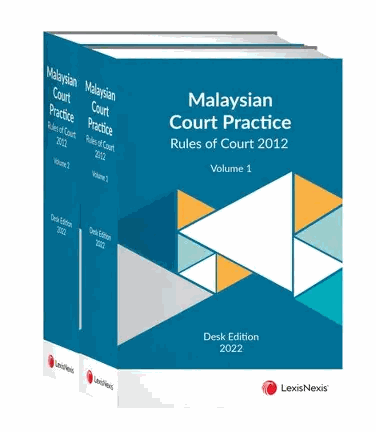


Description
AN EXTENSIVE REVIEW OF THE MALAYSIAN RULES OF COURT COMMENTARY
Review by marceljude.ai
Executive Review
This book is not merely a reproduction of the Rules of Court 2012. It is a comprehensive procedural commentary explaining how civil litigation is commenced, managed, tried, adjudicated and enforced in the Malaysian superior and subordinate courts.
Its central strength is the integration of four materials:
the text of each procedural rule; the historical relationship between the Rules of Court 2012 and the former Rules of the High Court and Subordinate Courts Rules; comparative references, particularly to Singaporean and English procedure; and judicial decisions explaining how the rules operate in actual litigation.
The book’s organising principle is the “Order”. Each Order is effectively a chapter devoted to one procedural stage or specialised proceeding. The structure broadly follows the life of a civil case: commencement, service, appearance, pleadings, interlocutory applications, evidence, trial, judgment, enforcement, appeals, costs and specialised proceedings.
The recurring judicial philosophy is that procedural rules exist to facilitate justice. Nevertheless, the book repeatedly warns that Order 1A and Order 2 do not excuse deliberate, reckless or fundamentally prejudicial non-compliance. The distinction between a curable procedural irregularity and a fundamental defect remains one of the book’s most important themes.
LIST OF CONTENTS
The page numbers below are the book’s printed page numbers.
Order 1 — Citation, Application, Interpretation and Forms — pp. 1–10
Order 1A — Court or Judge Shall Have Regard to Justice — pp. 11–18
Order 2 — Effect of Non-Compliance — pp. 19–34
Order 3 — Time — pp. 35–46
Order 4 — Consolidation of Proceedings — pp. 47–52
Order 5 — Mode of Beginning Civil Proceedings — pp. 53–60
Order 6 — Writs of Summons: General Provisions — pp. 61–78
Order 7 — Originating Summonses — pp. 79–85
Order 8 — Originating and Other Motions: General Provisions — historical commentary
Order 9 — Petitions: General Provisions — historical commentary
Order 10 — Service of Originating Process — pp. 91–102
Order 11 — Service of Process Out of Jurisdiction — pp. 103–126
Order 12 — Appearance — pp. 127–142
Order 13 — Default of Appearance to Writ — pp. 143–170
Order 14 — Summary Judgment — pp. 171–229
Order 15 — Causes of Action, Counterclaims and Parties — pp. 230–300
Order 16 — Third-Party Proceedings — pp. 301–324
Order 17 — Interpleader — pp. 325–344
Order 18 — Pleadings — pp. 345–432
Order 19 — Default of Pleadings — pp. 433–452
Order 20 — Amendments — pp. 453–491
Order 21 — Withdrawal and Discontinuance — pp. 492–508
Order 22 — Payment Into and Out of Court — historical commentary
Order 22A — Interim Payments — approximately pp. 509–534
Order 22B — Offer to Settle — approximately pp. 535–558
Order 23 — Security for Costs — approximately pp. 559–574
Order 24 — Discovery and Inspection — pp. 575–628
Order 25 — Summons for Directions — historical commentary
Order 26 — Interrogatories — pp. 629–640
Order 27 — Admissions — pp. 641–652
Order 28 — Originating Summons Procedure — pp. 653–674
Order 29 — Interlocutory Injunctions and Preservation of Property — pp. 675–720
Order 30 — Receivers — pp. 721–730
Order 31 — Sales of Immovable Property — pp. 731–740
Order 31A — E-Lelong System — immediately following Order 31
Order 32 — Applications and Proceedings in Chambers — pp. 741–770
Order 33 — Mode of Trial — pp. 771–786
Order 34 — Pre-Trial Case Management — pp. 787–804
Order 35 — Proceedings at Trial — pp. 805–834
Order 35A — Witness Statements — historical commentary
Order 36 — Trials and Inquiries by Registrar — pp. 835–838
Order 37 — Assessment of Damages — pp. 839–850
Order 38 — Evidence: General — pp. 851–878
Order 39 — Evidence by Deposition — pp. 879–894
Order 40 — Court Experts — pp. 895–912
Order 40A — Experts of Parties — immediately preceding p. 913
Order 41 — Affidavits — pp. 913–936
Order 42 — Judgments and Orders — pp. 937–964
Order 43 — Accounts and Inquiries — pp. 965–983
Order 44 — Proceedings Under Equitable Judgments and Orders — pp. 984–1004
Order 45 — Enforcement of Judgments and Orders — pp. 1005–1033
Order 46 — Writs of Execution: General — pp. 1034–1060
Order 47 — Writs of Seizure and Sale — pp. 1061–1076
Order 48 — Examination of Judgment Debtor — pp. 1077–1082
Order 49 — Garnishee Proceedings — pp. 1083–1100
Order 50 — Charging Orders and Stop Orders — pp. 1101–1114
Order 51 — Receivers: Equitable Execution — pp. 1115–1120
Order 51A — Rateable Distribution — immediately following Order 51
Order 52 — Committal — pp. 1121–approximately 1160
Order 53 — Judicial Review — approximately pp. 1161–1198
Order 54 — No operative Order; historical note
Order 55 — Appeals to High Court from Subordinate Courts — pp. 1199–1228
Order 56 — Appeals from Registrar to Judge — following p. 1228
Order 57 — Transfer of Proceedings — pp. 1247–1254
Order 58 — No operative Order; historical note
Order 59 — Costs — pp. 1260–1338
Order 60 — Proceedings by and Against Firms — pp. 1339–1348
Order 61 — Proceedings by and Against the Estate of a Deceased Person — pp. 1349–1352
Order 62 — Service of Documents — pp. 1353–1378
Order 63 — Paper, Printing, Notices and Copies — pp. 1379–1404
Order 64 — Change of Solicitors — pp. 1405–1416
Order 65 — Service of Foreign Process — pp. 1417–1424
Order 66 — Evidence for Foreign Courts — pp. 1425–1432
Order 67 — Reciprocal Enforcement of Judgments — pp. 1433–1450
Order 68 — No operative Order; historical note
Order 69 — Arbitration Proceedings — pp. 1451–1487
Order 69A — Adjudication Proceedings — immediately following Order 69
Order 70 — Admiralty Proceedings — pp. 1488–1599
Order 71 — Non-Contentious Probate — pp. 1600–1640
Order 72 — Contentious Probate — pp. 1641–1662
Order 73 — Proceedings by and Against Government — pp. 1663–1677
Order 74 — Debtors Act 1957 — pp. 1678–1708
Order 75 — Distress Act 1951 — pp. 1709–1718
Order 76 — Disability — pp. 1719–1744
Order 77 — Partners — pp. 1745–1770
Order 78 — Defamation Actions — approximately pp. 1771–1792
Order 79 — Moneylenders’ Actions — pp. 1793–1800
Order 80 — Administration and Similar Actions — pp. 1801–1812
Order 81 — Specific Performance and Summary Judgment — pp. 1813–1826
Order 82 — Debenture Holders’ Actions — pp. 1827–1834
Order 83 — Charge Actions — pp. 1835–1854
Order 84 — Proceedings Relating to Infants — pp. 1855–1860
Order 85 — Bills of Sale Act 1950 — approximately pp. 1861–1870
Order 85A — Hire-Purchase Proceedings — immediately preceding p. 1871
Order 86 — Inheritance (Family Provision) Act 1971 — pp. 1871–1875
Order 86A — Employment Act 1955 — approximately pp. 1876–1892
Order 87 — Trade Marks Proceedings — immediately preceding p. 1893
Order 88 — Companies Proceedings — pp. 1893–1905
Order 89 — Summary Possession of Land — pp. 1906–1921
Order 90 — Lodgment in Court and Payment to Sheriff — pp. 1922–1938
Order 91 — Court Fees — pp. 1939–1942
Order 92 — Miscellaneous — pp. 1943–1960
Order 93 — Small Claims Procedure — pp. 1961–1973
Order 94 — Repeal, Saving and Transitional Provisions — following p. 1973
CHAPTER-BY-CHAPTER REVIEW
Order 1 — Citation, Application, Interpretation and Forms Printed pages 1–10
Order 1 establishes the vocabulary and territorial reach of the entire procedural code. Its subsections address citation and commencement, application, definitions, interpretation of references to Orders and rules, references applicable to Sabah and Sarawak, possession actions, prescribed forms and the applicability of particular Orders.
The commentary is particularly useful on the historical unification of High Court and subordinate-court procedure. It explains that the Rules form a single procedural framework while retaining distinctions required by jurisdiction, statutory context and local law.
The definitions are not ornamental. Expressions such as “action”, “cause”, “Court”, “Judge”, “pleading”, “Registrar” and “writ” determine the scope of later Orders. The treatment of forms is pragmatic: prescribed forms should be followed, but a variation that preserves substance and causes no prejudice need not necessarily invalidate a proceeding.
The chapter is an effective foundation, although its density means it is best read together with the later Order being applied.
Order 1A — Court or Judge Shall Have Regard to Justice Printed pages 11–18
The sole rule is accompanied by substantial commentary on substantive justice and technical non-compliance.
The book rejects two extremes. Courts should not defeat meritorious cases through harmless technical objections, but neither should Order 1A become a universal excuse for indolence, intentional default or breach of a mandatory rule.
The subsections examine the principle’s history, explanation and scope. They distinguish genuine inadvertence from cavalier disregard, and compensable prejudice from defects affecting jurisdiction or the fairness of proceedings.
This is one of the book’s most important chapters because it supplies the interpretive philosophy for every subsequent Order.
Order 2 — Effect of Non-Compliance Printed pages 19–34
The principal subsections concern:
non-compliance with the Rules; applications to set aside for irregularity; and preliminary objections based on non-compliance.
The chapter explains that procedural non-compliance ordinarily creates an irregularity rather than automatically nullifying a proceeding. The court possesses broad powers to amend, regularise or impose terms, including costs.
The commentary nevertheless preserves limits. Defects involving a nonexistent party, expired originating process, absence of jurisdiction, failure to satisfy a statutory prerequisite or serious prejudice may be incapable of cure.
Its strongest discussion concerns the tension between “nullity” and “irregularity”. The book favours examining the legal consequence of the defect rather than mechanically attaching labels.
Order 3 — Time Printed pages 35–46
This chapter explains computation, enlargement and abridgement of procedural time.
Its subsections cover periods fixed by the Rules or court orders, acts required within specified periods, excluded days, extension or reduction of time and the consequences of default.
The practical message is that time limits must first be classified. Some are extendable as part of case management; others arise from statute and may be jurisdictional. Practitioners must therefore identify the source of the deadline before assuming that the court can extend it.
The chapter is valuable because it treats time as a substantive litigation risk rather than clerical arithmetic.
Order 4 — Consolidation of Proceedings Printed pages 47–52
This Order deals with consolidation, joint trials and the management of related proceedings.
The controlling considerations are common questions of law or fact, overlapping relief, risk of inconsistent judgments, duplication of evidence and procedural economy. Consolidation is discretionary and must not erase meaningful differences between the parties’ cases.
The commentary usefully distinguishes formal consolidation from directions that proceedings be heard together or sequentially.
Order 5 — Mode of Beginning Civil Proceedings Printed pages 53–60
The chapter distinguishes commencement by writ from commencement by originating summons.
A writ is appropriate where substantial factual disputes require pleadings, discovery and oral evidence. An originating summons is appropriate where the main issue concerns construction, legal rights or relatively undisputed facts.
The subsections also explain commencement under written law, proceedings involving statutory jurisdiction and the requirement that corporations ordinarily act through solicitors.
The chapter’s practical merit lies in showing that choosing the wrong originating process may create delay and costs, although the court may sometimes cure or convert the process.
Order 6 — Writs of Summons Printed pages 61–78
The subsections address the form of the writ, endorsements, capacity, solicitor and address details, concurrent writs, issue, duration and renewal.
The commentary emphasises accurate identification of parties, causes of action and relief. A writ must alert the defendant to the case that must be answered.
Renewal is treated as exceptional rather than automatic. The plaintiff must explain efforts at service and delay. The discussion also distinguishes mistakes attributable to the registry from failures attributable to the litigant.
Order 7 — Originating Summonses Printed pages 79–85
The chapter covers the form, issue, service and evidential structure of originating summons proceedings, including ex parte applications.
The procedure is affidavit-centred and ordinarily unsuitable for serious factual controversies requiring extensive cross-examination. Nevertheless, the court may give directions or convert proceedings where justice requires.
Orders 8 and 9 — Motions and Petitions Historical commentary
These chapters explain why originating motions and petitions ceased to be general methods of commencing civil proceedings.
Their value is historical and interpretive: specialised legislation may still use older terminology, but the modern procedural framework principally employs the writ and originating summons.
Orders 10 and 11 — Service Within and Outside Jurisdiction Printed pages 91–126
Order 10 deals with personal service, prepaid acknowledgment-of-receipt post, service on agents, contractual service, possession claims and originating summonses.
Order 11 addresses service outside jurisdiction, the categories permitting such service, supporting evidence, forum considerations and the form and transmission of process.
The commentary treats valid service as the foundation of procedural jurisdiction over a defendant. Substituted service is not merely a convenient alternative; it requires evidence that ordinary service is impracticable and that the proposed method is likely to bring the proceeding to the defendant’s attention.
Service abroad requires additional attention to international arrangements, local foreign law and proof of service.
Orders 12 and 13 — Appearance and Default Printed pages 127–170
Order 12 explains entry, time, memorandum and conditional appearance, as well as challenges to jurisdiction.
Order 13 deals with default judgments where a defendant fails to appear. Its subsections distinguish liquidated demands, unliquidated damages, detention of goods, possession and other claims.
The book stresses that default judgment depends on regular originating process and valid service. Setting aside is influenced by promptness, explanation, merits and prejudice, but an irregular judgment is treated differently from a regular judgment.
Order 14 — Summary Judgment Printed pages 171–229
This is one of the book’s most extensively analysed chapters.
Its subsections address the supporting affidavit, hearing, leave to defend, conditional leave, judgment for part of a claim, disposal of counterclaims and costs.
The plaintiff must first establish a complete prima facie claim. The burden then shifts to the defendant to disclose a bona fide triable issue. The court does not conduct a miniature trial, resolve genuine conflicts of evidence or finally determine credibility.
The commentary is especially strong on sham defences, bare denials, documentary contradictions and the distinction between an improbable defence and one that is legally unsustainable.
Orders 15–17 — Parties, Third Parties and Interpleader Printed pages 230–344
Order 15 examines joinder of causes, plaintiffs and defendants, representative proceedings, misjoinder, non-joinder and substitution.
Order 16 governs claims for contribution, indemnity or connected relief against third parties. It explains leave, service, appearance, directions and the relationship between the principal and third-party claims.
Order 17 protects a neutral stakeholder facing competing claims. The applicant must demonstrate genuine neutrality and willingness to transfer the property or fund as directed.
Together, these chapters show how civil procedure gathers all necessary parties and disputes into an effective adjudicative structure without sacrificing fairness.
Orders 18–21 — Pleadings, Default, Amendment and Discontinuance Printed pages 345–508
Order 18 explains statements of claim, defences, replies, counterclaims, particulars, admissions, denials and striking out. Pleadings define the battlefield: evidence cannot ordinarily repair a material cause of action never pleaded.
Order 19 supplies consequences for failure to plead. The appropriate default procedure depends on the nature of the relief.
Order 20 provides liberal amendment powers, particularly before trial, but examines prejudice, limitation, altered capacity, new causes of action and amendments after judgment.
Order 21 distinguishes withdrawal from discontinuance and explains when leave or consent is required. A discontinuance can carry costs consequences and does not invariably determine all collateral rights.
These chapters form the procedural core of adversarial litigation.
Orders 22, 22A, 22B and 23 — Payments, Settlement and Security Printed pages approximately 509–574
Order 22 is largely historical.
Order 22A allows interim payment where liability is established or highly secure and the claimant should not be forced to await final assessment.
Order 22B creates a formal offer-to-settle mechanism. Its central feature is the costs consequence of an unreasonable refusal to accept an offer that proves more favourable than the judgment.
Order 23 permits security for costs where statutory conditions and justice justify protection of a defendant. It must not be used oppressively to prevent a genuine claim merely because the plaintiff lacks means.
Orders 24–28 — Pre-Trial Information and Originating Summons Procedure Printed pages 575–674
Order 24 governs discovery, lists of documents, inspection, privilege, specific discovery and non-compliance. The book emphasises relevance, proportionality and the continuing duty of disclosure.
Order 25 is historical.
Order 26 covers interrogatories. Questions must assist the fair and economical resolution of material issues and must not become oppressive cross-examination in written form.
Order 27 concerns formal admissions of facts and documents, narrowing the matters requiring proof.
Order 28 explains directions, affidavit evidence, cross-examination and disposal of originating summons proceedings.
Orders 29–32 — Interim Protection and Chamber Applications Printed pages 675–770
Order 29 deals with interlocutory injunctions, preservation, detention, inspection, samples, sale of perishable property and related interim orders. The principal concerns are whether there is a serious issue, adequacy of damages, balance of convenience and preservation of the status quo. Full and frank disclosure is crucial in ex parte applications.
Order 30 governs receivers. Appointment is an equitable protective remedy, not a means of prematurely determining ownership.
Orders 31 and 31A regulate court-ordered sales and electronic auctions, including valuation, reserve price, proclamation, conduct of sale and distribution.
Order 32 supplies the general procedure for applications in chambers, affidavits, service and adjournment.
Orders 33–37 — Trial Management, Trial and Damages Printed pages 771–850
Order 33 determines whether trial should proceed before a judge, Registrar or through an issue or inquiry.
Order 34 gives the court extensive pre-trial case-management authority. Its objective is readiness, proportionality and prevention of trial by ambush. Non-compliance may lead to costs, exclusion of evidence or dismissal in serious cases.
Order 35 deals with trial sequence, absence of parties, adjournments and judgment.
Order 35A records the historical development of witness statements.
Order 36 regulates inquiries and trials before the Registrar.
Order 37 explains assessment after liability has been established, including notice, evidence, attendance and judgment for assessed damages.
Orders 38–41 — Evidence, Experts and Affidavits Printed pages 851–936
Order 38 covers proof by witnesses, affidavits, documents, subpoena and cross-examination.
Order 39 provides for depositions where evidence must be preserved or obtained from a witness who cannot conveniently attend.
Orders 40 and 40A distinguish a neutral court expert from experts appointed by parties. Expert evidence must assist the court and must not become partisan advocacy.
Order 41 is the central affidavit chapter. Its subsections cover form, multiple deponents, illiterate or blind deponents, defective affidavits, contents, scandalous material, alterations, independence of the oath administrator, filing, originals, exhibits, foreign affidavits and language.
The commentary correctly stresses that affidavits should contain admissible facts, identify sources of information where allowed, and separate evidence from submission.
Orders 42–44 — Judgment, Accounts and Equitable Relief Printed pages 937–1004
Order 42 addresses delivery, dating, drawing up, entry, correction and enforcement of judgments and orders.
Order 43 deals with accounts, inquiries, certificates and supporting evidence.
Order 44 governs further proceedings required to implement equitable judgments, including inquiries, directions and consequential relief.
These chapters demonstrate that a successful judgment must be framed precisely enough to be implemented and enforced.
Orders 45–51A — Enforcement Printed pages 1005–1120
Order 45 identifies the correct enforcement method for payment, possession, delivery or performance.
Order 46 regulates leave, issue, duration and renewal of writs of execution and the recording of satisfaction.
Order 47 provides the machinery for seizure and sale, including immovable property, advertisements, auctions, postponement and challenges based on material irregularity or fraud.
Order 48 enables examination of a judgment debtor regarding assets, debts and means.
Order 49 permits attachment of debts due from third parties through garnishee proceedings.
Order 50 concerns charging and stop orders over securities or funds.
Order 51 permits equitable appointment of a receiver where ordinary execution is inadequate.
Order 51A governs rateable distribution among competing execution creditors.
The overall lesson is that judgment and enforcement are distinct stages. A successful litigant must select the legally appropriate execution process.
Orders 52 and 53 — Committal and Judicial Review Printed pages approximately 1121–1198
Order 52 concerns contempt and committal. Because personal liberty is at stake, procedural safeguards, clear notice, precise allegations and proof to the applicable standard are indispensable.
Order 53 governs judicial review. Its subsections address leave, time, the proper application, relief, discovery, hearing, proper parties and appeals.
The commentary examines standing, amenability, illegality, irrationality, procedural unfairness, public-law remedies and the distinction between judicial review and private-law proceedings.
A particularly valuable discussion concerns intervention by a “proper person” with a direct interest and the Attorney General’s public-interest role.
Orders 54–59 — Appeals, Transfer and Costs Printed pages 1199–1338
Order 54 contains no operative rules.
Order 55 comprehensively regulates appeals from subordinate courts: notice within the prescribed period, record of appeal, appeals after trial, interlocutory appeals, fresh evidence, cross-appeals, amendments, absence, withdrawal, service, interest, communication of decisions and stays.
Order 56 deals with appeals from Registrar to Judge and explains why such proceedings resemble an actual rehearing.
Order 57 concerns transfer where jurisdiction, convenience, related proceedings or justice requires movement between courts.
Order 58 contains no operative rules.
Order 59 is the book’s major treatment of costs. It explains discretion, the event, misconduct, unnecessary issues, fixed and determined costs, standard and indemnity bases, solicitor-client costs, trustees, interlocutory applications, trials, judgments without trial and interest.
Its detailed explanation of expressions such as “costs reserved”, “costs in the cause”, “costs here and below”, “costs thrown away” and “costs payable forthwith” is exceptionally practical.
Orders 60–67 — Special Parties, Service and International Assistance Printed pages 1339–1450
Order 60 deals with litigation involving firms and service on partners.
Order 61 addresses proceedings involving deceased estates where no personal representative is available or substitution is required.
Order 62 governs ordinary service of non-originating documents, including solicitors, addresses for service and deemed service.
Order 63 prescribes presentation, paper, printing, notices and copies.
Order 64 regulates appointment, change and withdrawal of solicitors. Until the prescribed notice is filed and served, the existing solicitor may remain solicitor on record.
Orders 65 and 66 deal respectively with service of foreign process in Malaysia and obtaining evidence for foreign courts.
Order 67 addresses registration and enforcement of qualifying foreign judgments, including jurisdictional objections, natural justice, fraud, public policy and satisfaction.
Orders 68–70 — Arbitration, Adjudication and Admiralty Printed pages approximately 1451–1599
Order 68 contains no operative rules.
Order 69 provides procedural support for arbitration-related applications. The court’s role is supervisory and supportive, subject to the applicable arbitration legislation.
Order 69A addresses adjudication proceedings and the procedural route for enforcement or challenge.
Order 70 is a self-contained admiralty code. Its many subsections cover actions in rem and in personam, arrest, service on ships, caveats, bail, release, limitation proceedings, collision claims, appraisement, sale and priorities.
The chapter’s detail reflects the distinct nature of maritime jurisdiction, where the res itself may be proceeded against.
Orders 71 and 72 — Probate Printed pages 1600–1662
Order 71 concerns non-contentious probate: applications for grants, affidavits, citations, caveats, proof of wills, renunciation, administration and limited grants.
Order 72 governs contentious probate: parties, pleadings, testamentary instruments, solemn-form proof, caveats, discovery and trial.
The important dividing line is whether entitlement to the grant or validity of the testamentary instrument is disputed.
Orders 73–78 — Government, Debtors, Distress, Disability, Partners and Defamation Printed pages 1663–1792
Order 73 modifies ordinary procedure for proceedings involving government, including endorsements, service, judgment and execution restrictions.
Order 74 supplies procedures under the Debtors Act, including examination, instalment arrangements and arrest-related safeguards.
Order 75 governs distress proceedings and challenges to seizure.
Order 76 protects infants and persons under disability through litigation representatives, court approval of settlements and control of money recovered.
Order 77 deals with partnership names, disclosure of partners and execution against partnership assets.
Order 78 contains special pleading and evidential rules for defamation, including the words complained of, meaning, publication, justification, fair comment or honest opinion, privilege, malice and mitigation.
Orders 79–86A — Statutory and Equitable Proceedings Printed pages 1793–1892
Order 79 imposes special requirements in moneylending actions, including proof of the transaction and statutory compliance.
Order 80 governs administration of estates and trusts, including inquiries into assets, liabilities, beneficiaries and accounts.
Order 81 provides a specialised summary route in clear claims for specific performance.
Order 82 concerns debenture holders and receivers’ registers.
Order 83 governs charge actions, possession, payment, redemption, foreclosure and sale.
Order 84 protects infants in applications involving guardianship and property.
Order 85 addresses bills of sale.
Order 85A requires hire-purchase claims to plead the agreement, parties, goods, price, sums paid, arrears and other amounts claimed. The commentary stresses that failure to plead statutory compliance may expose the claim to striking out.
Order 86 concerns family provision from a deceased estate. The commentary notes the statutory exclusions and focuses on reasonable provision for qualifying dependants.
Order 86A deals with Employment Act proceedings and appeals.
Orders 87–90 — Intellectual Property, Companies, Land and Court Funds Printed pages approximately 1893–1938
Order 87 regulates the procedural form of trade-mark proceedings.
Order 88 addresses company applications, petitions and proceedings requiring specialised statutory treatment.
Order 89 provides summary possession of land against persons occupying without licence or consent. The summary procedure is inappropriate where the occupier discloses a substantial issue concerning title or a legal right to possession.
Order 90 governs lodgment of money or securities in court and payments to the Sheriff. Its technical provisions protect the integrity, accounting and release of court-controlled funds.
Orders 91–94 — Fees, Inherent Powers, Small Claims and Transition Printed pages 1939 onwards
Order 91 concerns court fees and the consequences of deficient payment.
Order 92 collects miscellaneous powers. Of particular importance is the court’s inherent jurisdiction to make orders necessary to prevent injustice or abuse of process. This power supplements but does not contradict express procedural or statutory provisions.
Order 93 creates a simplified small-claims procedure designed for speed, accessibility and proportionality. Formality is reduced, but basic fairness and proof remain necessary.
Order 94 repeals the former procedural regimes while preserving accrued rights, steps already taken and transitional matters where appropriate.
REVIEW OF THE BOOK AS A WHOLE 1. Central thesis
The book’s central thesis is that civil procedure is the architecture through which substantive rights become enforceable. Procedure is neither a collection of dispensable technicalities nor an end in itself.
Orders 1A and 2 provide the philosophical centre: justice prevails over harmless technical failure, but compliance remains essential to certainty, equality and orderly adjudication.
2. Structure
The sequence is coherent:
Orders 1–11 establish the applicable framework and commencement; Orders 12–21 define the parties’ formal cases; Orders 22A–32 regulate settlement, disclosure and interlocutory protection; Orders 33–41 prepare and conduct trial; Orders 42–51A convert adjudication into enforceable relief; Orders 52–59 address public-law remedies, appeals and costs; Orders 60–94 govern specialised parties, proceedings and statutory jurisdictions. 3. Treatment of authorities
The commentary uses authority extensively and generally for identifiable procedural propositions. Malaysian appellate decisions receive central importance, while English and Singaporean decisions supply historical or comparative guidance.
Its best feature is not the number of cases cited, but the way competing lines of authority expose unresolved procedural tensions.
4. Practical value
The book is most valuable when used at four stages:
choosing the proper originating process; checking the validity and timing of procedural steps; preparing or resisting an interlocutory application; and identifying enforcement and appeal consequences.
The commentary headings permit focused research by Order, rule and proposition.
5. Principal strengths
The strongest chapters are those concerning non-compliance, summary judgment, pleadings, amendments, injunctions, affidavits, enforcement, judicial review, appeals and costs.
The book also treats Sabah and Sarawak as part of the operative procedural framework rather than as an afterthought, including references requiring adaptation to local legislation and jurisdiction.
6. Limitations
The commentary’s comprehensiveness can obscure the governing rule beneath extensive historical and comparative material. Practitioners must distinguish:
the actual wording of the current rule; binding Malaysian authority; persuasive foreign authority; historical provisions; and the authors’ explanatory observations.
A decision cited for an older rule should not automatically be applied without confirming that the current wording is materially equivalent.
7. Final assessment
This is a substantial and highly useful procedural reference. Its real achievement is the connection it draws between formal rules and the judicial values underlying them: fairness, notice, expedition, proportionality, finality and enforceability.
The book should be read as an integrated map of civil litigation. No Order operates entirely alone. Service affects default judgment; pleadings control evidence; case-management directions shape trial; judgment determines enforcement; and procedural conduct ultimately affects costs and appeal rights.
Overall assessment by marceljude.ai: an authoritative, practically oriented and exceptionally wide-ranging guide to Malaysian civil procedure, whose greatest value lies in helping the reader understand not merely what each rule says, but why it exists, how the courts have interpreted it and what procedural consequences follow from compliance or default.
- MALAYSIA'S 1ST AI LAWYER - CLICK HERE
- ISMAIL – INTEGRATED SINGAPORE/MALAYSIA AI & LAW (Library)
- OPENING OF SINGAPORE MALAYSIA AI CENTRE AND LAW LIBRARY
- LIFT - LAW INSTRUMENTS FORMS & TEMPLATES
- LAWS OF MALAYSIA FOR SINGAPOREAN DUMMIES
- HANNAH YEOH'S ARTIFICIAL INTELLIGENCE LAW ENCYCLOPEDIA
- LEAD CR - Law Ecosystem Archive Databases on CD-ROM
- BREAKING NEWS FROM MJN
- CLICK HERE CO. PROFILE
- EXCITING NEW SERIES - THE ADVENTURES OF BOBBY TAN -ADVOCATE & SOLICITOR IN THE HIGH COURT OF NORTH BORNEO by marceljude.ai
- MEDICO LEGAL - BY PRISKILA AKWILA & GLORIOUS PETAL SDN BHD - powered by marceljude.ai
- MISCELLANOUS
- ANNOTATED STATUTES OF SABAH - A NEW SERIES
- e-library - marceljude.ai
- DRAFT - DOCUMENT RESEARCH & AUTOMATED FILING TECHNOLOGY
- CLARA – Case Law Analysis & Retrieval AI
- FOR RESEARCH REQUEST CLICK HERE
- CLICK HERE TO ASK ANYTHING
- RAMBO'S LAW - THE LAW OF THE LAW JUNGLE - EXCITING NEW SERIES - CASE ANALYSIS BY JOHN RAMBO @ +60138646786
- PRISKILA AKWILA ADVOCATES - High Court of Sabah & Sarawak @ Kota Kinabalu
- COLA - COMMONWEALTH ONLINE LAWCASES AI -marceljude.ai
- THE LAW LIBRARY THAT COMES TO YOU ANYWHERE AND ANYTIME
- marceljude.ai training academy
