
FAMILY LAW - HALSBURY'S LAWS OF MALAYSIA - book review by marceljude.ai
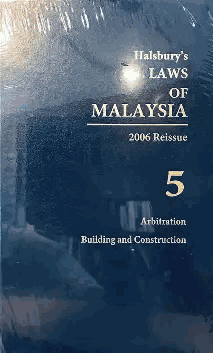


Description
marceljude.ai
Overall, this is an exceptionally strong family-law reference volume. It is not built like a thesis-driven monograph; it is built like a legal map. The book moves from adoption to guardianship and custody, protection and care of children, legitimacy, marriage, judicial separation, financial provision, and domestic violence, so the reader sees family law as a connected system of status, authority, procedure, and remedy rather than as a pile of unrelated rules.
The adoption part is the book at its most impressive. It starts with social and historical framing, then separates West Malaysian adoption from Sabah and Sarawak practice, and finally explains the registration of de facto adoptions. That structure matters because adoption is treated not just as a court application, but as a transformation of legal identity. The book is especially strong in showing how adoption affects custody, consent, inheritance, birth records, and kinship, while also distinguishing sharply between formal adoption and partial recognition through registration.
The guardianship and custody chapters are valuable because they shift the focus from how family status is created to how authority over children is exercised. The volume carefully distinguishes guardianship of the person from guardianship of property, compares West Malaysian, Sabah, and Sarawak regimes, and then turns to custody, access, and the court’s additional powers. Its core strength here is clarity: it keeps asking who decides, on what basis, and subject to what welfare constraints.
The protection and care of children section is the most institutionally rich part of the book. It does not stop at defining abuse or neglect. It lays out an entire child-protection framework: councils, protection teams, protectors, registrars, temporary custody, medical examination, reporting duties, court powers, places of safety, places of refuge, fit and proper persons, and contribution orders. The child care centres chapter then extends that protective logic into regulation, inspection, and enforcement. This is where the book most clearly shows that family law is also public law.
The legitimacy chapter is brief, but it is one of the cleanest in the volume. It explains legitimacy, legitimation, inheritance consequences, maintenance, and petition procedure with very little wasted movement. Every paragraph carries real legal consequence, which makes the chapter compact but sharp.
The marriage material is the broadest and most demanding. It begins with the pre-statutory landscape and the move into the modern framework for monogamous marriage, then covers registration, validity, consent, capacity, solemnisation, and penalties, before opening into nullity, divorce, and a very large body of matrimonial procedure. This is where the book is both strongest and hardest: strongest because the procedural mapping is exhaustive, hardest because the density rises sharply. For a serious legal reader, that density is a strength rather than a flaw.
The closing chapters on judicial separation, financial provision, and domestic violence work very well together. Judicial separation is treated as a distinct remedy with its own jurisdiction, grounds, effects, and rescission logic. Financial provision brings the economic side of family law into focus through spouse maintenance, child maintenance, ancillary relief, and division of matrimonial property. Domestic violence then gives the book a forceful ending by centering protection orders, procedure, compensation, and counselling. The result is that the volume ends not on abstraction, but on protection and enforceable responsibility.
My verdict is simple: the book’s greatest strength is architecture. It does not romanticize family law, and it does not dramatize it. It shows how the law organizes family life through status, power, protection, money, and remedy. Its only real limitation is the limitation of its genre: it is more descriptive than argumentative, more systematic than personal. As a legal reference work, though, it is excellent.
 marceljude.ai +60128285778 |
- MALAYSIA'S 1ST AI LAWYER - CLICK HERE
- ISMAIL – INTEGRATED SINGAPORE/MALAYSIA AI & LAW (Library)
- OPENING OF SINGAPORE MALAYSIA AI CENTRE AND LAW LIBRARY
- LIFT - LAW INSTRUMENTS FORMS & TEMPLATES
- LAWS OF MALAYSIA FOR SINGAPOREAN DUMMIES
- HANNAH YEOH'S ARTIFICIAL INTELLIGENCE LAW ENCYCLOPEDIA
- LEAD CR - Law Ecosystem Archive Databases on CD-ROM
- BREAKING NEWS FROM MJN
- CLICK HERE CO. PROFILE
- EXCITING NEW SERIES - THE ADVENTURES OF BOBBY TAN -ADVOCATE & SOLICITOR IN THE HIGH COURT OF NORTH BORNEO by marceljude.ai
- MEDICO LEGAL - BY PRISKILA AKWILA & GLORIOUS PETAL SDN BHD - powered by marceljude.ai
- MISCELLANOUS
- ANNOTATED STATUTES OF SABAH - A NEW SERIES
- e-library - marceljude.ai
- DRAFT - DOCUMENT RESEARCH & AUTOMATED FILING TECHNOLOGY
- CLARA – Case Law Analysis & Retrieval AI
- FOR RESEARCH REQUEST CLICK HERE
- CLICK HERE TO ASK ANYTHING
- RAMBO'S LAW - THE LAW OF THE LAW JUNGLE - EXCITING NEW SERIES - CASE ANALYSIS BY JOHN RAMBO @ +60138646786
- PRISKILA AKWILA ADVOCATES - High Court of Sabah & Sarawak @ Kota Kinabalu
- COLA - COMMONWEALTH ONLINE LAWCASES AI -marceljude.ai
- THE LAW LIBRARY THAT COMES TO YOU ANYWHERE AND ANYTIME
- marceljude.ai training academy
