
Halsbury's Laws of Malaysia - Occupational Safety and Health


Description
MALAYSIA'S 1ST AI LAWYER
THE MALAYSIA & SINGAPORE AI & LAW LIBRARY
ISMAIL - INDEPENDENT SINGAPORE & MALAYSIA AI LAWYER
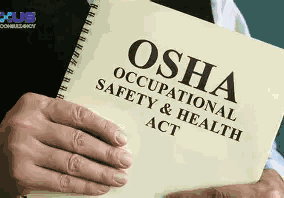
In-Depth Review and Analysis of Halsbury's Laws of Malaysia - Occupational Safety and Health by marceljude.ai
This volume stands as a systematic, authoritative legal treatise structured around paragraph references [580.001 et seq.]. It delivers exhaustive commentary on the Occupational Safety and Health Act 1994 as the primary legislation, supplemented by detailed analysis of subsidiary regulations, related statutes (including the Factories and Machinery Act and Workmen's Compensation Act), enforcement mechanisms, institutional frameworks, and broader policy considerations. The work excels in clarity, precision of definitions, cross-referencing, and integration of case law (drawing on Malaysian decisions alongside comparative UK and Singapore precedents) to illustrate core principles such as “so far as is practicable.” It consistently promotes a tripartite, preventive, and consultative approach to occupational safety and health (OSH), balancing employer obligations with employee responsibilities and robust institutional oversight. The analysis remains rigorous, practical, and forward-looking, positioning the volume as an indispensable reference for interpreting legal obligations, achieving compliance, assessing liability, and advancing safety standards across Malaysian workplaces. Part (1) Primary Legislation This foundational part establishes the Act’s core framework through precise statutory interpretation and policy exposition.
A. Introduction [580.001]: It contextualizes the legislation against Malaysia’s industrial transformation, articulating the Long Title and Preamble. The Act secures safety, health, and welfare at work; protects third parties from work-related risks; establishes the National Council; and facilitates progressive replacement of outdated laws via regulations and approved industry codes. It delineates territorial scope, industry coverage, and exclusions while referencing annual official reports for broader context. B. Interpretation and Application [580.002–580.006]: The provisions operate additively and prevail in conflicts. Application extends nationwide to ten specified economic sectors listed in Schedule 1 (manufacturing; mining and quarrying; construction; agriculture, forestry and fishing; utilities; transport, storage and communication; wholesale and retail trades; hotels and restaurants; finance, insurance, real estate and business services; public services and statutory authorities). Detailed definitions clarify “work,” “place of work,” “plant,” “substance,” and “industry.” Explicit exclusions apply to seagoing vessels under merchant shipping ordinances and the armed forces. C. Salient Features [580.007–580.013]: The Act encompasses premises (land, buildings, vehicles, vessels, aircraft, installations on or offshore, tents, movable structures). It mandates workplace safety systems (including on construction sites) and outlines four fundamental objectives: protecting workers and others; promoting physiologically and psychologically adapted environments; and enabling modernization through regulations and codes. Risk-management guidance and consultative mechanisms via the National Council underscore the preventive ethos.
Part (2) Overall Policy and Implementation This part translates high-level policy into operational requirements.
A. Occupational Safety and Health Policy [580.014–580.019]: Employers must establish safety and health committees at workplaces with 40 or more employees (or when directed by the Director General). Composition, election, powers, and procedures are prescribed. Employers must consult committees on arrangements for cooperation in safety measures, with penalties for non-compliance. Committee functions include ongoing review of measures, investigation of unsafe conditions or risks, resolution attempts, and referral to the Director General where necessary. The part emphasizes best-practice policy statements and progressive replacement of archaic rules by codes. B. Promotion of Safety and Health Culture [580.020]: Corporate examples illustrate voluntary adoption of OSH prerequisites, including dedicated committees and integrated management systems designed to embed welfare culture at industry workplaces. C. Appointment of Officers and Independent Inspecting Body [580.021–580.026]: The Minister appoints a Director General, deputies, directors, and other officers from public service. Officers exercise all Director General powers subject to limitations, with certificates of authorization required on entry. Officers and independent inspectors (appointed from industry to advise) hold public-servant status under the Penal Code. Deputy Director General assumes functions during incapacity.
Part (3) National Council for Occupational Safety and Health This part constructs a tripartite-plus governance body for national OSH advancement.
A. Establishment [580.027–580.029]: The Council comprises 12–15 members appointed by the Minister (three each from employer and employee organizations, three or more from relevant ministries, and three or more from professional bodies, with at least one woman). A Chairman and Deputy Chairman are designated from within. B. Holding of Office [580.030–580.033]: Three-year terms (eligible for reappointment up to two further terms) include provisions for resignation, removal for incapacity or cause, disqualification (unsound mind, bankruptcy, fraud/dishonesty convictions, OSH offences, or incapacity), and automatic cessation for non-attendance or revocation. C. Meetings [580.034–580.037]: The Minister convenes the inaugural meeting; thereafter quarterly sessions occur. The Chairman presides (or elected member in absence); quorum is six; casting vote resolves ties. Proper records are mandatory. D. Allowances, Declaration of Interest and Liability [580.038–580.040]: Minister-determined allowances apply. Pecuniary interests must be declared. Personal liability is shielded except for intentional, reckless, or grossly negligent acts. E. Powers and Functions [580.041–580.043]: The Council may do all things expedient to advance the Act’s objects and must investigate and report on legislative changes, enforcement improvements, management-labour cooperation, special needs of women/handicapped/other groups, chemical controls, statistics, workplace health facilities, code development, and rehabilitation. Annual reports to the Minister are required. Industry-specific committees assist on codes; a public-officer secretary supports operations.
This part exemplifies consultative, inclusive national policy-making. Part (4) General Duties and Responsibilities The substantive core of the volume, this part meticulously dissects obligations at every level.
A. Duties of Employers and Self-Employed Persons: (i) Duties to Employees [580.044–580.047]: Exhaustive definitions cover “employee,” “employer,” “principal/immediate employer,” and “self-employed person,” extending to independent contractors. The general duty (s 15(1)) requires ensuring safety, health, and welfare “so far as is practicable.” Specific duties encompass safe plant and systems; arrangements for plant/substance use, handling, storage, and transport; information, instruction, training, and supervision; maintenance of safe places of work and means of access/egress; and adequate welfare facilities. Duties extend to controlled contractors. Prohibitions prevent charging employees for safety provisions and discrimination for complaints or committee membership. (ii) Duties Relating to the Workplace [580.048–580.049]: Reiterates safe plant/systems and working environments. (iii) Further Duties: Includes written policy statements and risk assessments.
Duties of Occupiers, Designers, Manufacturers, and Suppliers [580.054–580.060]: Obligations extend to non-employees (s 18) and require safe design, testing, and information for articles and substances. Duties of Employees [580.061–580.064]: Cooperation, proper use of equipment, compliance with instructions, and non-interference are mandated. Definition of “Practicable” [580.050]: A four-factor test weighs hazard severity, state of knowledge, availability/suitability of controls, and cost. The onus of proving practicability lies on the accused.
Case law richly illustrates negligence, statutory breach, contributory negligence, co-employee duties, and invitee liability, reinforcing the “reasonably practicable” balancing exercise. Part (5) General Safety and Health Provisions at Workplace Detailed provisions govern medical surveillance, appointment of safety and health officers, notification of accidents/dangerous occurrences/occupational poisoning/diseases (with prescribed schedules), Director General inquiries, and prohibition orders on unsafe plant or substances. Part (6) Industry Codes of Practice [580.075–580.079] The Minister approves codes on Council advice; codes offer practical guidance and carry evidentiary weight (compliance may serve as a defense). Revision processes and content requirements are prescribed. Part (7) Enforcement and Investigation [580.080 et seq.] Officers’ powers include entry (with or without warrants), search, examination, sampling, seizure, questioning, and documentation. Procedures for seized items, obstruction offences, and police collaboration ensure robust enforcement. Part (8) Liability for Offences [580.106 et seq.] Penalties (fines and/or imprisonment) apply; corporate liability pierces to directors, managers, and agents on consent/connivance. Defenses and compounding mechanisms are addressed. Part (9) Appeal [580.119–580.123] Appeal committees handle notices and prohibitions, with defined procedures and finality of decisions. Part (10) Non-Disclosure of Secret Information [580.124] Strict protections and offences for unauthorized disclosure safeguard sensitive data. Part (11) Subsidiary Legislation Extensive commentary dissects key regulations, including:
Control of Industrial Major Accident Hazards (CIMAH); Use and Standards of Exposure of Chemicals Hazardous to Health; Classification, Packaging and Labelling of Hazardous Chemicals; Notification of Accidents, Dangerous Occurrences, etc.; Safety and Health Officer Regulations (qualifications, duties, registers); Safety and Health Committee Regulations (composition, functions, training). Each regulation’s requirements, record-keeping, and penalties receive granular treatment.
Subsequent Major Parts
(2) Chemical and Energy Control and Safety: Covers hazardous-substance tracking, the Chemical Weapons Convention, and the Atomic Energy Licensing Act (licensing, safety standards, waste management, enforcement). (3) Factory and Machinery Safety: Thorough analysis of the Factories and Machinery Act 1967—definitions (factory, machinery), officer powers, licensing, certificates of fitness, general safeguards (guarding, ventilation, cleanliness, welfare), construction regulations, noise/mineral-dust controls, lifts, and other subsidiary rules. (4) Compensation for Occupational Injury and Diseases: Examines the Workmen’s Compensation Act—scope, employer liability, benefit scales, claim processes, arbitration, and foreign-worker schemes. (5) General Guidelines: References approved guidelines and national master plans. (6) Codes of Practice: Additional codes on personal protective equipment, chemical handling, fall prevention, and related topics. (7) Occupational Safety and Health in Islam: Integrates Syariah objectives with Quranic and Hadith principles on worker welfare, wages, and safety, embedding cultural and religious relevance.
Key Themes and Strengths The volume repeatedly underscores prevention through risk assessment and the “practicable” standard, supported by case law. Its institutional and consultative framework (National Council, committees, tripartism) is exceptionally well developed. Enforcement provisions are robust, with clear officer powers, corporate liability piercing, and graduated penalties. Progressive modernization—favoring flexible codes over rigid rules—integrates legacy and contemporary laws seamlessly. Practicality shines through industry examples, comparative insights, and litigation illustrations (negligence, safe systems, contributory fault). Overall comprehensiveness spans duties across all stakeholders, hazard categories (chemical, mechanical, construction), remedies (compensation), and societal context. The treatise masterfully distills complex, interlocking legislation into accessible, actionable legal analysis while underscoring OSH’s profound societal importance. It equips employers, employees, regulators, practitioners, and policymakers with precise guidance for compliance, risk mitigation, and cultivation of a pervasive safety culture. This volume is an exemplary reference—precise, balanced, and profoundly insightful.
 marceljude.ai +60128285778 |
- MALAYSIA'S 1ST AI LAWYER - CLICK HERE
- ISMAIL – INTEGRATED SINGAPORE/MALAYSIA AI & LAW (Library)
- OPENING OF SINGAPORE MALAYSIA AI CENTRE AND LAW LIBRARY
- LIFT - LAW INSTRUMENTS FORMS & TEMPLATES
- LAWS OF MALAYSIA FOR SINGAPOREAN DUMMIES
- HANNAH YEOH'S ARTIFICIAL INTELLIGENCE LAW ENCYCLOPEDIA
- LEAD CR - Law Ecosystem Archive Databases on CD-ROM
- BREAKING NEWS FROM MJN
- CLICK HERE CO. PROFILE
- EXCITING NEW SERIES - THE ADVENTURES OF BOBBY TAN -ADVOCATE & SOLICITOR IN THE HIGH COURT OF NORTH BORNEO by marceljude.ai
- MEDICO LEGAL - BY PRISKILA AKWILA & GLORIOUS PETAL SDN BHD - powered by marceljude.ai
- MISCELLANOUS
- ANNOTATED STATUTES OF SABAH - A NEW SERIES
- e-library - marceljude.ai
- DRAFT - DOCUMENT RESEARCH & AUTOMATED FILING TECHNOLOGY
- CLARA – Case Law Analysis & Retrieval AI
- FOR RESEARCH REQUEST CLICK HERE
- CLICK HERE TO ASK ANYTHING
- RAMBO'S LAW - THE LAW OF THE LAW JUNGLE - EXCITING NEW SERIES - CASE ANALYSIS BY JOHN RAMBO @ +60138646786
- PRISKILA AKWILA ADVOCATES - High Court of Sabah & Sarawak @ Kota Kinabalu
- COLA - COMMONWEALTH ONLINE LAWCASES AI -marceljude.ai
- THE LAW LIBRARY THAT COMES TO YOU ANYWHERE AND ANYTIME
- marceljude.ai training academy
