
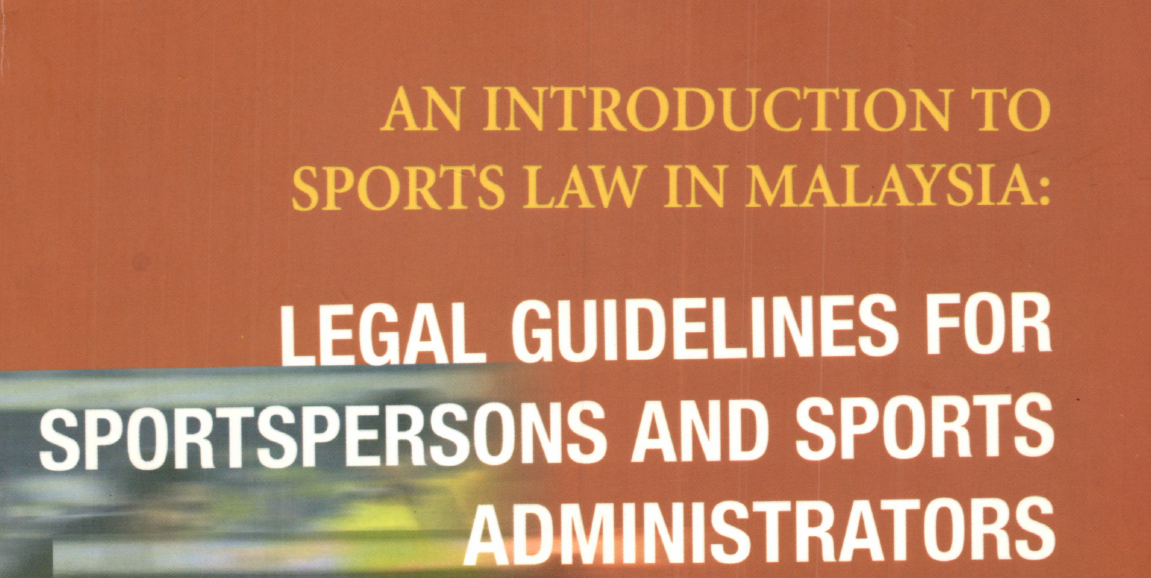
An Introduction to Sports Law in Malaysia: Legal Guidelines for Sportspersons and Sports Administrators


Description
Author:- Zaidi Hassim L.L.B. (Hons), M.C.L. (IIUM)
Book Review by marceljude.ai
Book Review
An Introduction to Sports Law in Malaysia: Legal Guidelines for Sportspersons and Sports Administrators
Overall assessment
This book is best understood as a foundational Malaysian sports-law text. Its central thesis is that sport in Malaysia can no longer be treated as a private recreational sphere insulated from law. The author presents sports law as an “amalgam” of public law, private law, criminal law, employment law, tort law, constitutional law, intellectual property, insurance, medical liability, and international sports regulation. That breadth is the book’s main strength: it explains why a sportsperson’s legal position cannot be reduced to the rules of the game alone.
From a law professor’s standpoint, the most valuable feature is the book’s insistence that Malaysian sportspersons are rights-bearing legal actors. They are not merely athletes under the control of associations, coaches, or national bodies. They are employees, contracting parties, injured claimants, possible defendants, constitutional subjects, commercial personalities, and participants in global regulatory systems. The book repeatedly argues that the Sports Development Act 1997 is important but incomplete: it regulates sports bodies and administration, yet it does not fully protect sportspersons in employment, injury, insurance, dispute resolution, medical care, and commercial rights.
Its weakness is also connected to its strength. Because the book tries to cover nearly the whole field of sports law, some chapters read more like broad doctrinal surveys than tightly argued monographs. It relies heavily on English, American, Canadian, Australian, and international examples because Malaysian sports-law litigation is comparatively thin. That comparative method is useful, but at times the book could have gone further in explaining how foreign doctrines should be adapted to Malaysian constitutional structure, culture, courts, and sports institutions. Still, as a teaching text and reform text, it is impressive: it gives Malaysia a vocabulary for sports-law accountability.
List of contents with printed book page numbers
Front matter
Foreword — p. v. Acknowledgements — p. vii. Preface — p. ix. Introduction — p. xi. Table of Cases — p. xxvii. Table of Statutes — p. xxxv.
Chapter 1 — History and Development of Sports in Malaysia — starts p. 1
1.0 Introduction — p. 1. 1.1 Definitions of Sports — p. 1. 1.2 Definition of Sports from the Malaysian Perspective — p. 2. 1.3 Brief Historical Background of Sports in Malaysia — p. 3. 1.3.1 The Pre-Historic Malaysia — p. 3. 1.3.2 The Malacca Sultanate — p. 3. 1.3.3 The Colonial Era — British Rule — p. 5. 1.3.4 Independence — p. 6. 1.3.5 Sports in Sabah and Sarawak — p. 8. 1.4 Conclusion — p. 8.
Chapter 2 — Sports Policies and Sports Governance in Malaysia — starts p. 11
2.0 Introduction — p. 11. 2.1 Sports National Related Policies — p. 12. 2.1.1 The Malaysian Plans — p. 12. 2.1.2 The National Sports Policy 1988 — p. 16. 2.1.3 National Sports Convention, Langkawi 1996 — p. 18. 2.1.4 Malaysian National Education Philosophy 1979 — p. 19. 2.1.5 Malaysian National Youth Policy 1985 — p. 20. 2.1.6 Sports Tourism and Visit Malaysia Year Promotion — p. 20. 2.1.7 Vision 2020 — p. 22. 2.2 The Involvement of the Malaysian Government in Sports Development — p. 22. 2.2.1 The Ministry of Youth and Sports — p. 22. 2.2.2 The Malaysian National Sports Council — p. 23. 2.2.3 Merdeka Stadium Corporation of Malaysia — p. 23. 2.2.4 Olympic Council of Malaysia — p. 24. 2.2.5 Malaysian Paralympic Council — p. 25. 2.2.6 The Sports Commission Office — p. 25. 2.2.7 District and State Sports Associations — p. 26. 2.3 Issues Related to Sports in Malaysian Education System — p. 26. 2.3.1 Malaysian School Sports Council — p. 27. 2.3.2 Malaysian Sports Schools — p. 28. 2.3.3 Malaysian University Sports — p. 28. 2.3.4 Sports Academies — p. 29. 2.4 Conclusion — p. 30.
Chapter 3 — The Legal Regulation of Sports in Malaysia — starts p. 31
3.0 Introduction — p. 31. 3.1 The Regulation of Sports in Malaysia — p. 32. 3.2 The Legislations Regulating the Welfare and Development of Malaysian Sports — p. 34. 3.2.1 The Merdeka Corporation Act 1957 — p. 35. 3.2.2 The National Sports Council of Malaysia Act 1971 — p. 35. 3.2.3 The Sports Development Act 1997 — p. 37. 3.2.3.1 The Commissioner of Sports: Issues on Registration and Termination — p. 38. 3.2.3.2 Section 23 of the SDA 1997: Issues on Dispute Resolution in Sports — p. 40. 3.2.3.3 Malaysian Sports Advisory Panel — p. 41. 3.2.4 Other Legislations Regulating Sports in Malaysia — p. 42. 3.3 The Regulation of National Sports Bodies in Malaysia — p. 43. 3.3.1 Judicial Control of Malaysian Sporting Bodies — p. 44. 3.3.1.1 Resolution of Sports Dispute in Malaysia: A Brief Historical View — p. 44. 3.3.1.2 Factors of the Failures of Sports Resolution in Malaysia — p. 46. 3.4 Disciplinary Measurements in Governing Bodies’ Constitutions and By Laws — p. 46. 3.4.1 Concept of Natural Justice in Malaysian Sports — p. 47. 3.4.2 Constitution and By Laws of Sports Bodies in Malaysia — p. 47. 3.5 Court Litigation in Malaysian Sports — p. 50. 3.5.1 What is Judicial Review? — p. 50. 3.5.2 The Authorities and Application of Judicial Review in Sports — p. 51. 3.5.3 Malaysian Experience of Judicial Review on Sports Dispute — p. 53. 3.5.4 Why Judicial Review Fails in Its Application to Malaysian Sports Cases — p. 55. 3.5.5 The Laws Providing for Sports Dispute Resolution in Malaysia — p. 56. 3.6 Recommendations for Solutions: Judicial Reform of SDA 1997 — p. 58. 3.7 Conclusion — p. 59.
Chapter 4 — Sports Participation in Malaysia — starts p. 61
4.0 Introduction — p. 61. 4.1 Definition of Sportspersons — p. 61. 4.2 Amateurs and Professional Sportspersons — p. 62. 4.2.1 Amateur Sportspersons — p. 63. 4.2.2 Professional Sportspersons — p. 64. 4.3 Participation of Malaysian Women in Sports — p. 65. 4.3.1 Issues on Sports Discrimination under the Anti-Discrimination Act 1975: Section 44 — p. 66. 4.3.2 Position of Pregnant Sportswomen in Malaysia — p. 68. 4.4 Transsexual Sportspersons — p. 70. 4.5 Amateurism: Legal Issues in Sports and Education — p. 72. 4.6 Sports Administrators / Sports Officials — p. 74. 4.6.1 Liability of Sports Officials — p. 75. 4.6.2 Defences Available for Sports Officials — p. 76. 4.6.3 Assault Problems Faced by Sports Officials — p. 77. 4.7 The Liability of Sports Agents — p. 78. 4.8 Conclusion — p. 80.
Chapter 5 — Sports and Contract of Employment in Malaysia — starts p. 81
5.0 Introduction — p. 81. 5.1 What is a Contractual Agreement — p. 82. 5.2 Sportsperson’s Contract — p. 82. 5.2.1 Amateur Sportsperson’s Contract — p. 83. 5.2.2 Professional Sportsperson’s Contract — p. 84. 5.3 Standard Sportsperson’s Contract for Malaysian Sportspersons — p. 84. 5.3.1 A Proposed Standard-Form of Sportsperson’s Contract — p. 85. 5.3.2 A Collective Bargaining Agreement — p. 87. 5.3.3 The Additional Contracts Amendment — p. 88. 5.3.4 Issues on Professional Contract of Employment in Malaysia — p. 90. 5.4 Employment Issues in Malaysian Sports — p. 91. 5.4.1 Legislations Protecting Malaysian Sports Professional — p. 91. 5.4.2 Duties of a Sportsperson as an Employee — p. 93. 5.4.3 Duties of an Employer in the Sporting Arena — p. 93. 5.5 Termination of the Sportsperson’s Contract — p. 96. 5.5.1 Unfair Dismissal and Wrongful Dismissal — p. 97. 5.6 Conclusion — p. 98.
Chapter 6 — Tortious Liability in Sports — starts p. 99
6.0 Introduction — p. 99. 6.1 Definition of a Tort and Sources of Tort Law in Malaysia — p. 100. 6.2 Factors that Influence Tort Liability in Sports — p. 100. 6.3 Protection of Sportsperson from Physical Injury — p. 102. 6.3.1 Assault and Battery — p. 103. 6.3.2 Negligence — p. 104. 6.3.3 Reckless Misconduct — p. 107. 6.3.4 Nuisance — p. 108. 6.3.5 Reputation of a Sportsperson — p. 108. 6.4 Protection Against Other Civil Liabilities — p. 109. 6.4.1 Liability Against Defective Products — p. 109. 6.4.2 Liability Against Facility Providers and Possessors — p. 110. 6.4.3 Medical Liability — p. 111. 6.4.4 Vicarious Liability — p. 111. 6.4.5 Liability for Sportspersons’ Belongings — p. 112. 6.5 Conclusion — p. 112.
Chapter 7 — Sports Violence and Criminal Law in Malaysia — starts p. 113
7.0 Introduction — p. 113. 7.1 Sports Violence in Malaysia — p. 114. 7.1.1 Definition of Violence — p. 115. 7.1.2 Definition of Violence in Sports — p. 115. 7.2 Theories and Societal Effects in Sports Violence — p. 116. 7.2.1 Theories of Sports Violence — p. 116. 7.2.2 Societal Effects of Sports Violence — p. 117. 7.2.3 Sports Violence in Malaysian Society — p. 117. 7.3 Sports Violence and Criminal Law — p. 118. 7.3.1 Crime, Criminal Law and Criminal Liability — p. 118. 7.3.2 Concept of Crime in the Sporting Activities — p. 120. 7.3.3 Criminal Assault and Battery in Sports — p. 120. 7.3.4 Criminal Force Causing Hurt and Grievous Hurt in Sports — p. 122. 7.3.5 English Precedent: The Position of Sports in the Criminal Law — p. 124. 7.4 Potential Defences and Impediments in Sports — p. 126. 7.4.1 The Defence of Consent — p. 126. 7.4.2 Other Defences: Self Defence, Involuntary Reflex and Provocation — p. 129. 7.5 Controlling Violence in Sports Field: Malaysian Context — p. 130. 7.5.1 Constitutions and By Laws — p. 131. 7.5.2 Sports Punishment during the Games — League Control — p. 131. 7.5.3 Disciplinary Sanction and Internal Sports Procedure Section 23 — p. 132. 7.5.4 International Solution — The Court of Arbitration for Sports — p. 133. 7.5.5 Alternative Procedures — p. 133. 7.6 Conclusion — p. 134.
Chapter 8 — Constitutional Rights of Sportsperson in Malaysia — starts p. 135
8.0 Introduction — p. 135. 8.1 Jurisdiction for Enacting Sports Law — p. 135. 8.2 Constitutionality of Sports Bodies Established under the SDA 1997 — p. 136. 8.3 Constitutional Rights of Sportspersons — p. 137. 8.3.1 Substantive Rights — Personal Freedom — p. 137. 8.3.2 Procedural Rights — p. 139. 8.3.3 Legality of Drug Testing — p. 140. 8.3.4 Restraint of Trade — p. 141. 8.4 Conclusion — p. 142.
Chapter 9 — Drug Use and Drug Doping in Malaysian Sports — starts p. 145
9.0 Introduction — p. 145. 9.1 Historical Background of Drug Doping in Malaysian Sports — p. 146. 9.2 Sports Perspective on Drug Usage — p. 147. 9.3 Drug Doping and Its Legality — p. 148. 9.4 Regulation of Drug Doping — p. 149. 9.4.1 The International Court of Arbitration for Sport — p. 150. 9.4.2 National Sports Bodies and International Federations — p. 150. 9.4.3 The Regulation of Drug Doping in Malaysia — p. 151. 9.5 The Law of Evidence and Procedural Issues of Drug Doping in Malaysia — p. 153. 9.5.1 Issues on Employment Contract, Wrongful Dismissal and Remedies — p. 155. 9.5.2 Issues on Fundamental Rights of the Sportspersons — p. 156. 9.5.3 The Issue of Criminal Analogy in Drug Doping — p. 157. 9.5.4 The Issue of Strict Liability in Doping Cases — p. 158. 9.6 Legal Challenges by Sportspersons in Drug Doping Case — p. 159. 9.7 Penalty and Legal Sanction in Drug Doping — p. 160. 9.8 Anti-Doping Regulation: Issues and Rationale — p. 162. 9.9 Harmonisation of Methods and Measurements of Doping — p. 163. 9.10 Conclusion and Suggestions — p. 165.
Chapter 10 — Intellectual Property Rights in Malaysian Sports — starts p. 167
10.0 Introduction — p. 167. 10.1 What are Intellectual Property Rights — p. 167. 10.2 The Importance of Protected Commercial Sectors in Malaysian Sports — p. 168. 10.3 The Need of Law in the Area of Sports Marketing in Malaysia — p. 169. 10.4 Brief Historical Background of Intellectual Property Law in Malaysia — p. 171. 10.5 Scope and Enforcement of Intellectual Property Law in Sports — p. 173. 10.5.1 The Right of Patent in Sports — p. 173. 10.5.2 The Right of Copyright in Sports — p. 176. 10.5.3 The Right of Broadcasting in Sports — p. 177. 10.5.4 The Right of Trade Marks in Sports — p. 178. 10.5.5 Trade Mark Issues in Malaysian Sports — p. 180. 10.6 Ownership Legal Issues of Intellectual Property Law in Sports — p. 182. 10.7 General Remedies for Infringements — p. 183. 10.8 Conclusion and Suggestions — p. 185.
Chapter 11 — Legal Issues of Risk Management Programme and Insurance Liability in Malaysian Sports — starts p. 187
11.0 Introduction — p. 187. 11.1 What is Risk Management? — p. 187. 11.1.1 The Importance of Risk Management in Sports — p. 188. 11.1.2 Factors that Influence the Liability in Sports Risk Management — p. 189. 11.1.3 Law that Regulate Risk Management Programme in Malaysia — p. 190. 11.2 The Issues of Insurance in Sports — p. 192. 11.2.1 Insurance Management in Sports — p. 192. 11.2.2 Risk Transfer in Sports Liability — p. 193. 11.2.3 Waiver Agreement and Release of Liability in Sports — p. 194. 11.3 Personal Injury Insurance: The Right of Insurance for Malaysian Sportspersons — p. 195. 11.4 The Right of Insurance for Professional Sportspersons in Malaysia — p. 197. 11.5 Conclusion: Limitations of Sports Insurance — p. 198.
Chapter 12 — Legal Issues of Sports Medicine in Malaysia: The Liability of Sports Physician — starts p. 201
12.0 Introduction — p. 201. 12.1 The Relationship Between Sports Medicine and the Law — p. 201. 12.1.1 Definitions of Sports Medicine — p. 203. 12.1.2 Who is Team Physician? — p. 203. 12.2 The Liability of Sports Team Physician — p. 204. 12.2.1 Liability of Physician at Large Crowds — p. 208. 12.2.2 Liability of Physician at School Sports Day — p. 209. 12.3 Sports Team Physician Limited Liability and Defences — p. 210. 12.4 Conclusion: Guidelines and Suggestions — p. 211.
Chapter 13 — Legal Issues of Stadium Safety in Malaysia — starts p. 213
13.0 Introduction — p. 213. 13.1 The Historical Establishment of Malaysian Stadiums — p. 213. 13.2 Legislations of Establishment and Management of Stadiums in Malaysia — p. 214. 13.3 The Legal Aspects in Risk Management and Stadium Safety in Malaysia — p. 215. 13.4 An Outline: Stadium Disasters Reports in England — p. 217. 13.5 The Law Intervention for Stadium Safety in Malaysia — p. 218. 13.6 Stadium Negligence Related Cases in the U.K. and U.S. — p. 221. 13.7 Spectators Limited Liability and Defences — p. 223. 13.8 Remedies — p. 224. 13.9 Conclusion and Basic Safety Guidelines — p. 224.
Chapter 14 — Conclusion: Cabinet Committee for Sports — A Way Forward — starts p. 227
14.0 Introduction — p. 227. 14.1 The Formation of Cabinet Committee for Sports — p. 228. 14.2 Conclusion: Objectives and Recommendations — p. 228.
Appendices and index
Appendix 1 — Sports Development Act 1997 — p. 231. Appendix 2 — National Sports Council of Malaysia Act 1971 — p. 255. Appendix 3 — Merdeka Stadium Corporation Act 1963 — p. 275. Appendix 4 — Malaysia National Sports Policy 1988 — p. 283. Index — p. 291.
Chapter-by-chapter review Chapter 1 — History and Development of Sports in Malaysia, pp. 1–10
Chapter 1 performs an important jurisprudential function: it shows that sports law cannot be understood unless sport itself is understood as a social institution. The author begins with definitions of “sport,” including linguistic and conceptual meanings, then narrows the discussion to the Malaysian statutory meaning of sports. That move is important because law requires definitions. A cultural activity becomes legally manageable only when legislation, regulations, associations, and courts can identify what counts as sport and what does not.
The chapter then moves through Malaysian sporting history: pre-historic and early archipelagic activity, the Malacca Sultanate, British colonial influence, independence, and the special contexts of Sabah and Sarawak. The discussion of traditional games such as silat, sepak raga/sepak takraw, kite-flying, top-spinning, and congkak is useful because it resists the idea that Malaysian sports are merely imported Western activities. At the same time, the chapter acknowledges that modern institutional sport developed heavily through colonial clubs, schools, and organized competitions.
As a law professor, I see this chapter as laying the groundwork for later legal intervention. It explains why sports associations, stadiums, schools, ministries, and national bodies became legally relevant. The strongest point is the connection between sport, national identity, and institutional governance. The weaker point is that the legal analysis remains introductory; the chapter mostly prepares the factual and historical foundation for the later chapters. That is acceptable for Chapter 1, because the book is clearly building from history toward regulation.
Subsection 1.1 defines sport broadly as activity, diversion, recreation, skill, and contest. Subsection 1.2 is more legally significant because it asks what counts as sport from a Malaysian statutory perspective. Subsection 1.3 gives the historical account. Subsection 1.3.1 explains early cultural and survival-based activities. Subsection 1.3.2 links the Malacca Sultanate to Malay martial and recreational traditions. Subsection 1.3.3 explains the British role in introducing modern organized sports. Subsection 1.3.4 discusses post-independence development, including national institutions and public sports policy. Subsection 1.3.5 gives Sabah and Sarawak their own place in the national sporting history. Subsection 1.4 concludes by arguing that Malaysia needs stronger grassroots sports culture and better institutional organization.
Chapter 2 — Sports Policies and Sports Governance in Malaysia, pp. 11–30
Chapter 2 shifts from history to governance. It explains that sports development in Malaysia has not been random; it has been shaped through national plans, public policy, educational philosophy, youth policy, tourism policy, and nation-building ambitions. The author places the Ministry of Youth and Sports, the National Sports Council, the Merdeka Stadium Corporation, the Olympic Council of Malaysia, the Paralympic Council, the Sports Commission Office, and state/district bodies within a larger governance architecture.
The discussion of the Malaysian Plans is especially valuable. It shows that sports policy was linked to health, youth development, national unity, high-performance sports, infrastructure, and international prestige. The National Sports Policy discussion is also central because the book repeatedly returns to the distinction between “sports for all” and “high performance sports.” This distinction matters legally. Mass participation requires safety, access, education, facilities, and public-health policy. Elite sport requires contracts, selection rules, doping regulation, medical care, insurance, and dispute resolution.
As a law professor, I would call this chapter a governance map. It does not simply identify institutions; it asks whether those institutions are accountable, coordinated, transparent, and legally effective. Its strongest claim is that Malaysian sports development requires cooperation between government and sports bodies, but also proper legal boundaries so that sports bodies do not become private fiefdoms. The chapter’s most important practical insight is that sports law is not only litigation; it is also policy design, institutional architecture, and administrative accountability.
Subsection 2.1 surveys national policies. Subsection 2.1.1 traces the Malaysian Plans and shows how sports became part of national development. Subsection 2.1.2 addresses the National Sports Policy. Subsection 2.1.3 discusses the Langkawi convention and reform ideas. Subsection 2.1.4 connects sport to education philosophy. Subsection 2.1.5 connects sport to youth policy. Subsection 2.1.6 treats sports tourism as an economic and national-image tool. Subsection 2.1.7 places sport within national development ambitions. Subsection 2.2 explains government involvement through ministries and sports institutions. Subsection 2.3 moves into education, including school sports, sports schools, university sports, and academies. Subsection 2.4 concludes that sports governance must be planned, monitored, and transparent at federal, state, district, and club levels.
Chapter 3 — The Legal Regulation of Sports in Malaysia, pp. 31–60
Chapter 3 is the doctrinal heart of the book. It asks the central question: how is sport legally regulated in Malaysia? The author identifies several layers of regulation: disciplinary rules imposed during games, the rules of the game, the internal law of sports associations, Malaysian national law, international federation rules, and received common-law principles. This layered model is one of the book’s strongest analytical contributions because it shows that sports law is pluralistic. A football player, for example, may be subject to the referee, the league, the national association, the Sports Development Act, employment law, tort law, criminal law, and international federation rules at the same time.
The chapter’s treatment of the Sports Development Act 1997 is especially important. The author analyzes the Commissioner of Sports, registration and deregistration, dispute resolution under section 23, ministerial referral, and the Sports Advisory Panel. The chapter also addresses judicial review, natural justice, domestic tribunals, and internal disciplinary systems. The author’s central criticism is that sports bodies often possess significant power over sportspersons, but their internal procedures may not consistently reflect natural justice, fair hearing, independence, or meaningful appeal.
As a law professor, I would emphasize Chapter 3 as the chapter most likely to be assigned in an administrative-law or sports-law class. Its discussion of judicial review is vital because sports associations often claim autonomy, yet their decisions can affect livelihood, reputation, eligibility, and career opportunity. The chapter properly insists that autonomy cannot mean arbitrariness. The author’s recommendation for alternate dispute resolution is also persuasive. Malaysia needs sports-specific dispute processes that are affordable, fast, independent, and procedurally fair.
Subsection 3.1 explains the different layers of sports regulation. Subsection 3.2 examines the main statutory framework, including the Merdeka Corporation Act, National Sports Council legislation, and the Sports Development Act. Subsections 3.2.3.1 to 3.2.3.3 focus on the Commissioner of Sports, section 23 dispute resolution, and the Sports Advisory Panel. Subsection 3.3 turns to sports bodies’ constitutions and bylaws. Subsection 3.3.1 addresses judicial control. Subsections 3.3.1.1 and 3.3.1.2 explain the historical experience and failures of sports dispute resolution. Subsection 3.4 discusses disciplinary measurements. Subsection 3.4.1 explains natural justice. Subsection 3.4.2 reviews constitutions and bylaws. Subsection 3.5 addresses court litigation and judicial review. Subsection 3.6 recommends reform. Subsection 3.7 concludes that Malaysian sports law recognizes procedural fairness, but internal sports procedures have not always fully embodied it.
Chapter 4 — Sports Participation in Malaysia, pp. 61–80
Chapter 4 humanizes the book. Instead of treating sports bodies as the main subject, it centers the sportsperson and related actors. It defines sportspersons, distinguishes amateurs from professionals, discusses women’s participation, considers pregnant sportswomen, addresses transsexual sportspersons, examines student-athletes, and then moves to sports administrators, coaches, umpires, and agents.
The chapter’s amateur/professional distinction matters because legal rights often depend on status. An amateur may be treated as a participant in recreation, while a professional may be treated as an employee, contractor, commercial personality, or unionizable worker. The author’s discussion of women in sport is also legally important because participation is not simply a matter of athletic ability; it involves access, discrimination, facilities, policy, family expectations, and institutional support. The sections on pregnant sportswomen and transsexual sportspersons show the author trying to confront difficult eligibility and equality issues through legal reasoning. Some terminology reflects the book’s framing, and a modern treatment would need careful dignity-based language, but the basic legal question remains important: who gets to participate, on what terms, and who decides?
The material on sports officials and agents is practical. Coaches and umpires are not legally invisible. They may owe duties of care, may face assault risks, and may be protected by defences depending on their role and conduct. Sports agents raise agency-law questions: loyalty, conflict of interest, disclosure, bargaining power, and professional standards. The chapter is strongest when it shows that “participation” includes a network of legal relationships, not just athletes on a field.
Subsection 4.1 defines sportspersons. Subsection 4.2 distinguishes amateurs and professionals. Subsection 4.2.1 explains amateur participation. Subsection 4.2.2 explains professional participation and the importance of contracts. Subsection 4.3 addresses women’s participation. Subsection 4.3.1 uses anti-discrimination analysis. Subsection 4.3.2 discusses pregnancy and sport. Subsection 4.4 considers transsexual sportspersons. Subsection 4.5 explores student-athletes and educational institutions. Subsection 4.6 covers coaches and umpires. Subsections 4.6.1 to 4.6.3 address liability, defences, and assault problems faced by officials. Subsection 4.7 discusses sports agents. Subsection 4.8 concludes that Malaysian sports participation requires better legal protection, especially as sport becomes more professional.
Chapter 5 — Sports and Contract of Employment in Malaysia, pp. 81–98
Chapter 5 is one of the book’s most practically useful chapters. It explains that once sport becomes professional, the contract becomes the central legal document. A sportsperson’s rights to salary, incentives, medical care, selection, termination protection, transfer, discipline, outside activity, publicity, and grievance procedures may all depend on contractual wording. The author therefore argues for a standard sportsperson’s contract in Malaysia.
The chapter begins with basic contract formation: offer, acceptance, consideration, intention, and clarity. It then distinguishes amateur contracts from professional contracts. The author’s analysis of a proposed standard-form sportsperson’s contract is particularly important. Clauses on termination, physical condition, payment, other activities, grievance procedure, uniqueness, rules, assignment, publicity, and collective bargaining are treated as necessary safeguards. The chapter’s emphasis on collective bargaining is forward-looking: if sportspersons have little bargaining power individually, collective negotiation can protect minimum rights.
As a law professor, I would praise this chapter for converting abstract sports reform into draftable legal architecture. A standard contract is not glamorous, but it is one of the most effective ways to protect athletes. The chapter is also right to connect employment law with workplace safety. A professional sportsperson is not simply “playing”; he or she is working in a high-risk occupation. The limitation is that the chapter could provide even more detailed Malaysian model clauses, but its reform direction is sound.
Subsection 5.1 explains contractual agreement. Subsection 5.2 introduces the sportsperson’s contract. Subsection 5.2.1 explains amateur arrangements. Subsection 5.2.2 addresses professional contractual obligations. Subsection 5.3 argues for a standard Malaysian sportsperson’s contract. Subsection 5.3.1 proposes the standard form. Subsection 5.3.2 discusses collective bargaining. Subsection 5.3.3 addresses additional contract amendments. Subsection 5.3.4 discusses professional employment issues in Malaysia. Subsection 5.4 analyzes employment law. Subsection 5.4.1 lists protective legislation. Subsections 5.4.2 and 5.4.3 explain duties of sportsperson and employer. Subsection 5.5 treats termination. Subsection 5.5.1 explains unfair and wrongful dismissal. Subsection 5.6 concludes that Malaysian law needs stronger sports-specific employment protection.
Chapter 6 — Tortious Liability in Sports, pp. 99–112
Chapter 6 concerns civil wrongs, especially personal injury. It begins by defining tort and identifying Malaysian sources of tort law, then moves into factors affecting sports liability. The chapter is structured around a basic tort question: when should injury in sport be treated as an accepted risk, and when should it become legally compensable?
The author addresses assault and battery, negligence, reckless misconduct, nuisance, and reputation. The negligence section is the key. In sports, negligence claims may arise from poor supervision, unsafe equipment, defective facilities, inadequate warnings, unqualified personnel, or unsafe organization of events. The chapter also covers product liability, facility-provider liability, medical liability, vicarious liability, and liability for belongings. This breadth is useful because sports injuries rarely involve one actor only. Liability may involve athletes, coaches, schools, clubs, governing bodies, facility owners, equipment manufacturers, medical staff, or event organizers.
As a law professor, I would describe this chapter as the book’s tort-law teaching unit. It takes the classic structure of duty, breach, causation, damage, consent, and defences and applies it to sports. The chapter is especially important for coaches and administrators who may believe that sports injuries are simply “part of the game.” Some injuries are inherent risks, but others are legally preventable harms. The chapter’s main lesson is preventative: good supervision, safe facilities, trained staff, proper warnings, and written procedures reduce both injury and liability. The reliance on foreign cases is understandable, though more Malaysian litigation would have made the chapter stronger.
Subsection 6.1 defines tort and sources of Malaysian tort law. Subsection 6.2 identifies factors influencing tort liability. Subsection 6.3 addresses physical injury. Subsection 6.3.1 explains assault and battery. Subsection 6.3.2 explains negligence. Subsection 6.3.3 discusses reckless misconduct. Subsection 6.3.4 addresses nuisance. Subsection 6.3.5 deals with reputation and defamation-type concerns. Subsection 6.4 expands to defective products, facilities, medical liability, vicarious liability, and belongings. Subsection 6.5 concludes that those involved in sports must understand legal responsibility for injury prevention.
Chapter 7 — Sports Violence and Criminal Law in Malaysia, pp. 113–134
Chapter 7 asks when violence in sport should move beyond internal discipline and become a criminal-law issue. The chapter begins with Malaysian examples of spectator and sports-related disorder, then defines violence and sports violence. It discusses theories of violence, social effects, criminal-law basics, assault, battery, criminal force, hurt, consent, self-defence, involuntary reflex, provocation, internal sanctions, CAS, and alternative procedures.
The chapter’s most important contribution is its rejection of the idea that the playing field is a law-free zone. Sports may involve physical contact, but not all physical conduct is legally acceptable. Consent matters, but consent has limits. A participant may accept ordinary risks of a game; that does not automatically authorize conduct outside the rules or conduct intended to harm. The chapter also emphasizes that internal disciplinary systems may be useful but insufficient when serious public wrongs occur.
As a law professor, I would highlight the chapter’s careful balance. It does not criminalize ordinary sport. It recognizes that contact sports require space for aggression within rules. But it also insists that sports bodies should not be allowed to privatize criminal justice. The discussion of league control, disciplinary committees, and criminal prosecution is useful because it shows different levels of response: in-game penalties, association sanctions, civil claims, criminal prosecution, and legislative reform.
Subsection 7.1 situates sports violence in Malaysia. Subsections 7.1.1 and 7.1.2 define violence generally and sports violence specifically. Subsection 7.2 explains theories and social effects. Subsections 7.2.1 to 7.2.3 analyze causes and societal consequences. Subsection 7.3 explains criminal law, criminal liability, assault, battery, criminal force, and comparative precedent. Subsection 7.4 addresses defences, especially consent. Subsection 7.5 discusses control mechanisms, including bylaws, league punishment, section 23 internal procedure, CAS, and legislation. Subsection 7.6 concludes that Malaysian society should distinguish legitimate sporting contact from punishable violence.
Chapter 8 — Constitutional Rights of Sportsperson in Malaysia, pp. 135–142
Chapter 8 is short but conceptually significant. It places sportspersons within constitutional law. The author begins with the Federal Constitution and asks whether sports law may be enacted by federal or state authorities. Sports is located in the constitutional structure through the Concurrent List, meaning both federal and state dimensions may arise. The chapter then examines sports bodies established under the Sports Development Act and turns to constitutional rights of sportspersons.
The chapter’s most important sections are on substantive rights and procedural rights. Substantive rights include personal liberty, equality, movement, expression, association, and related freedoms. Procedural rights include fair hearing, notice, absence of bias, and natural justice. These ideas matter because sports bodies often make decisions that can suspend, ban, discipline, select, exclude, or economically harm athletes. The author also discusses drug testing and restraint of trade as constitutional-adjacent issues.
As a law professor, I would call this chapter a bridge between private sports governance and public law. Its greatest value is that it refuses to treat sports bodies as purely private when their decisions can have public consequences. The chapter could have benefited from deeper analysis of Malaysian constitutional remedies and state action doctrine, but it properly frames athletes as constitutional persons, not merely members of associations.
Subsection 8.1 explains jurisdiction to enact sports law. Subsection 8.2 examines the constitutionality and legal position of sports bodies under the SDA. Subsection 8.3 identifies constitutional rights. Subsection 8.3.1 discusses personal freedom and substantive rights. Subsection 8.3.2 focuses on procedural fairness. Subsection 8.3.3 asks whether drug testing violates personal liberty or privacy-type interests. Subsection 8.3.4 examines restraint of trade, especially rules limiting athlete movement. Subsection 8.4 concludes that sportspersons must know their rights and sports bodies must not rely on ignorance.
Chapter 9 — Drug Use and Drug Doping in Malaysian Sports, pp. 145–166
Chapter 9 is one of the book’s most legally sophisticated chapters because doping regulation combines science, evidence, employment, discipline, constitutional rights, international law, and strict liability. The author begins with doping examples and then raises procedural questions: chain of custody, storage, testing accuracy, external contamination, intent, knowledge, and fairness. The chapter recognizes that anti-doping law must protect clean sport, but it must also protect sportspersons from careless procedures and unjust sanctions.
The regulatory sections are particularly important. Doping rules are not only Malaysian; they are shaped by international bodies, CAS, national sports bodies, international federations, and domestic agencies. The author’s discussion of evidence is crucial because doping cases often depend on scientific proof and procedure. A false or mishandled result can destroy reputation, employment, sponsorship, and future opportunities. The chapter also discusses strict liability, one of the most contested ideas in anti-doping law. Strict liability promotes enforcement, but it can be harsh where athletes lack intent or where contamination or procedural error is plausible.
As a law professor, I would praise the chapter for treating anti-doping as a rule-of-law problem, not merely a sports-science problem. The author understands that integrity in sport must be matched by integrity in procedure. The strongest recommendation is harmonization: Malaysian systems should align with international standards while preserving natural justice, confidentiality, and fair adjudication. The chapter is strongest when it insists that anti-doping policy must be coordinated among sports authorities, health authorities, education, and national institutions.
Subsection 9.1 provides the Malaysian background. Subsection 9.2 explains why sportspersons may be tempted by performance-related substances. Subsection 9.3 addresses legality. Subsection 9.4 maps regulation through CAS, federations, and Malaysia. Subsection 9.5 analyzes evidence and procedure. Subsections 9.5.1 to 9.5.4 examine employment remedies, fundamental rights, criminal-law analogy, and strict liability. Subsection 9.6 addresses legal challenges. Subsection 9.7 discusses sanctions. Subsection 9.8 considers anti-doping rationale. Subsection 9.9 argues for harmonization. Subsection 9.10 concludes with reform suggestions.
Chapter 10 — Intellectual Property Rights in Malaysian Sports, pp. 167–186
Chapter 10 moves from athlete protection to sports commercialization. It explains that modern sports are not only games; they are markets. Names, logos, broadcasts, marks, images, equipment, event identities, merchandise, sponsorships, franchises, and licensing arrangements all create legal value. The author introduces intellectual property as a system that protects creativity, innovation, commercial identity, and market integrity.
The chapter addresses patents, copyrights, broadcasting rights, trade marks, ownership issues, and remedies. The author’s treatment of broadcasting and trade marks is especially relevant because many sports-law disputes arise from unauthorized use of club names, event marks, broadcast material, athlete identity, or promotional associations. The chapter properly explains that the law may not recognize a general property right in a “spectacle” as such, but it can still protect specific legal interests through copyright, trade mark, passing off, licensing, contract, and statutory remedies.
As a law professor, I would call this chapter ambitious and commercially important. It takes Malaysian sports law beyond injury and discipline into commercial rights. It is strongest when explaining remedies: damages, injunctions, passing off, delivery up, destruction of infringing goods, and statutory enforcement. One ambitious point is the suggestion that sportspersons may protect invented skills or moves; that raises complex questions about patentability, originality, fixation, and public policy. Still, the broader point is correct: Malaysian sportspersons and sports bodies must become legally literate in intellectual property if they want to participate fairly in modern sports markets.
Subsection 10.1 defines intellectual property rights. Subsection 10.2 explains protected commercial sectors. Subsection 10.3 argues that sports marketing needs law. Subsection 10.4 provides historical background. Subsection 10.5 explains patent, copyright, broadcasting, trade marks, and trade-mark disputes. Subsection 10.6 addresses ownership. Subsection 10.7 explains remedies. Subsection 10.8 concludes that Malaysian sportspersons and administrators must understand registration, licensing, franchising, and enforcement.
Chapter 11 — Legal Issues of Risk Management Programme and Insurance Liability in Malaysian Sports, pp. 187–200
Chapter 11 is one of the most practical chapters in the book. It shifts from after-the-fact liability to prevention. Risk management is presented as a system of identifying hazards, preventing accidents, planning responses, documenting procedures, inspecting facilities, training personnel, and using insurance intelligently. The chapter makes a strong point: a sports body that waits for injury before thinking about law has already failed.
The author identifies direct, indirect, and supported activities requiring risk management. Direct activities include competitions, staffing, office operations, training, travel, and event preparation. Indirect activities include sanctioned events, emergency plans, security, first aid, medical services, and facility inspection. Supported activities include helping local clubs and associations manage risk. This layered approach is excellent because national bodies often influence risk even when they do not directly run every event.
The insurance discussion is equally important. Insurance is not a substitute for safety, but it is a necessary protection for sportspersons, administrators, and organizations. The book covers insurance management, risk transfer, waivers, releases, personal injury insurance, professional sportspersons’ insurance, and limitations. As a law professor, I would emphasize that waivers and insurance should never become excuses for negligence. The chapter’s strongest lesson is that sports bodies need written risk-management programmes, trained staff, proper equipment, emergency medical plans, and realistic insurance coverage.
Subsection 11.1 defines risk management. Subsection 11.1.1 explains why it matters. Subsection 11.1.2 identifies factors affecting liability. Subsection 11.1.3 connects risk management to Malaysian law. Subsection 11.2 discusses insurance. Subsection 11.2.1 explains insurance management. Subsection 11.2.2 addresses risk transfer. Subsection 11.2.3 discusses waivers and releases. Subsection 11.3 focuses on personal injury insurance. Subsection 11.4 addresses professional sportspersons. Subsection 11.5 warns that insurance has limitations and cannot replace legal compliance or safety planning.
Chapter 12 — Legal Issues of Sports Medicine in Malaysia: The Liability of Sports Physician, pp. 201–212
Chapter 12 treats sports medicine as both a medical and legal field. The author explains that sports physicians may serve teams, athletes, national bodies, and event organizers, but their legal duties cannot be reduced to loyalty to the team. The central legal problem is the physician’s duty of care. A physician must advise properly, treat competently, respect medical standards, and understand the legal consequences of returning an injured sportsperson to competition too quickly.
The chapter also identifies conflicts of interest. A team may want an athlete to return quickly; an athlete may feel pressure to compete; a physician must protect health and professional integrity. That triangle creates legal risk. The book’s discussion of liability at large crowds and school sports days broadens the analysis beyond elite sport. Event medicine, emergency planning, crowd care, school-sports injuries, and first-aid protocols all raise negligence issues.
As a law professor, I would call this a necessary professional-responsibility chapter. It shows that sports medicine cannot be treated casually. Coaches should not act as doctors beyond their training. Medical personnel need clear protocols. Sports bodies should employ or arrange competent medical and paramedical staff. The chapter’s recommendation for written standards and specialized certification is strong. It also correctly stresses record-keeping, emergency planning, and coordinated medical services.
Subsection 12.1 explains the relationship between sports medicine and law. Subsection 12.1.1 defines sports medicine. Subsection 12.1.2 identifies the team physician. Subsection 12.2 analyzes physician liability. Subsection 12.2.1 addresses large-crowd medical care. Subsection 12.2.2 addresses school sports day liability. Subsection 12.3 discusses limited liability and defences. Subsection 12.4 gives guidelines: prompt injury care, access to physiotherapy and paramedical services, professional medical staffing, safety review, emergency plans, written protocols, and sports-medicine training.
Chapter 13 — Legal Issues of Stadium Safety in Malaysia, pp. 213–226
Chapter 13 extends risk management into the stadium. The author’s concern is clear: stadiums are not merely buildings; they are legal environments. Spectators, athletes, officials, vendors, security personnel, and organizers all interact in a space where crowding, poor design, defective facilities, lack of warnings, inadequate supervision, and disorder can create serious legal consequences.
The chapter begins with the historical establishment of Malaysian stadiums, including Stadium Merdeka, the National Stadium, and the Bukit Jalil National Sports Complex. It then considers legislation governing establishment and management, including the Merdeka Stadium Corporation Act, state provisions, local government authority, and other regulatory powers. The author’s major criticism is that Malaysia lacks a specific spectator-safety framework comparable to more developed stadium-safety regimes.
The chapter’s treatment of English stadium disasters and foreign negligence cases is meant to warn Malaysia before tragedy forces reform. The author argues for inspections, crowd management, safe seating, lighting, emergency exits, warning systems, security, medical planning, and spectator remedies. As a law professor, I consider this one of the book’s strongest public-safety chapters. It shows how tort law, public regulation, local-government power, statutory duties, and crowd control intersect. Its recommendation for spectator safety legislation is persuasive.
Subsection 13.1 gives stadium history. Subsection 13.2 reviews legislation on stadium establishment and management. Subsection 13.3 explains risk management and stadium safety. Subsection 13.4 uses English disaster reports as cautionary material. Subsection 13.5 discusses legal intervention in Malaysia. Subsection 13.6 reviews negligence cases from the U.K. and U.S. Subsection 13.7 examines spectator defences and limited liability. Subsection 13.8 discusses remedies. Subsection 13.9 concludes with basic safety guidelines and a call for stronger Malaysian law.
Chapter 14 — Conclusion: Cabinet Committee for Sports — A Way Forward, pp. 227–230
Chapter 14 is the book’s reform conclusion. The author treats the Cabinet Committee for Sports as a possible turning point in Malaysian sports governance. The chapter frames the committee as a response to declining standards, inconsistent achievement, and the need to make sport a national priority. The inter-ministerial structure is important because sport is not only the responsibility of the Ministry of Youth and Sports. Education, higher education, housing, health, national unity, infrastructure, and finance all shape the conditions in which sport succeeds or fails.
The author identifies key objectives: focusing on selected high-performance sports, producing higher-quality sportspersons, improving youth and school sports, creating a sports culture, and making sport a viable career path. As a law professor, I see the final chapter as a policy brief. It is less doctrinal than Chapters 3, 5, 6, 9, or 13, but it brings the book’s argument together: without law, policy, funding, education, safety, and accountability working together, Malaysian sports development will remain uneven.
The strongest part of Chapter 14 is its insistence on implementation. Committees, plans, and policies are not enough. Sports bodies need accountable leadership, trained administrators, enforceable legal standards, athlete protections, grassroots development, and transparent performance measures. The chapter’s reform spirit is consistent with the whole book: sports law is not anti-sport; it is the legal condition for fair, safe, professional, and internationally credible sport.
Subsection 14.1 explains the formation of the Cabinet Committee for Sports. Subsection 14.2 gives the objectives and recommendations: priority sports, athlete development, school and university sports, sports culture, facility improvement, inter-ministerial cooperation, and implementation of a national sports agenda.
Review of the entire book
The book’s greatest contribution is that it gives Malaysian sports a legal language. It takes what many people might see as isolated problems — an athlete’s contract, a doping test, a stadium incident, a disciplinary hearing, an insurance dispute, a selection controversy, a medical decision, a sponsorship conflict — and shows that all are part of one legal ecosystem. In that sense, the book is not merely descriptive. It is constitutive: it helps create the field of Malaysian sports law by naming its problems and organizing its doctrines.
The author’s recurring concern is the imbalance of power between sportspersons and sports bodies. Sports bodies make decisions about registration, selection, discipline, employment, eligibility, transfer, medical care, and participation. Without fair procedure, those decisions can become arbitrary. The book therefore repeatedly returns to natural justice, fair hearing, written rules, appeal, judicial review, arbitration, and statutory reform. That is a sound legal instinct. In sports, as in administrative law, power must be legally structured.
The book is also strong on prevention. Chapters 6, 11, 12, and 13 show that sports law should not only compensate injuries after they occur. Good law should prevent avoidable harm. That means safe facilities, qualified coaches, competent doctors, insurance, risk management, emergency plans, spectator safety, and clear institutional duties. The book’s practical message to sports administrators is direct: ignorance of law is not a management strategy.
The book’s commercial-law contribution appears most clearly in Chapter 10. By treating intellectual property, broadcasting, trade marks, licensing, and merchandising as sports-law issues, the author recognizes that modern sport is commercialized. Malaysian sportspersons and sports bodies cannot fully protect themselves if they understand only competition rules. They must understand contracts, image rights, branding, licensing, sponsorship, and remedies.
The book’s constitutional and criminal-law chapters are shorter but important. Chapter 7 warns that sport cannot become a private zone for violence. Chapter 8 warns that sportspersons do not lose constitutional dignity when they enter sports institutions. Chapter 9 then connects those principles to anti-doping: clean sport is important, but clean procedure is equally important.
The book’s main limitation is that it sometimes covers more than it can deeply resolve. For example, the sections on gender, transsexual sportspersons, intellectual property in athletic performance, and constitutional rights raise complex issues that could each support a separate book. Some foreign authorities are used heavily because Malaysian case law is limited. That is not fatal; it is common in developing legal fields. But a later sports-law text would need to update, localize, and deepen those areas.
My final judgment: this is a pioneering Malaysian sports-law book. It is best read as a legal map and reform manifesto rather than a narrow doctrinal treatise. It deserves attention from law students, sports administrators, coaches, athletes, policymakers, national sports associations, school-sports authorities, university sports bodies, and lawyers advising sports clients. Its core message is still powerful: Malaysian sports development requires not only talent and funding, but law, fairness, safety, accountability, and rights.
- MALAYSIA'S 1ST AI LAWYER - CLICK HERE
- ISMAIL – INTEGRATED SINGAPORE/MALAYSIA AI & LAW (Library)
- OPENING OF SINGAPORE MALAYSIA AI CENTRE AND LAW LIBRARY
- LIFT - LAW INSTRUMENTS FORMS & TEMPLATES
- LAWS OF MALAYSIA FOR SINGAPOREAN DUMMIES
- HANNAH YEOH'S ARTIFICIAL INTELLIGENCE LAW ENCYCLOPEDIA
- LEAD CR - Law Ecosystem Archive Databases on CD-ROM
- BREAKING NEWS FROM MJN
- CLICK HERE CO. PROFILE
- EXCITING NEW SERIES - THE ADVENTURES OF BOBBY TAN -ADVOCATE & SOLICITOR IN THE HIGH COURT OF NORTH BORNEO by marceljude.ai
- MEDICO LEGAL - BY PRISKILA AKWILA & GLORIOUS PETAL SDN BHD - powered by marceljude.ai
- MISCELLANOUS
- ANNOTATED STATUTES OF SABAH - A NEW SERIES
- e-library - marceljude.ai
- DRAFT - DOCUMENT RESEARCH & AUTOMATED FILING TECHNOLOGY
- CLARA – Case Law Analysis & Retrieval AI
- FOR RESEARCH REQUEST CLICK HERE
- CLICK HERE TO ASK ANYTHING
- RAMBO'S LAW - THE LAW OF THE LAW JUNGLE - EXCITING NEW SERIES - CASE ANALYSIS BY JOHN RAMBO @ +60138646786
- PRISKILA AKWILA ADVOCATES - High Court of Sabah & Sarawak @ Kota Kinabalu
- COLA - COMMONWEALTH ONLINE LAWCASES AI -marceljude.ai
- THE LAW LIBRARY THAT COMES TO YOU ANYWHERE AND ANYTIME
- marceljude.ai training academy
