
Nine New Faces at the Apex: How 2025 Quietly Reset Malaysia’s Federal Court by marceljude.ai
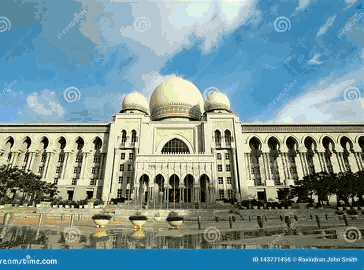
Nine New Faces at the Apex: How 2025 Quietly Reset Malaysia’s Federal Court
Something significant happened to Malaysia’s judiciary in 2025, and it didn’t involve a constitutional crisis, a midnight judgment, or a dramatic dissent. It involved time, retirements, and the slow, decisive turning of an institutional wheel.
By year’s end, nine new judges had been appointed to the Federal Court, the highest court in the land. In numerical terms, that is striking. In institutional terms, it is transformative.
This was the largest refresh of the Federal Court bench in recent memory, and it marks a generational shift in how Malaysia’s apex court will think, reason, and decide cases for years to come.
Why the Federal Court Matters More Than It Looks
The Federal Court does not sit often. It does not flood headlines daily. But when it speaks, it settles the law.
Questions of constitutional meaning, federal–state relations, judicial power, statutory interpretation, and fundamental liberties ultimately end here. When nine seats change hands, the interpretive temperament of the court changes with them.
Judges bring with them habits of reasoning formed over decades—how they weigh precedent, how strictly they read statutes, how boldly they engage constitutional principles. A large turnover does not guarantee doctrinal revolution, but it resets the baseline.
A Confluence of Retirements, Not a Coup
This reshuffle was not the result of political upheaval or sudden reform. It was driven largely by mandatory retirements, which reached a critical mass in 2024–2025. Several senior judges exited within a short span, creating an unusually large vacuum at the top.
Into that vacuum stepped judges largely elevated from the Court of Appeal, carrying deep experience in civil, criminal, administrative, and constitutional law. The appointments followed the existing framework involving the Judicial Appointments Commission, though—as always—questions about transparency, balance, and independence linger in public discourse.
Institutional Memory vs Institutional Renewal
Every apex court walks a tightrope between continuity and change.
On one side lies stability: respect for precedent, predictability, and restraint. On the other lies renewal: fresh perspectives, doctrinal clarity, and the courage to revisit settled assumptions.
With nine new judges, the Federal Court now leans—inevitably—toward renewal. This does not mean precedent will be discarded wholesale. It does mean that old disagreements may be re-examined, and unresolved tensions in the law may finally be confronted rather than avoided.
Why Lawyers, Litigants, and States Should Pay Attention
For litigators, this refresh matters immediately. Arguments that once found little traction may now resonate. Constitutional framing, comparative jurisprudence, and principled statutory interpretation may carry new weight depending on the intellectual leanings of the reconstituted bench.
For states—particularly Sabah and Sarawak—this matters even more. Federalism disputes, revenue rights, and constitutional history often land at the Federal Court. A bench less anchored to the assumptions of the past may be more willing to engage seriously with the text and structure of the Constitution as originally negotiated.
The Quiet Power of Timing
Judicial transformations rarely announce themselves with fanfare. They emerge slowly, case by case, paragraph by paragraph.
The real impact of the 2025 refresh will not be felt in press releases but in future landmark decisions—in how boldly the court speaks, how carefully it reasons, and how willing it is to say what the law is, rather than what is merely convenient.
Malaysia has not changed its Constitution. It has not rewritten its laws. But by refreshing its highest court so extensively, it has changed the lens through which those laws will now be read.
That, in constitutional systems, is often how history moves: quietly, deliberately, and then all at once.
- MALAYSIA'S 1ST AI LAWYER - CLICK HERE
- ISMAIL – INTEGRATED SINGAPORE/MALAYSIA AI & LAW (Library)
- OPENING OF SINGAPORE MALAYSIA AI CENTRE AND LAW LIBRARY
- LIFT - LAW INSTRUMENTS FORMS & TEMPLATES
- LAWS OF MALAYSIA FOR SINGAPOREAN DUMMIES
- HANNAH YEOH'S ARTIFICIAL INTELLIGENCE LAW ENCYCLOPEDIA
- LEAD CR - Law Ecosystem Archive Databases on CD-ROM
- BREAKING NEWS FROM MJN
- CLICK HERE CO. PROFILE
- EXCITING NEW SERIES - THE ADVENTURES OF BOBBY TAN -ADVOCATE & SOLICITOR IN THE HIGH COURT OF NORTH BORNEO by marceljude.ai
- MEDICO LEGAL - BY PRISKILA AKWILA & GLORIOUS PETAL SDN BHD - powered by marceljude.ai
- MISCELLANOUS
- ANNOTATED STATUTES OF SABAH - A NEW SERIES
- e-library - marceljude.ai
- DRAFT - DOCUMENT RESEARCH & AUTOMATED FILING TECHNOLOGY
- CLARA – Case Law Analysis & Retrieval AI
- FOR RESEARCH REQUEST CLICK HERE
- CLICK HERE TO ASK ANYTHING
- RAMBO'S LAW - THE LAW OF THE LAW JUNGLE - EXCITING NEW SERIES - CASE ANALYSIS BY JOHN RAMBO @ +60138646786
- PRISKILA AKWILA ADVOCATES - High Court of Sabah & Sarawak @ Kota Kinabalu
- COLA - COMMONWEALTH ONLINE LAWCASES AI -marceljude.ai
- THE LAW LIBRARY THAT COMES TO YOU ANYWHERE AND ANYTIME
- marceljude.ai training academy
