
The Quiet Rebel of Ranau: Naomi Francis's Fight for Sabah's Rights
The Quiet Rebel of Ranau: Naomi Francis's Fight for Sabah's Rights
Naomi Francis stands outside the Kota Kinabalu High Court in November 2025, clutching the thick sheaf of papers for her latest judicial review application. An independent candidate-turned-citizen litigant from Ranau, she is challenging the Attorney General's decision to partially appeal a landmark ruling affirming Sabah's right to 40% of its federal revenue - a constitutional entitlement long denied. In her plain trader's attire against the courthouse columns, she cuts an unassuming figure. Yet, in that moment, Naomi embodies a quiet revolution: a single hawker determined to hold the nation's highest legal officers to account, armed not with political power but with faith in the courts.
From Market Stalls to Court Petitions
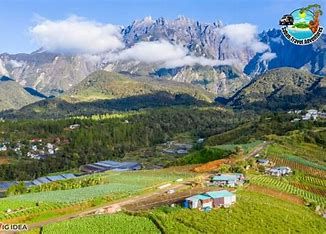
Long before she stood on courthouse steps, Naomi @ Neomi Francis was known simply as a hardworking hawker in Pekan Ranau's central market. For decades, she ran a small food stall amid the bustle of vendors selling produce and fish in the misty foothills of Mount Kinabalu. It was an unlikely place to germinate a constitutional crusader, yet this market is where Naomi's civic instincts took root. When local authorities tried to impose unfair measures on the traders -hiking stall rentals or leasing space to outsiders in violation of local by-laws - Naomi was often the first to speak up. In 2014, 2016, and 2018, she challenged several decisions by the Ranau District Council that disadvantaged local bumiputera (native) vendors. Rather than resort to loud protests, the petite hawker quietly gathered evidence, wrote petitions, and knocked on the doors of the Local Government Ministry. Her persistence paid off: faced with her complaints, the council rolled back increased fees and halted the renting of stalls to non-local traders, retracting their decisions without the battles ever reaching a courtroom.
Older stall owners in Ranau began to view Naomi as a one-woman watchdog for their rights. In the market's early hours, amidst the clatter of wok pans and calls of customers, whispers circulated of how "Naomi Francis berani" - Naomi is brave. She had no formal title or backing, just a hawker's apron and an instinct for fairness. It earned her a reputation as an iron-lady of the market, unafraid to confront authority for the little people. Each small victory in the market saga quietly steeled her resolve. "I am just a small trader carrying the voice of the people," Naomi would later say, "not a wealthy politician". Those market skirmishes taught her that even without wealth or status, an ordinary Sabahan could push back against systemic slights - if she was persistent enough, and knew where to press.
The Vaccine Mandate Showdown
That lesson was put to the ultimate test in 2021, when the COVID-19 pandemic brought a new kind of pressure to Naomi's doorstep. In September of that year, the Sabah government decreed that only fully vaccinated individuals could enter business premises - including hawkers and their helpers - effective immediately. The order landed in Ranau's market like a thunderbolt. On September 21, 2021, Naomi and her husband received a stern letter from the Ranau District Council: get vaccinated within one week or face fines between RM2,000 and RM50,000. Naomi was 55 then, a mother of four and a fixture at the Pasar Besar Ranau. Suddenly, the very stall that fed her family stood threatened by a government mandate that she deeply distrusted.
That evening, in their modest home, her farmer husband offered to do the unthinkable. "He said he wants to 'sacrifice' for our family and take the vaccine," Naomi recalls softly, the memory still vivid. "I cried when I heard that and told him not to unless he is truly sincere... I told him there must be other ways." For Naomi, this was not about being anti-vaccine - two of her children worked in healthcare and had tried to persuade her to get the jab. It was about choice. The more she read the Federal Constitution, the more she felt the mandate trampled her fundamental rights. Article 5 guaranteed personal liberty; Article 8 promised equality before the law. To her, the new SOP did the opposite: "The Sabah government is violating the Federal Constitution by not providing liberty - discriminating between vaccinated and unvaccinated," she argued, pointing out how the unvaccinated were being denied access to livelihoods and essential services. The issue had grown bigger than just her stall; Naomi felt she was standing up for teachers, shopkeepers, and ordinary folks across Sabah barred from offices and banks due to their vaccination status. If the authorities wouldn't reconsider, then she would find "other ways" to fight - through the courts.
Within days, Naomi took the extraordinary step of filing for judicial review against the Ranau District Council's vaccine requirement. On September 28, 2021, as the High Court in Kota Kinabalu convened to hear her application, Naomi - clad in her simple baju kurung - walked into the courtroom alongside her lawyer, Marcel Jude, a maverick attorney known for taking on controversial cases. In her affidavit, she declared all SOPs restricting the unvaccinated unconstitutional. It was likely the first challenge of its kind in Sabah. The petite hawker from Ranau was now Applicant, taking on the government of her state. Outside the courthouse, masked reporters jostled for quotes. Naomi's message was resolute: "I only want to fight for this. I want the government to stop imposing rules that are against the Federal Constitution," she told them, voice steady. "We should have the liberty to choose, without being punished for that choice." She insisted she wasn't against vaccines per se - she simply wasn't confident in their safety yet and believed no one should be coerced.
The legal battle that followed was arduous. While the case wound through procedural hoops, Naomi's stall remained shuttered. True to their warning, council officers forbade her and her unvaccinated family from operating at the market. Weeks stretched into months. September's vegetables rotted away; Christmas came and went; by the new year of 2022, Naomi's stall was still empty. "During this time, I lost income, loyal customers, and the public's trust in my business," she would later recount in court filings. Her stance had cost her dearly - financially and emotionally. Yet she did not waver. "I was pressured to obtain vaccination solely for the purpose of continuing my business," she wrote, describing "significant mental exhaustion, emotional distress and trauma" from the ordeal. For 18 long months, from September 2021 until March 2023, Naomi and her husband kept their stall closed rather than submit to what they viewed as unlawful coercion.
In the end, her gamble paid off. In February 2023, the Health Ministry quietly bowed to reality -and to the legal merits of her challenge. An official letter from the ministry's enforcement division informed her that the punitive action was a "technical error": the RM50,000 compound notice issued to her on December 20, 2021 was cancelled, effectively nullifying the fine and enforcement against her. The Ranau Council, in turn, withdrew its warning letter on March 8, 2023. Naomi could finally reopen for business. By then, however, her victory felt bitter-sweet. The warung that once bustled with customers had to start almost from scratch. Many regulars had found other lunch options in the interim; some never returned. The financial hole of a year and a half with no income was deep. Naomi's family survived on savings and the little her husband's vegetable plot yielded. It was a quiet toll, unseen by those enforcing broad policies.
True to character, Naomi did not consider the matter closed. The principle of the thing still gnawed at her - she had complied with the law, but the law's enforcers had nearly ruined her anyway. In June 2025, she took yet another bold step: filing a civil suit against the government and former Health Minister Khairy Jamaluddin for wrongful enforcement of Covid-19 rules. This, according to observers, was Sabah's first known civil suit over pandemic measures. In her statement of claim, Naomi detailed how the "technical error" had cost her 18 months of livelihood, arguing that the authorities' negligence and overreach had caused her irreparable harm. She sought compensation for loss of earnings and exemplary damages to send a message. It was an unusual move -few ordinary citizens would persist so far. But persistence is Naomi's hallmark. As she saw it, someone had to hold the powerful to account, even after the headlines faded. "I have stood up before against discrimination, coercive vaccination measures, and for the rights of bumiputera traders who have long been marginalised," she reminded those who asked why she wouldn't just move on. Her courtroom journey was never about publicity or profit; it was about principle, from start to end.
Citizen vs. Politician: An Unlikely Candidate
By 2025, Naomi Francis had evolved from a local market advocate into something of a folk hero in Ranau - a quiet symbol of resistance through lawful means. That year, Sabah was abuzz with its 17th state election, and talk of reform and rights filled the air. Despite her aversion to partisan politics, Naomi felt compelled to raise the people's voice on a bigger stage. She decided to contest the Karanaan state constituency - her home ground - as an independent candidate. In the hill town of Kundasang and surrounding villages that made up Karanaan, voters saw her simple posters and handmade banners. They remembered how this petite woman had taken on city hall, how she had fought for hawkers and stood firm on vaccine mandates. She had no party machinery or big funds, only name recognition and a reputation for courage. "This struggle is not merely about a DUN seat, but about restoring the rights and dignity of Sabah," Naomi said during the campaign, underscoring that her run was about issues, not ambition.
Election Day came and went with the usual fanfare of rural Sabah politics - helicopters ferrying ballot boxes, villagers braving muddy roads to cast votes. When results were announced, Naomi garnered a respectable number of votes for an independent, but not enough. The Karanaan seat was won by Datuk Seri Masidi Manjun, a heavyweight in the ruling coalition, GRS. Many in her camp expected Naomi to bow out gracefully. She had made her point, after all, and earned new admirers even in defeat. But as always, Naomi's eye was on the integrity of the process. Reports trickled in to her about irregularities during the campaign: whispers of cash handouts, suspiciously generous "donations" given out in villages, and procedural lapses by election officials. It all felt too familiar - powerful interests bending rules, ordinary folks shortchanged. So, true to form, Naomi headed back to court.
On December 26, 2025, barely two months after the election, she filed yet another judicial review application - this time challenging the very result of the Karanaan poll. Naming the Election Commission and Masidi Manjun as respondents, Naomi sought to overturn his victory and trigger a fresh election. In her affidavit, she alleged the contest had been "tainted by corruption and misconduct," claiming that during the campaign, voters were offered cash and other inducements by individuals linked to the winning candidate. She catalogued breaches: failures to adhere to election timelines, improper influence, and other actions that "could affect the legality of the outcome," backed by police reports and even photographs included in her cause papers. It was a bold accusation to level at a sitting Deputy Chief Minister, but Naomi did not blink. Her challenge was filed on the principle that Karanaan's people deserved a clean and fair election. As she explained, this was about defending democracy in Sabah rather than any personal grievance about losing. Once more, she was walking into court essentially alone - no party apparatus, just a small team of supporters and her own unflagging conviction that right should be done. The High Court fixed February 4, 2026 for an initial hearing. Until then, Naomi returned to Ranau to wait, tending her stall by day and preparing evidence by night. In the quiet of her village, many wondered what drove this soft-spoken mother to such lengths. But those who knew her well understood: Naomi Francis simply did not know how to back down when she believed the rights of ordinary Sabahans were at stake.
Sabah's Constitutional Moment - and a New Fight
Even as Naomi waged her personal battles, a larger war for Sabah's rights was reaching a crescendo in 2025. For decades, Sabahans had complained that they were not receiving their due from the federal system - roads were riddled with potholes, power blackouts were common, poverty remained high in this resource-rich state. Many traced these problems to a broken promise in the Malaysia Agreement 1963: that Sabah would retain significant control over its resources and enjoy a special annual grant equal to 40% of the net revenue derived from the state. This so-called "40% entitlement" was enshrined in the Federal Constitution under Article 112C and the Tenth Schedule - a legal guarantee that for every tax ringgit collected in Sabah, two-fifths would return to Sabah's coffers. In the early years of Malaysia, the system worked, with reviews conducted every five years as required by Article 112D. But after 1973, the reviews inexplicably stopped. From 1974 until 2021 - a span of 48 years - the federal government paid Sabah the same amount each year: RM26.7 million, not a cent more. As Sabah grew and contributed billions, the 40% formula was effectively ignored, leaving an ever-widening deficit. These were the "Lost Years," as Sabahan lawyers somberly dubbed them. In that time, an estimated tens of billions due to Sabah were withheld - money that "could have funded development in the state that is still poor despite rich resources," as one High Court judgment later noted pointedly.
By 2022, frustration reached a tipping point. The Sabah Law Society (SLS), representing the state's legal fraternity, took the unprecedented step of suing the federal government to reclaim Sabah's constitutional dues. It was a David-vs-Goliath legal challenge, filed in the High Court at Kota Kinabalu. The case slowly progressed, overcoming procedural roadblocks and government objections that it was too late to litigate the matter of decades past. Finally, in the summer of 2025, the courtroom drama truly began. On July 7, 2025, proceedings opened before the High Court what many were already calling "the mother of all Sabah rights cases." Inside the courtroom, every seat was filled. Tight security checked the flow of people, but even that couldn't keep out the political notables who came to witness history - among them former Chief Minister Shafie Apdal, who had publicly championed the 40% cause, and other state leaders across the divide. It was a rare sight: politicians sitting quietly on courtroom benches, subordinated to the authority of the judge at the front.
Over the days that followed, courtroom became a theatre of Sabah's post-colonial history. Lawyers sparred over yellowed documents and constitutional clauses. SLS's counsel laid out how the federal government had utterly failed to conduct the mandatory revenue reviews for 48 years despite the Constitution's clear language that such reviews "shall" be done every five years. Federal attorneys, in turn, tried to defend the indefensible: they argued that an "ongoing negotiation" had been taking place since 1974, even though they could produce no evidence beyond some classified memos. At one point, SLS counsel Dr. David Fung implored the court not to view the case as academic: "Governments come and go; the ones who suffer are the people of Sabah," he declared, enumerating the dilapidated roads and children who had to wade across rivers to get to school in rural Sabah.
Dr, David Fung is highly regarded in Sabah's legal market for his work as a litigator. He often represents clients in civil matters, and also regularly advises them on breach of contract cases. The case was initiated by the ex President of SLS, Datuk Roger Chin. Roger Chin is a legal professional with a career that spans law, business strategy, and intellectual property. From 2019 to 2023, he served as the President of the Sabah Law Society and currently holds the role of Immediate Past President.
On October 17, 2025, Judge Datuk Celestina Stuel Galid delivered her judgment in the Sabah 40% case, and it was nothing short of historic. Datuk Celestina Stuel Galid, clad in her black robe, presided with a calm, attentive demeanor. Hardly a household name, this Sabahan judge carried herself with a steady poise that belied the high stakes. Over 109 pages, she meticulously laid out the constitutional framework and the factual record. Her conclusions validated what Sabahans had long felt: the Federal Government had breached its constitutional obligations by failing to hold the required revenue reviews after 1973, and by withholding Sabah's 40% entitlement for the entire "Lost Years". In a bold stroke, the judge declared that this failure infringed not only Sabah's rights as a state, but also the people of Sabah's right to life and property under Articles 5 and 13 of the Constitution. It was a remarkable fusion of financial rights and fundamental rights - essentially recognizing that starving the state of funds had real human impact on Sabahans' quality of life. It was clear that the emperor had no clothes - Kuala Lumpur had neglected a solemn constitutional duty for nearly half a century, and everyone in Sabah knew it.
Celestina granted all the remedies SLS sought: a declaration of breach, a mandamus order compelling the government to conduct a proper review for the years 1974-2021 within 90 days, and even a certiorari order quashing parts of recent federal review exercises that attempted to gloss over the missing years. In short, she told the federal government to pay up what it owed Sabah and to fix the decades of neglect, by judicial command if necessary. Her written reasoning pulled no punches; she characterized the so-called "special grants" paid since 1974 as wholly insufficient and the lack of review as unconstitutional. Many in Sabah's civil society quietly likened Celestina's ruling to the state's own Brown v. Board of Education moment - a legal turning point affirming rights long denied.
The reaction was swift. That very week, the Prime Minister convened a special Cabinet meeting in Kuala Lumpur to discuss the fallout. Sensing the political weight of Sabah's sentiments, the federal authorities initially struck a conciliatory tone. The Attorney General's Chambers announced on November 11, 2025 that the government would accept the High Court's affirmation of Sabah's 40% entitlement and would begin negotiations to implement it immediately. For a brief moment, jubilation spread in Sabah - after half a century, the state's rights were officially recognized. Newspapers dubbed it a "new dawn" for Sabah's autonomy. Even the Prime Minister promised that fulfilling the court order on Sabah's revenue rights was now a top priority of his administration. But then came the fine print. The AG's Chambers also revealed it would be filing a limited appeal against certain parts of Justice Celestina's judgment. Specifically, the federal government did not appreciate the finding that both Kuala Lumpur and Sabah's own leaders had "abused their powers" and breached constitutional duties since 1974. Nor was it comfortable with the judge's decision to label the recent "review" exercises of 2022 and 2023 as "unlawful, irrational, and procedurally flawed." Those statements, the AGC implied, were defective and unnecessary - perhaps too embarrassing to let stand unchallenged. So while the core 40% right would not be disputed, the government sought to cleanse the judgment of these pointed critiques. It was this nuance - this partial appeal, half acceptance, half denial -that caught in the craw of many Sabahans. Some saw it as Putrajaya trying to have its cake and eat it, publicly assenting to Sabah's rights while quietly chipping away at the ruling's implications. Warisan party leaders expressed dismay, and social media in Sabah buzzed with skepticism. After all, they asked, if the government truly respected Sabah's rights, why appeal at all? Was this not just foot-dragging by another name?
Naomi Francis followed these developments closely. Sitting in her Ranau home with copies of newspaper clippings and printed PDFs of court documents spread over her dining table, she read and reread the headlines: "Federal Govt Will Not Appeal 40% Ruling - But AG to Refine Judgment." To her, it sounded like doublespeak. She remembered well how often Sabahans had been promised their rights "in principle" only to see them diluted in practice. And she thought of Justice Celestina's hard-hitting words, which would now be put on trial in the Court of Appeal. That's when Naomi's quiet fury hardened into resolve. If no one else was going to defend the integrity of that judgment, she decided, she would.
In mid-November 2025, even as she was assembling her election petition, Naomi prepared yet another set of cause papers - perhaps the most consequential yet. She filed for leave to initiate a judicial review against the Attorney General's decision to appeal the 40% case judgment. In essence, Naomi was suing the government for suing itself. It was a meta-lawsuit of sorts, the citizen challenging the State's challenge to a pro-Sabah ruling. At first blush, some lawyers were unsure what to make of it - it is rare to question an Attorney General's discretion to appeal. But Naomi's application was firmly grounded. She sought a declaration that the AG's appeal was invalid, unconstitutional, and taken on irrelevant considerations. The appeal, she argued, betrayed the very constitutional promise that Justice Celestina had upheld. It was, in Naomi's view, an abuse of process aimed at diluting Sabah's win under Article 112C. By filing the appeal, the AG was effectively putting federal pride over Sabahan rights, and that, she believed, could not be lawful in a federation of equals.
For the third time in four years, Naomi found herself making the journey to the High Court in Kota Kinabalu, clutching binders of documents. This time, the stakes were immense. Yet she approached it with the same calm earnestness that she had brought to the fight over her market stall. Outside the courthouse, flanked by a handful of supporters, she explained her motivation to a Sabah Daily Express reporter. "These cases strengthened my resolve to fight what I view as systemic sidelining of ordinary Sabahans," she said, referring to her past courtroom battles. She was supported by a grassroots effort of fellow Sabah citizens who shared her frustration at what they saw as federal backpedaling. "I am not backed by any major party. I am just a small trader," Naomi emphasized, repeating her life's leitmotif, "just a small trader carrying the voice of the people." Her voice was steady, but there was fire in her eyes. In her mind, this was not just about one court case. It was about making sure Sabah's dignity won't be compromised in closed-door negotiations or legal technicalities. "This is a collective stand for constitutional fairness and the long-term dignity of the state," she said of her judicial review, urging fellow Sabahans to pay attention and support the cause.
Judges of an Awakening: Galid and Siew
As Naomi's legal challenge moves forward, it unfolds under the watchful eyes of Sabah's judiciary - in particular, two judges who have become quiet protagonists in this constitutional moment. Datuk Celestina Stuel Galid, who issued the landmark 40% ruling, and Datuk Alexander Siew How Wai, who many expect may preside over Naomi's new judicial review, represent two generations of jurists now at the forefront of Sabah's legal awakening. They are not politicians or firebrand activists; they carry no megaphones. But through their judgments and courtroom conduct, they are shaping Sabah's future in ways lawmakers have long failed to do.
Justice Celestina Stuel Galid's name is now etched in Sabahan history books next to her 109-page opus of a judgment. Yet, she remains a study in judicial reticence. A Sabahan of Kadazan-Dusun heritage, Celestina rose through the legal ranks steadily - appointed as a Judicial Commissioner in 2017 and a High Court judge soon after -without fanfare. Those who have appeared in her court describe her as meticulous and measured. She is the kind of judge who lets lawyers stretch their arguments, all while she jots notes on legal pads, poring over precedents late into the night. In the 40% case, however, Celestina showed another quality: fortitude. She understood the sensitivity of a case that effectively pitted Sabah's rights against decades of federal practice, and she approached it with fearless impartiality. During the trial, she refused to be sidetracked by procedural squabbles. Her Ladyship rightly emphasized that jurisdictional issues must be addressed, but she did not allow them to derail the substantive hearing. When government lawyers tried to argue that only the Federal Court could hear such a dispute (hoping to get the case thrown out on a technicality), she scrutinized their claims and then allowed the hearing to proceed on merits. This firmness earned quiet praise from observers.
More striking was how Celestina anchored her judgment in constitutional principle and historical truth. She dug into the archives - the Cobbold Commission Report, the Malaysia Agreement 1963, debates of the Inter-Governmental Committee - to reaffirm that Sabah's 40% was not a mere policy but a solemn promise that formed the basis of Malaysia's formation. In her written ruling, she declared, in no uncertain terms, that constitutional safeguards for Sabah cannot be ignored by executive inaction or political expediency. This was a line in the sand drawn by a judge: that the paper promises of 1963 were not just symbolic relics, but enforceable rights here and now. In a nation where federal authority often looms large, Celestina's judgment felt almost radical - a rebalancing of the federal-state relationship through the scalpel of law. Yet she did it all through orthodox judicial reasoning, carefully citing precedent and crafting orders within the court's powers. She was, as one Sabahan commentator put it, "restoring constitutional balance within the Malaysian Federation", and doing so with quiet conviction.
If Celestina Galid represents the bold voice of judicial affirmation for Sabah's rights, Alexander Siew How Wai might be seen as the measured hand on the tiller, guiding how those rights are managed in the legal system. At 57, Justice Siew is a Sabahan son of Borneo as well, though he spent a significant part of his career in Sarawak's legal circles. He was appointed a Judicial Commissioner in 2020 and became a High Court Judge in early 2024. Described by peers as cerebral and scrupulously objective, Siew has a reputation for sticking to the letter and spirit of the law, unswayed by political winds. He first came to wider public attention in May 2023, when he presided over a controversial case in Kuching: a group of local activists had sought to have the entire Malaysia Agreement 1963 declared null and void, an action seen by some as a bid to question Sarawak's and Sabah's position in Malaysia. Emotions ran high on that case - outside the court, fringe groups even touted pro-independence rhetoric. But Justice Alexander Siew cut through the noise with a firm ruling. He struck out the suit, bluntly concluding it was unsustainable. "The plaintiffs have no locus standi... Insofar as these issues concern Sarawak, the government of Sarawak has the requisite locus standi," he held, noting that ordinary citizens couldn't unilaterally litigate an international agreement. More importantly, Siew underscored a fundamental point: the Federal Constitution, as the supreme law, explicitly includes Sabah and Sarawak as part of Malaysia, and no court could simply ignore or rewrite that. "This court cannot disregard or rewrite the Federal Constitution," he wrote, "which the court would be guilty of doing if it were to grant the declaration sought." With those words, Justice Siew affirmed a core principle - that the rule of law must prevail over political sentiment, and any change to Sabah or Sarawak's status must come through the constitutional process (in Parliament with a two-thirds majority), not through judicial fiat. He even ordered costs against the plaintiffs for good measure, signaling his disapproval of what he saw as a legally baseless action.
Alexander Siew's Kuching decision might have disappointed some hardliners, but it won respect in legal circles for its clarity. It showed him as a judge deeply protective of constitutional order: progressive in interpreting rights, perhaps, but also conservative in guarding the sanctity of the constitution's text. In the context of Sabah's unfolding story, Siew represents the institutional strength of the judiciary - the idea that genuine reform and redress must occur within the lanes of law, not by breaking them. It is fitting, then, that as Justice Celestina's 40% judgment reverberates, it may fall to Justice Siew (now sitting in the Kota Kinabalu High Court) to navigate what comes next. If Naomi Francis's judicial review against the AG's appeal proceeds to a full hearing, it could very well land in his courtroom. There, Justice Siew would face a delicate task. On one hand, he must consider the validity of an Executive decision (the AG's appeal) and whether it was done with proper purpose - a check on executive action that aligns with his duty as a judge. On the other hand, allowing a judicial review to quash an appeal might be viewed as a judicial overstep into the appellate process. Striking that balance will require the kind of nuanced, principled reasoning that Siew is known for. The public reputations of the two judges -
Celestina the trailblazer, Siew the safeguard - could not be more complementary. Both Sabahan, both relatively new to the bench, they embody different stages of a legal awakening: one delivered justice for past wrongs, another now poised to ensure that justice isn't unraveled or misused in the aftermath. In their hands, the promise of Sabah's rights finds both assertive voice and conscientious scrutiny.
Epilogue: A New Path for Sabah
Late one evening in January 2026, as rain pattered on the zinc roofs of Ranau, Naomi Francis sat by a flickering light in her home, drafting notes for the hearing ahead. The air was cool and smelled of wet earth. In the background, a radio hummed with news from Kota Kinabalu: talk of a new special committee being formed to negotiate Sabah's 40% entitlement, Ministers giving assurances that Sabah would get its dues soon. Naomi listened quietly. She had heard many grand statements in her 59 years - promises by politicians that never materialized. But this time felt different. This time, the promises had been forced out into the open by ordinary people like her and by judges willing to uphold the law.
She looked at the documents spread before her - affidavits, cause papers, court orders with the official seal of the judiciary. In one, her own name Naomi Francis appeared as Applicant; in another, Sabah Law Society versus the Government of Malaysia. Together, they told a story that was still unfolding - a story of a state reclaiming its voice through the rule of law. She allowed herself a rare moment to reflect. Just a few years ago, she was fighting over market stall rents and being ridiculed by some as a troublemaker. Now, her actions had helped spark conversations in every kopitiam in Sabah about constitutional rights and state autonomy. "The ones who suffer are the people of Sabah," the lawyer had said in court, and Naomi thought of those people: the farmers like her husband, the hawkers like herself, the schoolchildren in distant Pitas who still used torchlights to study when the power failed. In her heart, she knew the 40% fight was never about money alone - it was about dignity. It was about Sabah finally standing on equal footing, not as a poor stepsister in the federation, but as an equal partner as promised in 1963.
Not far from Ranau, in the capital, lights burned past midnight in the judges' chambers as well. In one office, Justice Celestina might have been reviewing an appeal brief, her landmark judgment now headed for scrutiny by the country's apex court. In another, Justice Siew perhaps poured over constitutional law tomes and precedents, preparing for the cases that this new chapter of Sabahan self-assertion would bring before him. These two judges - one who had dared to call out 48 years of injustice, another who would ensure any reckoning stayed within the lines of the law - likely have never sought the limelight. But history has a way of finding its heroes in the most unassuming places: a market stall, a courthouse, or a judge's chambers late at night.
As dawn breaks over Mount Kinabalu, Sabah steps into a new day - cautiously hopeful. The road ahead is still uncertain. Court decisions must be implemented, negotiations must bear fruit, and the old habits of neglect and political trade-offs must be overcome. But one thing is clear: a new generation of Sabahans is no longer content to suffer in silence. If the politicians falter, there are citizens like Naomi Francis who will prod the system, and judges like Celestina Galid and Alexander Siew who will, when needed, remind the nation of the law's promise. Together, they are quietly remaking the relationship between Sabah and the federal center, one court case at a time.
Naomi often opens her stall just as the morning light touches the peaks. Perhaps on one of these mornings, a customer will ask her about the big court case in Kota Kinabalu - about Article 112C or the 40% owed to Sabah. And Naomi, ladling out rice or packing nasi lemak in brown paper, will smile a little and explain in simple Dusun or Malay what it all means. "It means Sabah has rights. It means we stood up and the court agreed." The legal jargon will fade into something relatable - a story of David versus Goliath, of a mother fighting for her children's future, of a judge who remembered the past and another ensuring a fair future. In that retelling, one can sense the quiet pride growing in Sabah. This isn't a loud revolution, but a steady reclamation. And in years to come, when Sabah finally sees the returns of that 40% - in better schools, in village clinics, in scholarships for bright Sabahan youth - people may remember that it started with individuals like Naomi Francis. Not a YB or a Datuk, but a market hawker with an unshakeable belief in justice, who chose courts over chaos and in doing so, helped awaken a state's soul.....and the story continues
Sources: Public court records, Affidavit and cause papers of Naomi @ Neomi Francis (2021-2025); Daily Express Sabah news reports; The Vibes interview with Naomi (Sept 26, 2021); The Star news report (June 11, 2025); High Court Judgment summary by Malay Mail (Nov 12, 2025); Borneo Herald commentary (Daniel J. Jambun, July 2025); Free Malaysia Today/The Vibes court news (May 25, 2023); Sabah Law Society case coverage by The Vibes (July 7, 2025); Daily
Express Sabah election petition report (Dec 28, 2025); New Straits Times report (Oct 19, 2025).
- MALAYSIA'S 1ST AI LAWYER - CLICK HERE
- ISMAIL – INTEGRATED SINGAPORE/MALAYSIA AI & LAW (Library)
- OPENING OF SINGAPORE MALAYSIA AI CENTRE AND LAW LIBRARY
- LIFT - LAW INSTRUMENTS FORMS & TEMPLATES
- LAWS OF MALAYSIA FOR SINGAPOREAN DUMMIES
- HANNAH YEOH'S ARTIFICIAL INTELLIGENCE LAW ENCYCLOPEDIA
- LEAD CR - Law Ecosystem Archive Databases on CD-ROM
- BREAKING NEWS FROM MJN
- CLICK HERE CO. PROFILE
- EXCITING NEW SERIES - THE ADVENTURES OF BOBBY TAN -ADVOCATE & SOLICITOR IN THE HIGH COURT OF NORTH BORNEO by marceljude.ai
- MEDICO LEGAL - BY PRISKILA AKWILA & GLORIOUS PETAL SDN BHD - powered by marceljude.ai
- MISCELLANOUS
- ANNOTATED STATUTES OF SABAH - A NEW SERIES
- e-library - marceljude.ai
- DRAFT - DOCUMENT RESEARCH & AUTOMATED FILING TECHNOLOGY
- CLARA – Case Law Analysis & Retrieval AI
- FOR RESEARCH REQUEST CLICK HERE
- CLICK HERE TO ASK ANYTHING
- RAMBO'S LAW - THE LAW OF THE LAW JUNGLE - EXCITING NEW SERIES - CASE ANALYSIS BY JOHN RAMBO @ +60138646786
- PRISKILA AKWILA ADVOCATES - High Court of Sabah & Sarawak @ Kota Kinabalu
- COLA - COMMONWEALTH ONLINE LAWCASES AI -marceljude.ai
- THE LAW LIBRARY THAT COMES TO YOU ANYWHERE AND ANYTIME
- marceljude.ai training academy
