
Subordinate Courts Act 1948
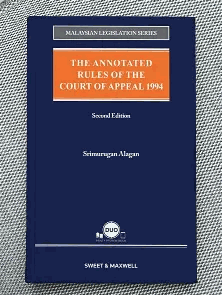


Description
The Annotated Statutes of Malaysia: Subordinate Courts Act 1948
Review by MarcelJude.ai
This is not a book that asks to be admired for beauty of language. It asks to be trusted. Judged on that standard, it is a very strong piece of legal publishing. What it offers is not merely the bare text of the Act, but a fully built research instrument: tables of cases, legislation, foreign legislation, and rules of court; a compact introduction; a section-by-section arrangement of the Act; dense annotations and notes; the schedules; a list of amendments; and an index that helps the whole volume function as a working tool rather than a static reference. It reads less like a “book” in the literary sense and more like a map of an institution—how subordinate courts are constituted, how far their powers reach, where their limits begin, and how those limits have been fought over in practice.
The first thing the book does well is architecture. Many legal texts fail not because the law is unclear, but because the editorial design makes the law hard to enter. This volume avoids that. Before the reader even reaches the Act proper, it lays out the terrain: the tables tell you what authorities matter; the introduction tells you what the Act is for; the arrangement of sections tells you how the subject has been broken down; and the index at the end gives the book a second life as a research aid. That matters because this is a statute about jurisdiction, power, hierarchy, transfer, enforcement, procedure, and institutional boundaries. A sloppy editorial structure would make the book nearly unusable. Here, the structure is one of its chief strengths.
The second strength is that the volume understands a truth many statute books miss: law is never just text; it is text plus conflict, amendment, and interpretation. The annotations are the heart of the book. Again and again, after reproducing a provision, the editors add notes explaining how amendments changed the section, what the courts have said about it, and how the provision interacts with other legislation and procedural rules. That is what turns the work from a mere printed statute into a practical legal companion. The pages on revisionary power, territorial jurisdiction, counterclaims, jurisdictional exceptions, distress, interpleader, civil and criminal competence, sentencing power, hearings in camera, transfer of criminal matters, and protection of judicial officers all show the same method: statutory wording first, then editorial explanation, then case-based clarification.
A third virtue is that the book quietly reveals the constitutional and institutional drama inside what might look, at first glance, like a dry procedural Act. The introduction and the annotated provisions make clear that this is not simply a housekeeping statute for “lower courts.” It is really a text about the distribution of authority within the justice system. The distinction between Sessions Courts and Magistrates’ Courts is not treated as a formality; it becomes the organizing principle of the volume. The reader sees which court can hear what, where monetary limits matter, where criminal competence stops, where declaratory or injunctive relief enters the picture, when matters may be transferred upward, and how supervision by higher courts operates. In other words, the book shows that subordinate courts are not minor appendages. They are load-bearing institutions, and the statute is one of the beams holding the structure together.
One of the most interesting features of the book is its treatment of legal history inside the present text. The arrangement of sections and the annotations make repeated note of deleted parts and repealed provisions. That could have become messy or antiquarian. Instead, it becomes one of the book’s subtler achievements. You feel the Act not as a frozen instrument but as something layered over time. Whole parts have disappeared; other powers have been widened, narrowed, or redirected; schedules survive where core provisions have been removed. The result is a kind of statutory archaeology. For a serious reader, that is valuable, because it reminds you that jurisdiction is historically made, not naturally given. For a casual reader, though, this same feature may feel forbidding. The book preserves the scars of legislative change, and that makes it intellectually richer but also harder to read straight through.
The Sessions Courts material is especially strong. The relevant sections are not presented as abstract doctrine; they are shown as a network of practical questions: territorial jurisdiction, criminal reach, civil limits, counterclaims beyond ordinary jurisdiction, exceptions involving immovable property, interpleader, distress, and the power to order sale or require security. The annotations surrounding these provisions are some of the book’s most useful pages because they explain where formal limits do and do not prevent a court from acting. This is the sort of detail that matters enormously to practitioners and students but is usually buried in scattered authorities. Here it has been consolidated with discipline.
The same is true of the Magistrates’ Courts chapters, which are among the most practically valuable parts of the book. The volume does not simply list the existence of first- and second-class magistrates; it walks the reader through constitution, appointment, qualifications, transfer of powers, general powers, preliminary and interlocutory orders, sitting arrangements, civil jurisdiction, criminal jurisdiction, and sentencing competence. The schedules deepen that picture by identifying ex officio magistrates and the ancillary powers that make court administration workable in reality. This gives the book a strong institutional feel. You come away understanding not only what a Magistrates’ Court is allowed to do, but also how the legal system imagines that court as an office, a place, and a node of authority.
The Third Schedule deserves special praise. In many legal compilations, schedules are treated as an afterthought. Not here. The schedule on additional powers of Sessions Courts and Magistrates’ Courts is a reminder that the real life of jurisdiction lies in procedural capabilities: stay of proceedings, transfer, service, discovery, attendance, commitment, execution before judgment, inspection, certified copies, enforcement, contempt, interim payments, and related machinery. By giving the schedule its due, the book avoids one of the common failures of statute editing—the failure to show that power is not only about headline jurisdiction, but also about procedural reach.
That said, the book has weaknesses, and they are worth stating plainly. Its greatest strength—density—is also its biggest obstacle. The typography is tight, the page design is old-school, and the book assumes a reader already comfortable with case citations, statutory cross-reference, amendment notes, and doctrinal compression. A lawyer, judge, or advanced law student will likely appreciate that economy. A general reader will feel shut out. Even where the annotations are excellent, they are often delivered in compact blocks that explain just enough for the legally trained reader while offering little soft entry for the newcomer. This is not a fault in accuracy. It is a limitation of audience design. The book is hospitable to professionals and only selectively hospitable to everyone else.
There is also a stylistic limitation in the annotations themselves. They are often very good at telling you what the law is doing, but less interested in telling you why it matters as doctrine. The editors prefer utility over essayistic synthesis. That is defensible—probably wise, given the book’s purpose—but it means the volume sometimes stops short of the higher kind of annotation, the kind that draws broad themes out of many cases and shows the reader the jurisprudential pattern. The book gives you the materials of understanding in abundance; it does not always pause to shape them into an argument. So the volume is rich in authority, but somewhat sparing in reflection.
My overall judgment is this: as a legal reference work, it is excellent; as a book for ordinary continuous reading, it is demanding; as an annotated statute, it is serious, rigorous, and deeply useful. It succeeds because it respects the reader’s need for structure, context, and authority. It does not pretend the Act is simple. It shows the law as layered, amended, contested, and operational. That is exactly what a good annotated statute should do. The book’s prose will not charm many people, but its editorial intelligence will impress anyone who understands what legal work actually requires.
Final verdict: a formidable and highly competent legal volume—more instrument than ornament, but all the better for that.
- MALAYSIA'S 1ST AI LAWYER - CLICK HERE
- ISMAIL – INTEGRATED SINGAPORE/MALAYSIA AI & LAW (Library)
- OPENING OF SINGAPORE MALAYSIA AI CENTRE AND LAW LIBRARY
- LIFT - LAW INSTRUMENTS FORMS & TEMPLATES
- LAWS OF MALAYSIA FOR SINGAPOREAN DUMMIES
- HANNAH YEOH'S ARTIFICIAL INTELLIGENCE LAW ENCYCLOPEDIA
- LEAD CR - Law Ecosystem Archive Databases on CD-ROM
- BREAKING NEWS FROM MJN
- CLICK HERE CO. PROFILE
- EXCITING NEW SERIES - THE ADVENTURES OF BOBBY TAN -ADVOCATE & SOLICITOR IN THE HIGH COURT OF NORTH BORNEO by marceljude.ai
- MEDICO LEGAL - BY PRISKILA AKWILA & GLORIOUS PETAL SDN BHD - powered by marceljude.ai
- MISCELLANOUS
- ANNOTATED STATUTES OF SABAH - A NEW SERIES
- e-library - marceljude.ai
- DRAFT - DOCUMENT RESEARCH & AUTOMATED FILING TECHNOLOGY
- CLARA – Case Law Analysis & Retrieval AI
- FOR RESEARCH REQUEST CLICK HERE
- CLICK HERE TO ASK ANYTHING
- RAMBO'S LAW - THE LAW OF THE LAW JUNGLE - EXCITING NEW SERIES - CASE ANALYSIS BY JOHN RAMBO @ +60138646786
- PRISKILA AKWILA ADVOCATES - High Court of Sabah & Sarawak @ Kota Kinabalu
- COLA - COMMONWEALTH ONLINE LAWCASES AI -marceljude.ai
- THE LAW LIBRARY THAT COMES TO YOU ANYWHERE AND ANYTIME
- marceljude.ai training academy
