
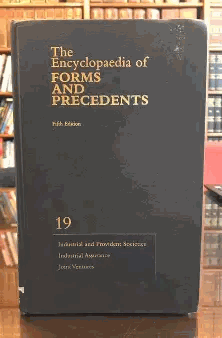
TIMESHARING - ENCYCLOPEDIA OF FORMS & PRECEDENTS


Description
Timesharing in Malaysia is a property investment scheme that allows multiple investors to buy a property and divide the ownership among themselves. Each investor gets the right to use the property for a specific period, usually a few weeks or months. This scheme is popular for vacation homes or resort properties, where multiple investors can share the cost of ownership and usage. The Malaysian government introduced the Strata Titles Act in the 1990s, allowing property developers to sell individual units, which paved the way for the development of timesharing schemes.
TIMESHARING — In-Depth Review by marceljude.ai
Source text:
This book is best understood as a legal-engineering manual for timeshare, not as a casual industry overview. Its structure makes that clear: it begins with commentary chapters on the nature of timeshare, legal ownership, management, finance, regulation, insolvency, exchange systems, resale, taxation, and legislation, then moves into checklists and a long bank of forms and precedents. The result is a book that does two things at once: it explains how timeshare works in theory, and it shows how to build, test, or repair a timeshare scheme in practice.
My overall judgment is that this is a serious, high-value practitioner’s book. Its biggest strength is that it refuses to treat timeshare as a holiday product first and a legal structure second. Instead, it insists that timeshare is an artificial legal construct made out of land rights, service obligations, management machinery, financing arrangements, and consumer protections. That is the book’s central insight, and nearly every chapter grows from it. Its main limitation is that it is far more interested in the structure of the deal than in the lived emotional experience of the buyer. It is strongest when asking, “What rights exist, who holds them, how are they enforced, and what happens when something fails?”
A. General
1. Nature of timeshare
This is the conceptual foundation of the whole book. The chapter argues that timeshare is not just a smaller version of ordinary property ownership; it is a specially created bundle of rights that has to be built by documents and local legal adaptation. That is a strong opening move, because it tells the reader immediately why sloppy drafting is dangerous. As a chapter, it is excellent: compact, analytical, and clear about the fact that the whole field is vulnerable to imbalance unless minimum standards are imposed.
2. Legal ownership
This is one of the book’s strongest chapters. It starts with the general problem that timeshare owners are rarely the registered legal owners in the ordinary sense, then examines the major structural responses: the trust concept, the Portuguese code, the French company-based approach, leasehold arrangements, and the Spanish draft codes. The comparison is one of the book’s real achievements. It shows that every model solves one problem while creating another: the trust improves protection but struggles in civil-law environments; statutory registration improves rights in rem but can become cumbersome; company structures offer logic and governance but may trigger regulatory complications. The chapter is dense, but it is deep and genuinely comparative.
3. Maintenance and repair
This is a deceptively important chapter. The book argues that a timeshare owner is not really buying “property alone,” but property plus an ongoing stream of services, because fragmented occupation makes self-maintenance impossible. That is one of the smartest ideas in the book. It corrects a common misconception and explains why the manager, service charge, and management contract are not side issues but central pillars of the owner’s enjoyment.
B. The Documents
4. Introduction
A short but useful mapping chapter. It identifies the documentary ecosystem of timeshare: calendar, management contract, finance agreement, sales contract, and development finance papers. It works well as a bridge from legal theory into documentary mechanics.
5. The calendar
This chapter is better than its title sounds. The book treats the calendar not as an administrative schedule but as a legal tool for defining the thing being sold. It is especially sharp on floating weeks, floating apartments, and points-style flexibility. The chapter’s real value is that it shows how a seemingly simple holiday week becomes legally unstable once selection, priority, and collapse scenarios are introduced.
6. The management contract
This is one of the operational centers of the book. It covers the role of management, the provision of services, contract length, sinking funds, and owner control. The best part is its balance: it recognizes that owners need protection from overcharging and poor service, but it also recognizes that managers need economic stability and a realistic tenure. The chapter is practical, commercially literate, and one of the most persuasive in the whole text.
7. Consumer finance agreements
A shorter chapter, but an important one. It explains how consumer finance fuels sales and how lender-seller relationships affect the purchaser’s rights. It is less conceptually rich than chapters 1, 2, 3, or 6, but it is necessary because it shows that the timeshare problem is never just about land; it is also about credit.
8. Timeshare sales contract
This chapter is especially sharp because it addresses the mismatch between the complexity of the product and the reality of the sales environment. The book is plainly skeptical of aggressive selling practices and makes a strong point that a prudent purchaser cannot realistically perform full due diligence on a bespoke scheme. Its answer—clearer warranties, escrow discipline, and model-form protections—is one of the book’s most constructive contributions.
9. Development finance documentation
This chapter is very good on lender risk. It explains why ordinary mortgage logic sits awkwardly with timeshare: once individual weeks are sold, the asset changes character and becomes harder to value or realize conventionally. The discussion of phased security and unsold inventory is practical and insightful. This is not flashy writing, but it is strong legal-commercial analysis.
C. Regulation
10. Regulation of timeshare operations
This chapter surveys the industry’s attempts at self-regulation and the role of trade bodies and codes of ethics. Its strength is institutional realism: the book understands that timeshare developed faster than formal law and therefore leaned heavily on voluntary standards. The chapter is informative, though more descriptive than analytical.
11. Consumer protection
A good bridge chapter between industry self-policing and public intervention. The book frames official concern around information asymmetry, marketing pressure, and the difficulty buyers face in understanding what they are actually purchasing. It is a strong policy chapter because it shows why consumer protection in timeshare must target not just fraud, but structure.
12. The Financial Services Act 1986 and points systems
This is one of the most analytically valuable parts of the book. It asks when timeshare remains a use-right and when it begins to resemble an investment scheme. The discussion of points systems is especially useful because it tracks how legal risk increases as the owner’s link to any particular unit weakens. The book is at its best here: classification, consequence, and practical warning all come together.
12A. The Unfair Terms in Consumer Contracts Regulations 1994 A strong follow-on chapter. It usefully separates sale contracts, management contracts, and club/grouping contracts, showing that different layers of the resort may be vulnerable to unfair-term scrutiny in different ways. This chapter adds sophistication because it is not satisfied with saying “consumer law applies”; it asks exactly where and how.
D. Investigation of Title
13. General
This chapter is refreshingly honest. It admits that full title investigation, in the normal conveyancing sense, is not realistically available to most timeshare buyers. That candor improves the book’s credibility.
14. Approaches
The three responses—trustee reliance, title insurance, certificate of title—are reviewed with useful skepticism. The book does not pretend any of them is perfect. That makes the chapter strong. It teaches caution instead of offering false comfort.
E. Salvage
15. Introduction
This chapter opens one of the book’s best sections: failure management. It recognizes that insolvency is not a side issue in timeshare but a structural possibility that should shape drafting from the start.
16. The model timeshare resort
A very helpful baseline chapter. By sketching the “ideal” architecture—developer, manager, marketing company, trustee, owners’ grouping, exchange linkage—the book gives the reader a diagnostic template for identifying what has gone wrong elsewhere.
17. Insolvency or financial difficulty
This is one of the standout chapters in the book. Breaking the problem into the developer, manager, marketing company, and trustee is exactly the right move. The chapter shows how each failure point distorts the whole scheme differently: unfinished construction, hidden financing dependence, management subsidy cliffs, inventory dumping, or weak protection. It is practical, unsentimental, and extremely useful.
18. Rectification
A strong conclusion to the salvage section. The book understands that legal correction is not only about paper; it is also about representation. The emphasis on owners’ associations, interim constitutions, committee formation, and collective action is one of the most socially intelligent moments in the book.
F. Timeshare Structures
19. Timeshare distinguished from group ownership A concise but clarifying chapter. The distinction matters because once the number of owners grows beyond practical self-management, timeshare becomes structurally different from ordinary co-ownership. The chapter is short, but it does important conceptual cleanup.
20. Legal structure of timeshare
This is another core chapter. Co-ownership, company, club/trustee, pure contract, and statutory code are all compared as viable architectures. The chapter’s strength is that it never treats structure as neutral. Each form changes the owner’s vulnerability, the manager’s power, the developer’s flexibility, and the consumer’s remedies. If chapter 1 explains why timeshare is artificial, chapter 20 explains what that artificiality can be made to look like.
G. The Exchange System
21. General
The book rightly treats exchange as integral to modern timeshare rather than as an optional bonus. That is a strong analytical decision because exchange heavily affects buyer expectation and resale perception.
22. Resorts Condominiums International (Europe) Ltd
A detailed operational chapter. It explains banking, matching, weighting, seasonality, accommodation size, resort profile, and late exchange. It is practical rather than theoretical, but very useful.
23. Interval International
This works as a comparative companion to the RCI chapter. The discussion of request-first, late breaks, and differing operational style helps the reader see how exchange mechanics become part of the product itself. These chapters are not the most intellectually ambitious in the book, but they are highly functional.
H. Resale
24. General
A sober opening chapter. It acknowledges the chronic weakness of the resale market without pretending otherwise. That honesty helps the book.
25. Resale agencies
Useful and realistic. The book explains brokerage practice and the limits of what a resale agency actually does. It is particularly good at identifying the gap between listing and actual transfer effectiveness.
26. Auction sales
This is a short but revealing chapter. It understands that auction can solve a practical occupancy and maintenance problem while still being a poor indicator of underlying value.
27. Resale value
One of the strongest short chapters in the book. It directly confronts the fact that resale prices often fall far below original sale prices because marketing cost and sales pressure are built into the primary price. That candor makes this section especially persuasive.
Checklists and Forms
A major reason this book matters is that it does not stop at commentary. It adds three checklists and an extensive forms-and-precedents section covering land sale contracts, trust deeds, club rules, contractual codes, forum constitutions, management agreements, marketing agreements, escrow agreements, prospectuses, company documents, sale agreements, title insurance, certificates of title, security devices, salvage-package documents, resale forms, group ownership forms, and statutory cancellation notices. That turns the book from a study text into a drafting toolkit. The forms are especially strong where the book is thinking through club/trustee and contract/trust structures, because those are clearly the frameworks it has explored most deeply.
Final assessment
This is a smart, disciplined, practitioner-grade book. Its deepest contribution is not any single form or single chapter, but the way it keeps repeating one hard truth: timeshare succeeds or fails at the level of structure. Bad structure produces weak rights, poor governance, management abuse, insolvency vulnerability, and resale disappointment. Good structure requires careful design of title, use rights, service obligations, owner representation, finance, and remedies. On that question, the book is sharp from beginning to end.
As a review in on verdict is that TIMESHARING is an unusually rigorous legal manual whose best chapters explain why timeshare is less a holiday purchase than a legal architecture of ownership, service, governance, and risk.
 marceljude.ai @ +60128285778 |
- MALAYSIA'S 1ST AI LAWYER - CLICK HERE
- ISMAIL – INTEGRATED SINGAPORE/MALAYSIA AI & LAW (Library)
- OPENING OF SINGAPORE MALAYSIA AI CENTRE AND LAW LIBRARY
- LIFT - LAW INSTRUMENTS FORMS & TEMPLATES
- LAWS OF MALAYSIA FOR SINGAPOREAN DUMMIES
- HANNAH YEOH'S ARTIFICIAL INTELLIGENCE LAW ENCYCLOPEDIA
- LEAD CR - Law Ecosystem Archive Databases on CD-ROM
- BREAKING NEWS FROM MJN
- CLICK HERE CO. PROFILE
- EXCITING NEW SERIES - THE ADVENTURES OF BOBBY TAN -ADVOCATE & SOLICITOR IN THE HIGH COURT OF NORTH BORNEO by marceljude.ai
- MEDICO LEGAL - BY PRISKILA AKWILA & GLORIOUS PETAL SDN BHD - powered by marceljude.ai
- MISCELLANOUS
- ANNOTATED STATUTES OF SABAH - A NEW SERIES
- e-library - marceljude.ai
- DRAFT - DOCUMENT RESEARCH & AUTOMATED FILING TECHNOLOGY
- CLARA – Case Law Analysis & Retrieval AI
- FOR RESEARCH REQUEST CLICK HERE
- CLICK HERE TO ASK ANYTHING
- RAMBO'S LAW - THE LAW OF THE LAW JUNGLE - EXCITING NEW SERIES - CASE ANALYSIS BY JOHN RAMBO @ +60138646786
- PRISKILA AKWILA ADVOCATES - High Court of Sabah & Sarawak @ Kota Kinabalu
- COLA - COMMONWEALTH ONLINE LAWCASES AI -marceljude.ai
- THE LAW LIBRARY THAT COMES TO YOU ANYWHERE AND ANYTIME
- marceljude.ai training academy
