
Halsbury’s Laws of Singapore, Volume 18: Tort
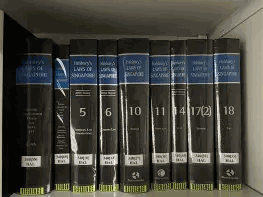


Description
Book Review of Halsbury’s Laws of Singapore, Volume 18: Tort
Review author: MarcelJude.ai
I read the book and reviewed it as a legal treatise rather than as a narrative textbook. The work identifies itself as Halsbury’s Laws of Singapore, Volume 18, Tort, a 2012 reissue, with the law generally stated as in force on 1 April 2012, subject to later changes included where possible.
List of contents, with printed book pages
The front matter contains References and Abbreviations at page xi, Table of Cases at page xv, Table of Statutes at page cxxv, Table of Subsidiary Legislation at page cxxxiii, Table of Foreign Legislation at page cxxxv, the main title Tort beginning at page 7, and the Index at page 465.
The main title, Tort, is organised into seven main doctrinal chapters:
1. The Law of Tort, printed pages 7–52. This chapter covers the nature and definition of tort, causation, parties liable in tort, joint and several tortfeasors, and remedies and defences.
2. Libel and Slander, printed pages 53–145. This chapter covers defamation, publication, defences, pleadings, damages, injunctions, and malicious falsehood.
3. General Principles of the Law of Negligence, printed pages about 146–240. This chapter covers the nature of negligence, duty of care, standard of care, causation, occupiers’ duties, dangerous operations, defective goods, highways, negligent statements, statutory authorities, proof, defences, contributory negligence, apportionment, and damages.
4. Misrepresentation and Negligent Statements, printed pages 241–318. This chapter covers actionable representation, falsity, fraud, innocent misrepresentation, inducement, materiality, remedies, deceit, negligent words, defences, and measure of damages.
5. Breach of Statutory Duty, printed pages 319–331. This chapter covers the nature of the cause of action, statutory construction, absolute and qualified duties, delegation, vicarious liability, damages, and defences.
6. Nature of Nuisance, printed pages 332–340. This chapter covers nuisance and dangerous user of property, including the rule associated with Rylands v Fletcher.
7. Trespass and Associated Torts, printed pages 341–464. This chapter covers wrongs to the person, assault and battery, false imprisonment, harassment, malicious prosecution, malicious civil proceedings, abuse of process, trespass to land, wrongful interference with goods, conversion, trespass to goods, interference with contractual relations, unlawful means, conspiracy, malicious falsehood, passing off, intellectual property-related unfair practices, and breach of confidence.
Overall review of the entire book
This book is a dense practitioner’s and scholar’s digest of Singapore tort law. It is not written like a student textbook with hypotheticals, policy debates, or long explanatory essays. Instead, it is closer to an authoritative legal map: each proposition is compressed, heavily footnoted, and arranged so that a lawyer can move quickly from a legal issue to relevant doctrine, statutes, and cases.
From a law professor’s perspective, its greatest strength is systematisation. It organises the whole field of tort into doctrinal categories: general tort theory, defamation, negligence, misrepresentation, statutory duty, nuisance, trespass, economic torts, and confidence. The structure shows tort law as a set of overlapping civil wrongs rather than one single theory of liability. The opening definition explains tort as a cause of action arising where a legally recognised duty is breached and injury or loss results, with ordinary redress by damages and, where appropriate, injunctions, declarations, or recovery of possession.
Its second strength is Singaporean legal localisation. The book does not merely repeat English common law. It constantly situates common-law principles inside Singapore statutes, Singapore Court of Appeal authority, Singapore High Court authority, and local procedural rules. For a professor, that matters because Singapore tort law is not simply “English tort law in Singapore”; it is common law developed through Singapore’s own courts, institutions, statutes, and policy choices.
Its third strength is litigation usefulness. The book repeatedly connects substantive tort doctrine with pleading, proof, remedies, limitation, contribution, defences, and damages. That makes it valuable not only for understanding what a tort is, but also for understanding how a tort claim is actually framed and fought.
Its main limitation is that it is not a reflective theoretical book. It rarely pauses to ask broad jurisprudential questions such as whether tort law is best explained by corrective justice, deterrence, loss distribution, rights protection, or economic efficiency. Its method is black-letter and case-driven. That is not a defect for practitioners, but students may need a textbook or lecture notes beside it to understand the deeper policy logic.
My overall assessment: highly authoritative, highly compressed, extremely useful for legal research, but demanding for beginners. It is best read with a casebook or lecture framework, because the book tells you what the law is and where to find it, but it does not always slow down to teach why the law evolved as it did.
Chapter 1 Review: The Law of Tort
Printed pages: 7–52
Chapter 1 is the conceptual foundation of the entire book. It introduces tort as a civil wrong arising from a legally imposed duty, then moves quickly into the core architecture of tort liability: causation, persons who may be liable, joint and several liability, remedies, defences, and extinction of liability. Its function is to give the reader a vocabulary for every later chapter.
1. Nature and Definition of Tort
Printed page: 7; paragraphs [240.001]–[240.007]
This section defines tort in functional terms: a cause of action accrues where a person suffers injury or loss because another breaches a duty imposed by law. The book rightly emphasises that damages are the ordinary remedy, but not the only remedy; injunctions, declarations, and recovery of possession may also be available. That is a strong opening because it prevents students from thinking tort is only about money compensation.
The distinction between tort and crime is important. A single act may be both criminal and tortious, but criminal law vindicates public wrongs while tort law vindicates private civil interests. This matters in Singapore because criminal compensation orders may overlap with civil damages, but they do not necessarily exhaust all civil remedies.
The distinction between tort and contract is also central. Contract is based on duties voluntarily undertaken between parties. Tort is based on duties imposed by law. The book’s approach is careful because many modern cases blur the boundary: negligent misstatement, professional negligence, occupiers’ liability, product liability, and pre-contractual misrepresentation may all sit near contract.
The subsections on rights of action, lawful competition, use of name or likeness, and damage prepare the reader for later economic and reputational torts. The book is especially useful in distinguishing true legal injury from mere loss caused by lawful competition. That is important in commercial law because not every business loss is legally actionable.
2. Causation in Tort
Printed pages: about 11–13; paragraphs [240.008]–[240.009]
The causation section introduces the general principles of factual and legal causation. The “but for” test appears as a basic tool: would the damage have occurred but for the defendant’s conduct? The book then signals that causation is not purely mechanical; foreseeability, remoteness, material contribution, and the precise nature of the defendant’s duty all matter.
As a professor, I would describe this as one of the book’s most important foundation sections. Causation is the bridge between wrongdoing and liability. Without it, negligence, nuisance, statutory duty, and misrepresentation claims fail even if breach is proven.
3. Parties Liable in Tort
Printed pages: about 13–29; paragraphs [240.010]–[240.030]
This section explains who may be liable in tort. It covers the Government of Singapore, limits to government liability, the armed forces, statutory bodies, foreign states, corporations, management corporations, trade unions, unincorporated associations, employers, independent contractors, principals and agents, partners, spouses, persons with mental disorders, minors, personal representatives, bankrupts, assignees, visiting forces, and foreigners.
The most practically significant subsections are employer liability, independent contractor liability, and principal-agent liability. The book explains that an employer can be liable where it authorises, ratifies, or is vicariously liable for an employee’s torts committed in the course of employment. That is one of the central risk-allocation doctrines in tort law.
The section is valuable because it makes tort law institutional. Torts are not committed only by individuals. They are committed through companies, agencies, public authorities, associations, employees, and contractors. For litigation, identifying the correct defendant is often as important as proving the wrong.
4. Joint and Several Tortfeasors
Printed pages: about 29–37; paragraphs [240.031]–[240.041]
This section deals with multiple wrongdoers. It distinguishes joint tortfeasors, several tortfeasors causing the same damage, and several tortfeasors causing distinct damage. The book explains that where multiple defendants cause the same damage, one may be sued for the whole loss, subject to contribution from others.
The subsections cover joint tortfeasors, several tortfeasors, distinct damage, the effect of judgment or release, recovery of contribution, entitlement to contribution, liability to contribute, assessment, apportionment, costs, and contractual indemnity.
This section is doctrinally technical but essential. It matters in construction defects, workplace accidents, chain collisions, professional negligence, and commercial conspiracies. The book’s strength is that it links liability with contribution and apportionment, so the reader sees not only who may sue but also how responsibility is redistributed among defendants.
5. Remedies and Defences
Printed pages: about 38–52; paragraphs [240.042]–[240.068]
This section covers four main subsections: action for damages or injunction, self-redress, defences, and extinction of liability.
The remedies discussion explains damages, interest, injunctions, and statutory or equitable remedies. The self-redress section covers situations where the law permits a person to act without first going to court, such as abatement or recaption, though such remedies are generally risky and narrow. The defences section introduces core tort defences such as inevitable accident, act of God, consent, illegality, mistake, and statutory authority. The extinction section addresses how liability may end through limitation, death, release, judgment, satisfaction, or contractual exclusion.
As a law professor, I would praise the chapter for ending with remedies and defences. This reinforces the reality that tort law is not just about classifying wrongs. It is about whether a court will grant a remedy, whether a defendant can resist liability, and whether the claim survives procedural and substantive bars.
Chapter 2 Review: Libel and Slander
Printed pages: about 53–145
This is the longest and most detailed early chapter. It treats defamation as a fully developed litigation system: cause of action, meaning, publication, privilege, fair comment, malice, innocent dissemination, offers of amends, pleadings, damages, injunctions, and malicious falsehood.
1. Causes of Action
Printed pages: about 53–76; paragraphs [240.069]–[240.112]
The chapter begins with introduction and definitions. It distinguishes libel from slander. Libel concerns defamatory matter in permanent form and is generally actionable without proof of special damage. Slander concerns transient publication, often oral, and usually requires special damage unless it falls into recognised categories actionable per se.
Under Elements of the Tort, the book breaks the inquiry into four subparts.
Reference to the plaintiff, beginning around page 58, asks whether the words identify the claimant. The legal test is not merely whether the claimant is named, but whether reasonable readers or hearers would understand the words to refer to that person.
Determining the meaning of the words, beginning around page 60, is crucial because defamation litigation often turns on meaning. Courts must decide the natural and ordinary meaning, possible innuendo, and whether the alleged defamatory meaning can reasonably be borne.
What is defamatory, beginning around page 64, asks whether the statement tends to lower the claimant in the estimation of right-thinking members of society, exposes the claimant to hatred, contempt, or ridicule, or harms reputation in a legally recognised way.
Slander actionable per se, beginning around page 69, covers categories where proof of special damage is unnecessary, such as imputations involving crime, office or profession, certain misconduct, and illness.
The Publication subsection then distinguishes publication of libel and publication of slander. Publication is not limited to mass media. It means communication to at least one person other than the plaintiff. This is the doctrinal gatekeeper: private insult without publication is not defamation.
2. Defences
Printed pages: about 77–112; paragraphs [240.113]–[240.176]
The defences section is one of the chapter’s richest parts.
Justification, beginning around page 80, is the truth defence. If the defamatory sting is substantially true, the defendant may avoid liability.
Absolute privilege protects certain occasions completely, even if the statement is false or malicious. Its subsections cover introduction, administration of justice and reports, parliamentary proceedings and reports, and affairs of state. The policy is institutional: some settings require complete freedom of speech to function.
Qualified privilege protects communications made on occasions of duty, interest, or public concern, unless defeated by malice. Its common-law subsections cover communications between persons with a common duty or interest, communications to the public generally, and fair and accurate reports of parliamentary and judicial proceedings. Its statutory subsections include extracts from parliamentary reports and fair and accurate reports in newspapers or broadcasts on specified matters.
Fair comment, beginning around page 99, protects opinion on matters of public interest. The book explains the distinction between fact and comment, the need for factual basis, and the difference between fair comment and justification.
Defences defeated by malice shows that qualified privilege and fair comment may fail if the claimant proves improper motive. This is doctrinally important because malice is often the hinge between protected speech and actionable defamation.
Innocent dissemination, offer of amends, leave and licence, and limitation complete the defensive architecture. These sections are useful for media defendants, distributors, online intermediaries, and litigants considering settlement.
3. Pleadings, Practice and Relief
Printed pages: about 113–136; paragraphs [240.177]–[240.209]
This section is especially practical. It covers commencement of action, pleadings, statement of claim, defence, reply, costs, damages, and final injunctions.
The statement of claim must identify the words complained of, publication, reference, defamatory meaning, and any special damage where required. The defence may plead justification, privilege, fair comment, consent, limitation, or other bars. The reply becomes necessary where the plaintiff must answer a pleaded defence, especially malice in response to privilege.
The damages section is important because defamation damages are not merely compensatory in the ordinary economic sense. They may vindicate reputation, compensate hurt feelings, and respond to aggravating conduct. The final injunction section is also crucial: courts are cautious about prior restraint but may restrain repetition after liability is established.
4. Malicious Falsehood
Printed pages: about 137–145; paragraphs [240.210]–[240.220]
Malicious falsehood is treated separately from defamation. It protects economic interests against false statements made maliciously that cause pecuniary loss. The subsections cover cause of action, malice, and special damage.
The distinction is subtle but important. Defamation protects reputation. Malicious falsehood protects against falsehoods that damage business, property, or economic interests. This section prepares the reader for later economic torts in Chapter 7.
Chapter 3 Review: General Principles of the Law of Negligence
Printed pages: about 146–240
This chapter is the heart of modern tort law. Negligence is the most flexible tort and the main vehicle for personal injury, professional liability, defective premises, defective goods, negligent public authority conduct, negligent misstatement, and economic loss. The book describes negligence as failure to exercise the care required in particular circumstances, but it does not treat careless conduct alone as enough. The claimant must prove duty, breach, causation, remoteness, and damage.
1. Nature of Negligence
Printed pages: about 146–170; paragraphs [240.221]–[240.231]
The chapter begins with general principles, explaining negligence as conduct falling below the required standard of care. It then moves to the requirements of negligence: duty, breach, causation, remoteness, and proof of loss.
The duty to take care subsection is doctrinally central. It explains the relationship between foreseeability, proximity, and policy. In Singapore, this necessarily brings in the two-stage duty framework associated with modern Singapore authority. The section’s value is that it prevents a simplistic view that foreseeable harm automatically creates liability.
The standard of care subsection explains reasonable care. It covers ordinary persons, skilled professionals, and context-sensitive risk assessment. A law professor would emphasise that negligence is not judged by hindsight; it asks what reasonable care required at the time.
The causation subsection then ties breach to damage. Negligence liability requires proof that breach caused the claimant’s loss and that the loss is not too remote.
2. Situations in Which a Duty of Care Arises
Printed pages: about 170–206; paragraphs [240.232]–[240.264]
This section is organised by recurring factual contexts.
Duty of occupier covers duties to visitors, neighbours, and trespassers. This is important because premises liability depends heavily on status, control, foreseeability, and the nature of the danger.
Duty of those who are not occupiers to those on the premises covers builders, contractors, landlords, maintenance providers, and others whose conduct affects premises safety even though they are not occupiers.
Dangerous operations and dangerous articles deals with heightened risk. The more dangerous the activity or object, the more careful the defendant must be.
Goods supplied covers duties owed by manufacturers, suppliers, repairers, and others whose goods may injure users or property.
Highways and public places concerns obstructions, dangers, road use, public access, and the responsibilities of those who create or control hazards in public spaces.
Negligent statements is a major doctrinal bridge to Chapter 4. The book recognises that careless words may cause economic loss where a duty of care exists. That area depends heavily on assumption of responsibility, reliance, proximity, and policy.
Statutory authorities deals with public bodies. This is difficult because courts must balance compensation for harm against public functions, discretion, resource allocation, and separation of powers.
3. Civil Proceedings and Remedies
Printed pages: about 206–240; paragraphs [240.265]–[240.302]
The proof section explains the burden of proof and res ipsa loquitur. Res ipsa loquitur is important where the accident itself suggests negligence, especially where the defendant controlled the relevant thing or situation.
The defences section covers volenti non fit injuria, limitation, illegality, inevitable accident, and other matters. Consent is not simply awareness of danger; it requires voluntary acceptance of the legal risk.
The apportionment section covers contributory negligence and joint tortfeasors. This is practically central because many negligence cases involve shared fault.
The damages section covers inter vivos claims and claims where death results. The book’s treatment is useful because negligence litigation often turns less on abstract duty and more on how damages are quantified.
As a chapter, this is the book’s strongest teaching chapter. It links doctrine, contexts, proof, defences, and remedies in a way that mirrors litigation.
Chapter 4 Review: Misrepresentation and Negligent Statements
Printed pages: 241–318
This chapter sits between contract, tort, equity, and statute. It explains when a false statement becomes legally actionable, when fraud is present, when negligence is enough, and how damages are assessed. The book states that a tort action may lie where a representor fraudulently or negligently makes a false representation to a representee who alters position and suffers loss by relying on it.
1. Introduction
Printed page: 241; paragraphs [240.303]–[240.304]
The introduction frames misrepresentation as a basis for damages. It also addresses postponement of limitation where fraud or concealment is involved. This is a practical opening because misrepresentation claims often arise years after a transaction.
2. Representation
Printed pages: about 242–251; paragraphs [240.305]–[240.317]
This section asks what counts as a representation.
What constitutes a representation explains the basic elements of a factual assertion capable of inducing action.
Statements of intention may be actionable where they imply a present state of mind and that state is false.
Promises and forecasts are not automatically representations, but they may become actionable where they imply present facts, expertise, or genuine belief.
Statements of opinion, belief, or information can be representations where the speaker implies that they honestly hold the opinion or have a reasonable basis.
Statements of law may be treated as representations in appropriate circumstances.
Statements as to documents cover representations about the existence, authenticity, or contents of documents.
Exaggeration and puff recognises that some promotional language is too vague or hyperbolic to be legally actionable.
This section is pedagogically strong because it teaches students that the law does not treat all words alike. A representation is not merely something said; it is a legally significant statement in context.
3. How Representations May Be Made
Printed pages: about 252–255; paragraphs [240.318]–[240.322]
Representations may be express, such as written or oral statements, or implied from conduct. This is important in commercial transactions where silence, half-truths, conduct, documents, or performance may communicate meaning.
4. Parties to a Representation
Printed pages: about 256–265; paragraphs [240.323]–[240.337]
The book distinguishes the representor from the representee. The representor is the person legally responsible for the statement. The representee is the person to whom the representation is made or whom it is intended to influence.
This matters because misrepresentation liability depends on relational structure. Not every person who hears a statement can sue. The claimant must show that the representation was made to them or to a class including them, and that reliance was legally relevant.
5. Misrepresentation
Printed pages: about 266–275; paragraphs [240.338]–[240.350]
This section explains falsity.
Falsity asks whether the representation was untrue.
Construction of representation determines what the representation actually meant.
Falsity by omission, silence, or inaction recognises that silence can mislead where there is a duty to speak, a half-truth, or a change in circumstances.
Representation composed of several statements requires the court to assess the representation as a whole.
Relevant date of falsity asks when the statement must be false for liability to arise.
This is one of the most analytically refined sections because it shows that falsity is not always obvious. It depends on meaning, context, timing, and omission.
6. Fraud
Printed pages: about 276–282; paragraphs [240.351]–[240.357]
Fraud is the most serious form of misrepresentation. It requires dishonesty: knowledge of falsity, absence of belief in truth, or recklessness. The book’s treatment is doctrinally orthodox and litigation-focused.
The key teaching point is that fraud is not merely inaccuracy. Fraud concerns the defendant’s state of mind.
7. Innocent Misrepresentation
Printed pages: about 283–285; paragraphs [240.358]–[240.360]
This section addresses misrepresentation without fraud. It is especially important because modern statutory and common-law developments may impose liability or remedies even where deceit is not proven.
8. Inducement and Materiality
Printed pages: about 286–297; paragraphs [240.361]–[240.375]
This section covers inducement, materiality, and alteration of position.
Inducement asks whether the claimant actually relied on the representation.
Materiality asks whether the representation was of a kind likely to influence a reasonable person or relevant to the decision.
Alteration of position asks whether the claimant changed position because of the representation.
This section is crucial because falsehood alone is not enough. Tort law requires a causal link between representation and loss.
9. Effect of Misrepresentation
Printed pages: about 298–301; paragraphs [240.376]–[240.377]
This section covers remedies and legal consequences. Misrepresentation may justify damages, rescission, or other relief depending on whether the claim is fraudulent, negligent, innocent, contractual, statutory, or equitable.
10. Action for Damages
Printed pages: about 302–318; paragraphs [240.378]–[240.398]
This section covers the cause of action of deceit, damage, parties, negligent words, defences, and measure of damages.
The deceit subsection explains that fraudulent misrepresentation is a tort.
The damage subsection identifies recoverable damage and the causal connection between misrepresentation and loss.
The parties subsection asks who may sue and be sued.
The damages for negligent words subsection is particularly important. It explains that a tortious claim may arise for careless statements where a duty to take care exists, independent of contract or fiduciary duty.
The defence and measure of damages subsections complete the litigation framework.
As a chapter, Chapter 4 is excellent for advanced students because it shows the overlap between tort, contract, equity, and statute. Its limitation is that beginners may find the categories difficult without a transactional example.
Chapter 5 Review: Breach of Statutory Duty
Printed pages: 319–331
This chapter is short but conceptually important. It explains when breach of a statute gives rise to a private tort action. The key point is that breach of a statute does not automatically create a damages claim. The court must construe the statute to decide whether Parliament intended a private right of action.
1. Nature of the Cause of Action
Printed page: 319; paragraphs [240.399]–[240.401]
The book treats breach of statutory duty as a common-law tort action arising from violation of a statutory obligation. It distinguishes this tort from negligence. The same facts may support both claims, but they are analytically different.
2. Construction of Statute to Ascertain Whether Action Lies
Printed pages: about 322–324; paragraphs [240.402]–[240.405]
This is the doctrinal core. The court considers whether the statute protects a limited class, whether the damage is the kind the statute was intended to prevent, whether the statute provides its own remedies or penalties, the nature of the obligation, and the general statutory purpose.
This section is excellent because it teaches statutory interpretation through tort. A statute may impose a public duty, a regulatory duty, or a private-law duty. Only the last will support damages.
3. Absolute and Qualified Duties; Delegation; Vicarious Liability
Printed pages: about 325–327; paragraphs [240.406]–[240.409]
This section distinguishes absolute statutory duties from duties qualified by reasonable care. It also addresses whether performance may be delegated and whether vicarious liability applies.
That distinction matters greatly. If the duty is absolute, the claimant may not need to prove negligence. If the duty is qualified, breach may depend on fault or reasonable precautions.
4. Damages
Printed page: about 328; paragraphs [240.410]–[240.412]
The damages section connects statutory breach to ordinary tort compensation. The claimant must still show relevant loss and causation.
5. Defences
Printed pages: about 329–331; paragraphs [240.413]–[240.418]
The defences section covers statutory defences, contributory negligence, consent, common employment, and other possible bars.
This chapter is one of the most efficient in the book. It is brief, but it gives a complete litigation path: duty, construction, breach, causation, damages, and defences.
Chapter 6 Review: Nature of Nuisance
Printed pages: 332–340
Chapter 6 deals with land-based and community-based interference. Nuisance is not simply “annoyance.” In law, it concerns unreasonable interference with public rights or private use and enjoyment of land.
1. Nuisance
Printed pages: about 332–335; paragraphs [240.419]–[240.426]
This section explains the meaning of nuisance, the distinction between nuisance and other claims, statutory nuisance, public nuisance, private nuisance, forms of interference, who may sue, and related remedies.
The book is strong in connecting nuisance with property interests. Private nuisance usually requires a proprietary interest in land, not merely personal discomfort. The text explains that generally only a person with a proprietary interest, such as a freehold or leasehold interest, may sue in private nuisance, though exclusive de facto possession may sometimes matter.
2. Dangerous User of Property
Printed pages: about 336–340; paragraphs [240.427]–[240.432]
This section covers the rule in Rylands v Fletcher, non-natural use, dangerous things, escape, acts of God or strangers, plaintiff default, consent, and common benefit. The book explains that the Rylands v Fletcher rule is closely related to nuisance but conceptually distinct. It imposes strict liability where a person brings onto land something likely to cause mischief if it escapes and damage results from escape.
As a professor, I would call Chapter 6 concise but doctrinally dense. It is especially useful for environmental harm, construction disputes, water escape, industrial operations, and neighbour disputes.
Chapter 7 Review: Trespass and Associated Torts
Printed pages: 341–464
This is the broadest chapter. It covers intentional torts to the person, property torts, process torts, economic torts, unfair practices, and breach of confidence. It is effectively a collection of discrete torts connected by intentional interference, possession, legal process, business interests, or confidential information.
1. Wrongs to the Person
Printed pages: about 341–380; paragraphs [240.433]–[240.503]
The chapter begins with classification and limitation.
Assault and battery, beginning around page 344, covers intentional interference with bodily security. Assault concerns apprehension of imminent unlawful contact; battery concerns unlawful contact itself. The subsections explain general principles, remedies, and defences such as self-defence, defence of others, lawful authority, and consent.
False imprisonment, beginning around page 349, covers total restraint of liberty without lawful justification. Its remedies and defences include release, damages, justification, lawful arrest, and other lawful authority.
Intentional physical harm other than trespass to the person and harassment, beginning around page 355, address intentional harm outside classic trespass categories.
Malicious prosecution, beginning around page 356, protects persons from being subjected to criminal process maliciously and without reasonable and probable cause. The subsections deal with what counts as prosecution, termination in the plaintiff’s favour, malice, absence of reasonable cause, damage, and remedies.
Malicious procurement of issue of search warrant, malicious civil proceedings, registration of judgments, and abuse of process extend the chapter into misuse of legal machinery. These are important because the legal system itself can become an instrument of harm if invoked improperly.
2. Wrongs to Property
Printed pages: about 381–451; paragraphs [240.504]–[240.602]
This section is divided into trespass to land, wrongful interference with goods, and trespass to goods.
Trespass to land, beginning around page 384, covers unlawful entry, continuing trespass, trespass and nuisance distinctions, distress, execution, tenants, abuse of authority, aerial intrusion, and remedies. It also covers who may sue, especially the importance of possession, and defences such as licence, necessity, legal authority, and claim of right.
Wrongful interference with goods, beginning around page 399, is one of the most technical parts of the book. It covers detinue, trover, conversion, who may sue, who may be sued, remedies, damages, waiver, defences, and judgment. Conversion is especially important: it protects possessory and proprietary interests in goods against acts inconsistent with the owner’s rights.
Trespass to goods, beginning around page 444, covers direct interference with goods, possession or right to possession, remedies, self-help, claim of right, recaption, authority of law, and related defences.
This property section is valuable because it teaches an older but still important part of tort law: the law protects possession as well as ownership. That principle explains why finders, bailees, possessors, and owners may have different but overlapping claims.
3. Unfair Practices
Printed pages: about 452–464; paragraphs [240.603]–[240.623]
This final section brings the book into economic torts and commercial wrongs.
Interference with contractual relationships, beginning around page 452, concerns inducing breach or interference with performance of contracts. It requires careful attention to knowledge, intention, justification, validity of contract, and proof of inducement.
Intentional damage to business by unlawful means, beginning around page 455, covers harm to business caused through unlawful acts. The book treats this separately from mere competition.
Conspiracy, beginning around page 456, covers combinations of two or more persons, intention to injure, unlawful means, predominant purpose, company-director issues, proof, and remedies.
Malicious falsehood, around page 461, cross-links back to Chapter 2 but is placed here because of its economic and commercial function.
Unfair practices relating to industrial property, around page 461, includes passing off, copyright infringement, patent infringement, and trade mark infringement.
Breach of confidence, around page 463, concludes the chapter. It is a significant ending because confidence sits at the border of tort, equity, privacy, commercial secrecy, and intellectual property.
Chapter 7 is the most sprawling chapter, but that breadth is justified. It shows that tort law protects the body, liberty, land, goods, legal process, business relationships, commercial reputation, and confidential information.
Law-professor critique of the book’s method
The book’s method is black-letter, categorical, and authority-led. It does not begin with theory and derive rules. It begins with legal categories and states the operative rules, exceptions, statutory modifications, and leading authorities. That makes it excellent for litigation and research.
Its treatment of negligence is especially valuable because it shows that modern tort law is not merely about moral blame. It is about duty boundaries, institutional competence, foreseeability, proximity, causation, remoteness, defences, and damages.
Its treatment of defamation is also strong because it gives an integrated view of cause of action, meaning, defences, malice, procedure, damages, and injunctions. That integration is crucial in defamation practice.
The misrepresentation chapter is sophisticated because it recognises overlap between tort and contract. The book does not artificially isolate the doctrines. It lets the reader see how deceit, negligent misstatement, statutory misrepresentation, inducement, rescission, and damages interact.
The shorter chapters on statutory duty and nuisance are efficient and useful, though they are less reflective. A professor might wish for more policy discussion: why courts hesitate to infer private rights of action from statutes; why nuisance protects land-based interests more than personal discomfort; why strict liability remains limited.
The final chapter on trespass and associated torts is doctrinally rich but less unified. That is not really the book’s fault. These torts are historically diverse. Still, the chapter would be easier for students if it began with a conceptual map distinguishing personal security, liberty, possession, property, legal process, economic relations, and confidential information.
Whole-book judgment
As a whole, Halsbury’s Laws of Singapore, Volume 18: Tort is a research work of high practical authority. It is best used by lawyers, judges, academics, and advanced students who already understand basic legal method. It is less suitable as a first introduction for a beginner because it assumes comfort with cases, statutes, procedural language, and cross-references.
The book’s central achievement is that it shows Singapore tort law as a structured field: not a random collection of wrongs, but an ordered system built around duty, injury, causation, protected interests, remedies, defences, and institutional limits.
Final evaluation by MarcelJude.ai: This is a strong, authoritative, practitioner-grade treatment of Singapore tort law. Its greatest virtues are precision, organisation, and case density. Its main weakness is limited theoretical exposition. For legal research, it is excellent. For teaching, it is best paired with cases and explanatory lectures.
- MALAYSIA'S 1ST AI LAWYER - CLICK HERE
- ISMAIL – INTEGRATED SINGAPORE/MALAYSIA AI & LAW (Library)
- OPENING OF SINGAPORE MALAYSIA AI CENTRE AND LAW LIBRARY
- LIFT - LAW INSTRUMENTS FORMS & TEMPLATES
- LAWS OF MALAYSIA FOR SINGAPOREAN DUMMIES
- HANNAH YEOH'S ARTIFICIAL INTELLIGENCE LAW ENCYCLOPEDIA
- LEAD CR - Law Ecosystem Archive Databases on CD-ROM
- BREAKING NEWS FROM MJN
- CLICK HERE CO. PROFILE
- EXCITING NEW SERIES - THE ADVENTURES OF BOBBY TAN -ADVOCATE & SOLICITOR IN THE HIGH COURT OF NORTH BORNEO by marceljude.ai
- MEDICO LEGAL - BY PRISKILA AKWILA & GLORIOUS PETAL SDN BHD - powered by marceljude.ai
- MISCELLANOUS
- ANNOTATED STATUTES OF SABAH - A NEW SERIES
- e-library - marceljude.ai
- DRAFT - DOCUMENT RESEARCH & AUTOMATED FILING TECHNOLOGY
- CLARA – Case Law Analysis & Retrieval AI
- FOR RESEARCH REQUEST CLICK HERE
- CLICK HERE TO ASK ANYTHING
- RAMBO'S LAW - THE LAW OF THE LAW JUNGLE - EXCITING NEW SERIES - CASE ANALYSIS BY JOHN RAMBO @ +60138646786
- PRISKILA AKWILA ADVOCATES - High Court of Sabah & Sarawak @ Kota Kinabalu
- COLA - COMMONWEALTH ONLINE LAWCASES AI -marceljude.ai
- THE LAW LIBRARY THAT COMES TO YOU ANYWHERE AND ANYTIME
- marceljude.ai training academy
